How C4H8O Concentration Analyzer Data Impacts Quality Control Decisions


Precise monitoring of volatile organic compounds is essential for modern industrial quality assurance, and understanding how C4H8O concentration analyzer data influences quality control decisions is becoming a key competitive factor. By integrating advanced instruments such as C10H20O concentration analyzer, C9H18O concentration analyzer, and CH3OH concentration analyzer, manufacturers across sectors can optimize process accuracy, reduce risk, and ensure compliance with rigorous safety standards.
Understanding C4H8O Concentration Analyzer and Its Industrial Relevance
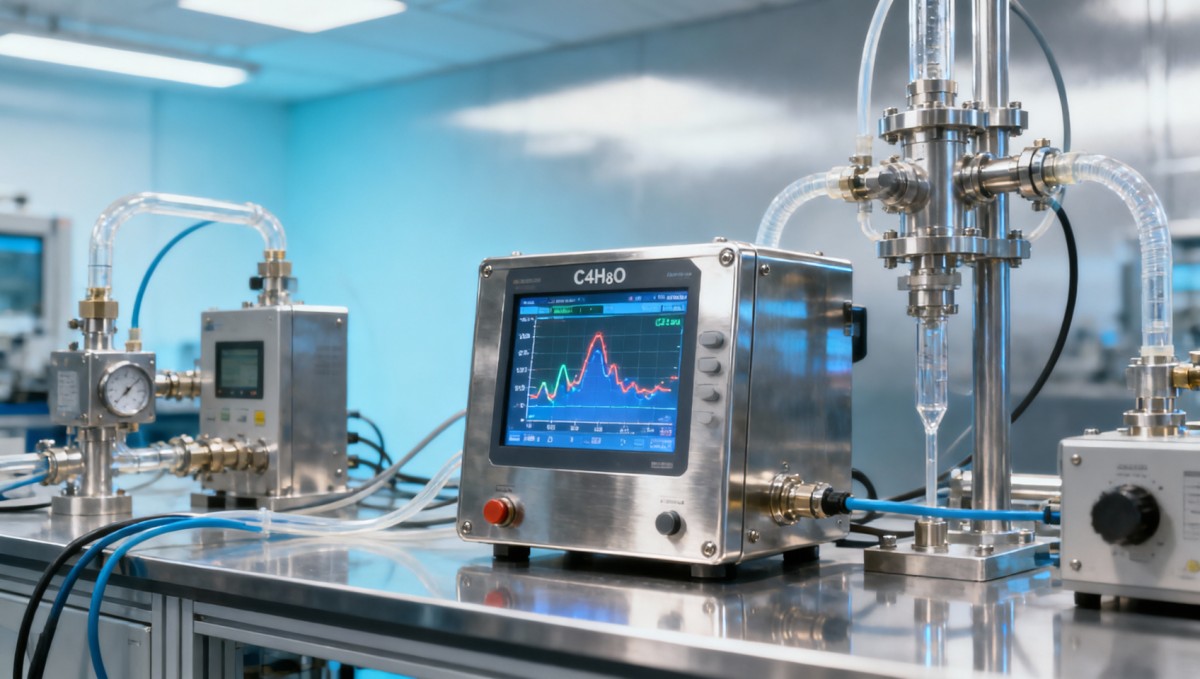
C4H8O, a compound representing butanone or related volatile organic substances, plays a critical role in chemical production, coatings, and energy processes. Its measurement requires highly sensitive instruments, typically utilizing infrared (IR) or gas chromatography principles, offering response times within 2–4 seconds and detection accuracy within ±0.5 ppm. Such precision helps factories maintain strict emission thresholds and product purity.
The instrumentation industry supports this need through advanced analyzers capable of continuous online detection, 24/7 operation, and integration with supervisory control systems. These analyzers provide data continuity essential for data-driven quality control decisions, transforming production workshops into intelligent, automated environments.
Typical manufacturing sectors applying C4H8O analyzers include petrochemical refining, pharmaceutical synthesis, and coating application lines, where analyzer calibration cycles often range between 7–15 days. This ensures stable measurement traceability while minimizing downtime.
Understanding its operational advantages also requires evaluating key parameters such as measuring range (0–1000 ppm typical), repeatability (±1%), and operating temperature between 10°C–45°C. These benchmarks set the foundation for quality control managers in critical industrial zones.
How Analyzer Data Shapes Quality Control Decisions
Quality decisions are increasingly data-centric. Real-time data from C4H8O concentration analyzers influences production control, system alarms, and product release authorization. When analyzer values exceed 20 ppm in solvent processes, automated feedback mechanisms can trigger ventilation, dosage regulation, or production halt warnings, effectively reducing safety incidents by over 30% in typical factory setups.
Moreover, integrating C4H8O, C10H20O, and CH3OH analyzers into a unified monitoring network offers multi-component insight. Decision systems then apply data correlation algorithms, improving predictive maintenance accuracy across 3–5 operational phases — calibration, baseline correction, active monitoring, data validation, and anomaly reporting.
In monthly quality review cycles, statistical deviation under ±2% establishes repeatability confidence, allowing quality assurance departments to approve batches faster while maintaining compliance with emission regulations. The result is not only minimized waste but also enhanced audit transparency.
Continuous monitoring ensures each unit of raw material and energy usage is traceable, aligning with ISO 9001 quality management principles. It also enables interdepartmental data sharing between engineering, procurement, and safety teams, shortening decision times from 48 hours to less than 12 hours in some operations.
Key Data Parameters Influencing QC Outcomes
These quantifiable parameters emphasize how even marginal fluctuations can change material approval decisions, especially in large-volume industries producing over 10,000 liters of solvent mixtures monthly.
Procurement and Selection Guidelines for C4H8O Analyzers
When selecting a C4H8O concentration analyzer, businesses should evaluate not only basic metrics but also lifecycle costs, calibration intervals, and integration feasibility. High-end instruments may carry an initial premium of 10–15%, but they typically reduce maintenance by up to 25% over three years due to robust sensor design and modular architecture.
Procurement teams often follow a four-step framework: define monitoring need → assess technology compatibility → review supplier certifications → conduct on-site demo assessment. This sequence shortens procurement cycles to approximately 2–4 weeks for small-scale deployments and ensures that equipment performance aligns with operational standards.
Common comparison factors include detection stability, communication protocol (Modbus, 4–20 mA, Ethernet), and maintenance accessibility. Having modular analyzers allows line technicians to replace measurement cells within 20 minutes without halting entire production, significantly improving uptime ratios.
For reference, below is a comparative evaluation between different types of analyzers used in multi-component monitoring networks:
Procurement officers should compare lifecycle performance and recalibration frequency, balancing instrument precision with operational throughput. Setting a clear evaluation matrix based on at least five criteria — accuracy, response time, cost, service interval, and integration — promotes objective vendor selection.
Compliance, Certification, and Risk Management
In sectors under strict environmental and safety mandates, analyzer performance must comply with certifications such as CE, RoHS, and ATEX. Each framework defines safety zones and permissible exposure limits within 8-hour operation cycles, typically capped at 100 ppm for volatile solvent types like C4H8O.
To achieve full traceability, the implementation usually follows a four-step compliance roadmap:
- Define measurement objectives and validate reference standards.
- Ensure calibration traceability to national metrology institutes, ideally within ±0.2 ppm verification tolerance.
- Record analyzer stability inspections at least every 6 months as per ISO/IEC 17025 guidelines.
- Document data integrity assurance mechanisms like access control and checksum logging.
Following this sequence improves audit readiness and minimizes the potential of non-compliance reports. In regulated industries such as pharmaceuticals, demonstrating consistent analyzer calibration records over a 12-month period is essential for GMP certification continuity.
Risk assessment teams should also establish threshold-triggered safety alerts. For example, a deviation of ±2 ppm outside validated baseline values should automatically initiate root-cause reviews and corrective actions within 48 hours. This procedural rigor reduces potential recall costs and enhances organizational resilience.
FAQ: Common Questions About Analyzer-Based Quality Control
How often should a C4H8O analyzer be calibrated?
Typically, calibration should occur every 6–12 months depending on environmental conditions and gas exposure levels. Facilities with heavy solvent loads over 500 ppm average may shorten intervals to quarterly verification.
Which industries benefit most from C4H8O analyzer integration?
Primary sectors include paints and coatings production, oil refining, electronics manufacturing, and pharmaceutical synthesis lines where VOC emissions monitoring forms part of environmental reporting frameworks.
Can analyzer data integrate with digital production systems?
Yes, most modern analyzers support Modbus RTU/TCP or Ethernet protocols, enabling seamless integration with SCADA or MES platforms. This allows live dashboards for batch control and predictive maintenance scheduling.
What operational costs should be anticipated?
Typical systems incur around 10–15% of their purchase price annually in maintenance, including sensor replacement, recalibration gas consumption, and system verification services.
Why Choose Us for Your Analyzer and Quality Control Solutions
As an instrumentation solution provider focusing on precise measurement and advanced analysis, we support end-users through every step — from parameter confirmation to onsite commissioning. Our portfolio includes analyzers for C4H8O, CH3OH, and other VOCs, compliant with ISO and CE standards.
We assist clients in defining detection scope (0–1000 ppm typical), configuring integration with existing SCADA systems, and optimizing calibration strategies for multi-shift production lines. Our average delivery cycle ranges between 3–5 weeks depending on customization requirements.
Organizations seeking to improve traceable quality control, environmental reporting accuracy, or compliance assurance can contact our engineering team for personalized consultation covering analyzer configuration, data logging solutions, and lifecycle support models.
Contact us today to discuss your C4H8O monitoring requirements, evaluate compatible instrument setups, and obtain a detailed quotation including calibration schedules, certification documentation, and on-site installation assistance.
Recommended for You
 Monitoring Sensor Prices in 2026: What Is Changing and WhyMonitoring sensor prices in 2026: compare portable sensor, fixed sensor, oxygen detector, infrared detector, electrochemical detector and paramagnetic detector options to choose a high accuracy sensor with better lifecycle value.
 Monitoring Sensor Data Looks Stable Until These Errors Show UpMonitoring sensor errors can hide behind stable data. Compare paramagnetic detector, electrochemical detector, infrared detector, and oxygen detector options for safer, high accuracy sensor selection.
 What Makes a Control Sensor Reliable in Harsh Environments?Control sensor reliability in harsh environments starts with the right oxygen detector, infrared detector, electrochemical detector, or paramagnetic detector for accurate, dependable monitoring.
 Control Sensor Delays Can Undermine Process StabilityControl sensor delays can destabilize operations. Compare paramagnetic detector, electrochemical detector, infrared detector, and oxygen detector options to find a high accuracy sensor for fixed, portable, laboratory, and monitoring sensor needs.
 Laboratory Sensor Repeatability Problems Often Start With SamplingLaboratory sensor repeatability issues often begin with sampling. Compare paramagnetic detector, electrochemical detector, infrared detector, and oxygen detector solutions to improve accuracy.
 Laboratory Sensor Selection Gets Harder With Lower Detection LimitsLaboratory sensor selection gets harder at lower limits. Compare paramagnetic detector, electrochemical detector, infrared detector, oxygen detector, fixed and portable sensor options for high accuracy monitoring and control.
 Portable Sensor Battery Loss Can Distort Long Shift MonitoringPortable sensor battery loss can distort long-shift monitoring. Compare paramagnetic detector, electrochemical detector, infrared detector and oxygen detector options for high accuracy sensor performance.
 Portable Sensor Accuracy in the Field Is Not Always What It SeemsPortable sensor accuracy can differ sharply from lab results. Compare paramagnetic detector, electrochemical detector, infrared detector, and oxygen detector performance to choose a high accuracy sensor for real field use.
 Fixed Sensor vs Portable Checks: Where Results Often DivergeExplore why fixed sensor and portable sensor readings diverge in oxygen detector systems using paramagnetic detector, electrochemical detector, and infrared detector technology.
 Why a High Accuracy Sensor May Still Miss Critical ChangesHigh accuracy sensor limits explained: compare paramagnetic detector, electrochemical detector, infrared detector and oxygen detector options to choose the right fixed, portable, laboratory or monitoring sensor.
 High Accuracy Sensor Claims: Which Specs Actually Prove It?High accuracy sensor selection starts with the right specs. Compare paramagnetic detector, electrochemical detector, infrared detector, and oxygen detector options for fixed, portable, laboratory, control, and monitoring sensor use.
 What Shortens the Service Life of an Oxygen Detector?Oxygen detector service life can drop fast due to heat, moisture, contamination, and poor calibration. Compare paramagnetic detector, electrochemical detector, and infrared detector solutions now.
 Oxygen Detector False Alarms Often Start With Sensor PlacementOxygen detector false alarms often start with sensor placement. Compare paramagnetic detector, electrochemical detector, and infrared detector options to improve accuracy and safety.
 Infrared Detector Response Time Can Change Your ReadingInfrared detector response time shapes alarm accuracy and stable readings. Compare paramagnetic detector, electrochemical detector, and oxygen detector options for every high accuracy sensor need.
 Infrared Detector Limits That Matter in Mixed Gas ApplicationsInfrared detector limits in mixed gas applications: compare paramagnetic detector, electrochemical detector, and oxygen detector options to choose a high accuracy sensor for portable, fixed, laboratory, control, and monitoring sensor use.
 Why Electrochemical Detector Calibration Fails More Often Than ExpectedElectrochemical detector calibration fails more often than expected—learn how a paramagnetic detector, infrared detector, or oxygen detector comparison helps you choose a high accuracy sensor for fixed, portable, laboratory, control, and monitoring sensor applications.
 Electrochemical Detector Lifespan Drops Fast Under These ConditionsElectrochemical detector lifespan can drop fast in heat, humidity, and corrosive gas. Compare paramagnetic detector, infrared detector, and oxygen detector options to choose a high accuracy sensor with lower lifecycle risk.
 Paramagnetic Detector Drift: What Usually Causes It?Paramagnetic detector drift explained: learn what causes oxygen detector errors, how it compares with electrochemical detector and infrared detector options, and how to keep a high accuracy sensor stable.
 Portable Detector Trends to WatchPortable detector trends: explore explosion proof monitor, laser monitor, infrared monitor, oxygen monitor, and high accuracy detector solutions that integrate with fixed detector systems.
 Fixed Detector Setup Mistakes to AvoidFixed detector setup mistakes can impact safety and costs. Learn how explosion proof monitor, oxygen monitor, infrared monitor, and portable detector users avoid false readings.
 High Accuracy Detector Selection TipsHigh accuracy detector selection tips for fixed detector and portable detector needs, covering explosion proof monitor, oxygen monitor, infrared monitor, and more for safer, smarter buying.
 Oxygen Monitor Export Trends in 2026Oxygen monitor export trends in 2026: explore explosion proof monitor, laser monitor, portable detector, fixed detector, and high accuracy detector demand shaping smarter buying decisions.
 Infrared Monitor Market Outlook 2026Infrared monitor market outlook 2026: compare explosion proof monitor, laser monitor, oxygen monitor, fixed detector and portable detector solutions for safer, smarter industrial projects.
 Where Electrochemical Monitors Work BestElectrochemical monitor guide: compare explosion proof monitor, infrared monitor, laser monitor, oxygen monitor, fixed detector, and portable detector for safer, smarter gas detection choices.
 Paramagnetic Monitor Import Outlook 2026Paramagnetic monitor import outlook 2026: compare explosion proof monitor, laser monitor, infrared monitor, oxygen monitor, and high accuracy detector solutions to source the right fixed or portable detector.
 Thermal Conductivity Monitor Price ShiftThermal conductivity monitor price trends explained with explosion proof monitor, laser monitor, oxygen monitor, and fixed or portable detector options for smarter, safer buying.
 How Laser Monitor Demand Is ChangingLaser monitor demand is changing as buyers compare explosion proof monitor, infrared, electrochemical, and oxygen monitor options for safer, high accuracy detector solutions.
 Oxygen Measurement System Export Demand in 2026Oxygen measurement system demand in 2026 is rising across industrial control equipment, gas quality measurement, emission control system, and process monitoring system markets. Explore key trends and smarter sourcing insights.
 Industrial Control System Trends to Watch in 2026Industrial control system trends for 2026: explore industrial control equipment, process monitoring system, gas quality measurement, oxygen measurement system, and emission control system upgrades.
 How to Improve Process Monitoring System ResultsImprove process monitoring system results with industrial control equipment, gas quality measurement, and emission measurement system strategies for smarter industrial control system performance.
 Emission Control System Import Risks in 2026Emission control system import risks in 2026: learn how industrial control equipment, gas quality measurement, and process monitoring system buyers can avoid delays, compliance issues, and costly mistakes.
 Gas Quality Control for Safer Plant OperationsGas quality control improves safer plant operations with industrial control equipment, gas quality measurement, and an emission measurement system—boost efficiency, compliance, and process monitoring performance.

Search Categories
Search Categories
Latest Article
- Monitoring Sensor Prices in 2026: What Is Changing and WhyMonitoring sensor prices in 2026: compare portable sensor, fixed sensor, oxygen detector, infrared detector, electrochemical detector and paramagnetic detector options to choose a high accuracy sensor with better lifecycle value.Posted by:
- Monitoring Sensor Data Looks Stable Until These Errors Show UpMonitoring sensor errors can hide behind stable data. Compare paramagnetic detector, electrochemical detector, infrared detector, and oxygen detector options for safer, high accuracy sensor selection.Posted by:
- What Makes a Control Sensor Reliable in Harsh Environments?Control sensor reliability in harsh environments starts with the right oxygen detector, infrared detector, electrochemical detector, or paramagnetic detector for accurate, dependable monitoring.Posted by:
Please give us a message
