How C10H20O Concentration Analyzer Enhances Process Accuracy in 2026


In 2026, the demand for high-precision measurement solutions continues to rise as industries pursue smarter production and tighter quality control. The C10H20O concentration analyzer, together with C9H18O, C8H16O, C7H14O, C6H12O, C5H10O, C4H8O, C3H6O, C2H4O, and CH3OH concentration analyzers, plays a vital role in enhancing process accuracy, stability, and safety. This article explores how advanced composition analysis technologies empower decision-makers and operators to achieve greater efficiency across industrial applications.
Understanding C10H20O Concentration Analyzer and Its Role in Process Industries
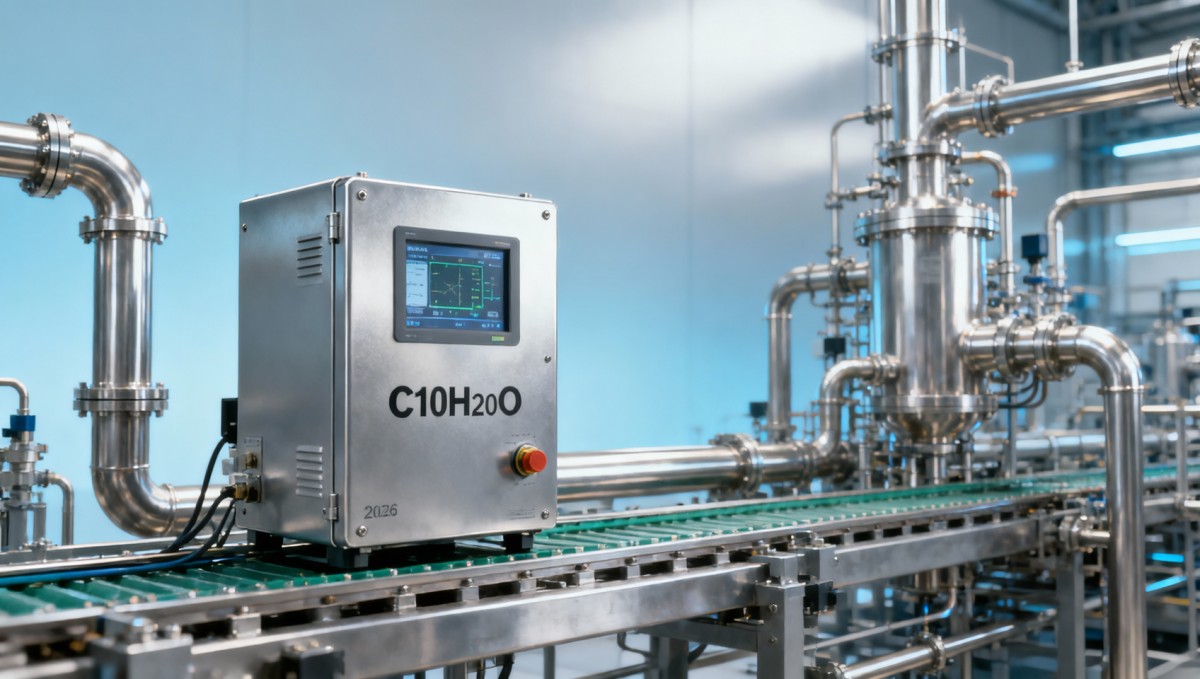
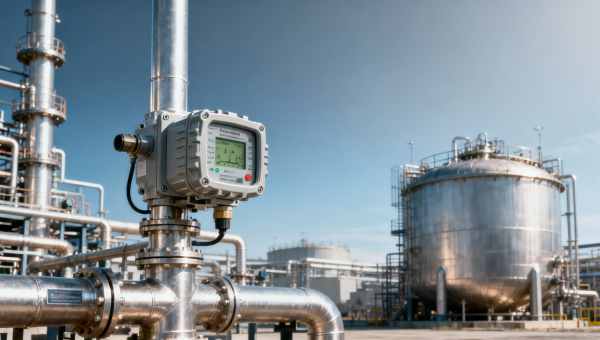
The C10H20O concentration analyzer is an advanced instrument designed to measure organic compound levels in chemical, energy, and production processes. Operating across a concentration range of 0.1–1000 ppm, it allows precise monitoring of reaction balance and purity consistency. In 2026, its relevance has expanded due to the growing emphasis on real-time composition feedback and automated deviation correction.
As part of the broader instrumentation sector—which includes devices for pressure, temperature, and flow measurement—the analyzer integrates seamlessly into digital control frameworks. It communicates via high-speed industrial buses such as Modbus RTU and OPC-UA, supporting cycle times as short as 1–3 seconds per measurement.
For operators in refineries, pharmaceutical lines, and polymerization units, this device bridges the gap between laboratory precision and production-scale monitoring. It acts as a foundation for predictive quality control systems that prevent process drift exceeding ±0.3% specification tolerance, thus increasing product yield by up to 5–8% over quarterly evaluations.
Decision-makers within manufacturing plants view these analyzers not as stand-alone tools but as strategic data nodes. Their integration contributes to a 3-stage improvement path: initial baseline calibration (0–2 weeks), operational stabilization (2–4 weeks), and long-term optimization (after 8–12 weeks of continuous feedback).
Market Dynamics and Industry Trends Toward 2026
The global instrumentation market continues to expand at an estimated 6–8% annual growth rate, with chemical composition analyzers showing above-average demand. In sectors like petrochemicals, food processing, and energy generation, the accuracy requirements tightened by approximately 15% between 2022 and 2025 due to stricter environmental standards and higher customer specifications.
C10H20O, a representative compound in volatile organic mixtures, is central to multiple industrial formulations. The ability to maintain its concentration within ±0.2 ppm directly affects downstream blending efficiency, energy consumption, and safety thresholds. This alignment with Industry 4.0 principles makes analyzers essential assets for real-time decision environments.
Table 1 contrasts traditional periodic sampling with modern digital analyzers, highlighting clear efficiency gains that can reduce manual intervention frequency by over 60%.
Data interpretation indicates that smart composition analyzers not only reduce workforce dependency but also accelerate reporting cycles by up to 70%. This development aligns with global efforts to achieve near-zero downtime manufacturing environments by 2026.
Key Technical Features and Integration Parameters
From a technical perspective, the C10H20O analyzer incorporates multi-spectral detection and temperature-compensated sensors capable of sustaining accuracy across 10℃–80℃ ranges. Its detection cell usually employs stainless or PFA materials to resist corrosion from hydrocarbon-rich streams. The device calibration adheres to ASTM and ISO analytical standards through 3-point verification cycles.
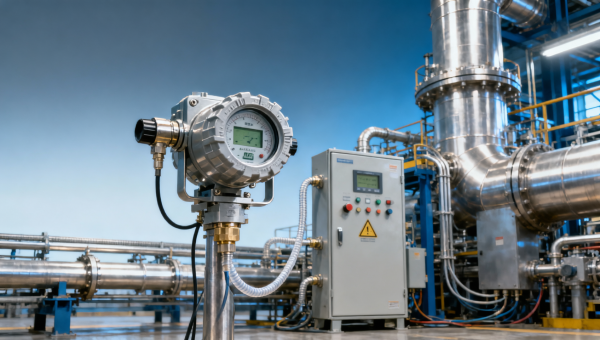
Operators benefit most when the analyzer integrates with distributed control systems (DCS) using digital interfaces supporting 4–20 mA and RS485 outputs. This connectivity allows continuous adjustment without manual recalibration for up to 1,000 hours of operation. Signal stability is typically maintained within ±0.1% of full-scale output over a 90-day interval.
The following table outlines representative technical parameters for procurement evaluation and system matching in typical instrumentation setups.
These parameters suggest that the analyzer meets stringent industrial specifications for continuous monitoring in medium-to-large production lines. Equipment managers and engineering supervisors often refer to these baseline configurations to set quarterly recalibration plans and maintenance intervals of around 90–120 days.
Procurement Insights and Cost Evaluation
When procuring C10H20O analyzers, companies typically evaluate vendors based on 5 major dimensions: measurement reliability, integration ease, lifecycle cost, compliance readiness, and after-sales support. Each factor affects ROI differently over a standard 3-year service horizon. For example, choosing models with modular sensor heads can reduce maintenance costs by 18–25% annually due to faster replacement cycles (under 2 hours vs. 6–8 hours for fixed sensors).
Budget planning should also account for consumable parts like calibration gases and light-source modules. Enterprises operating three or more production lines usually plan a 12–18 month budget cycle that covers preventive maintenance, software upgrades, and spare cell replacement. Transparent supplier documentation such as calibration certificates and conformity reports aligned with IEC/ISO norms is critical for audit readiness.
To guide decision-makers, a structured procurement checklist becomes essential:
- Confirm measurement accuracy better than ±0.5% of full-scale and repeatability within ±0.2%.
- Verify digital protocol compatibility (e.g., Modbus TCP/IP, RS485).
- Assess calibration traceability to national or international standards.
- Evaluate delivery cycle—commonly 4–6 weeks for customized configurations.
- Request after-sales technical training lasting at least 2–3 days for plant personnel.
Enterprises adopting such structured evaluation processes consistently report faster commissioning, typically within 10–20 working days post-installation, reducing the payback period for analytical upgrades.
Common Misconceptions and Application FAQs
What are the common mistakes during installation?
One frequent issue is inadequate sampling line design. Tubes exceeding 5 meters between the sampling point and the analyzer can cause signal lag beyond 2 seconds, compromising accuracy. The tubing diameter and material must also match the chemical compatibility of C10H20O compounds.
Can one analyzer type cover multiple compounds?
While modern systems support multi-component detection, each sensor is calibrated for a defined chemical profile. Cross-application without recalibration leads to up to 1.5% deviation. Thus, analytical engineers recommend distinct calibration curves for each compound, including C10H20O and CH3OH.
How long is the typical analyzer lifecycle?
The expected operational lifetime ranges between 5–8 years, depending on maintenance discipline and environmental exposure. Optical sources are usually replaced after 20,000–25,000 operating hours, ensuring the analyzer retains less than 0.1% measurement drift annually.
What maintenance practices ensure stable accuracy?
Quarterly performance verification, filter cleaning every 3 months, and gas cell inspection every 6 months are recommended. Automation specialists also schedule firmware updates twice a year to synchronize with plant networks and maintain cybersecurity compliance.
Why Choose Us for Analyzer Implementation
For organizations aiming to modernize their measurement systems in 2026, partnering with an experienced instrumentation solution provider ensures both compliance and performance continuity. We specialize in delivering full-cycle support—from parameter validation to project commissioning—covering concentration analyzers for C10H20O, C9H18O, and other organic compounds.
Our technical consultation service includes:
- Pre-project requirement mapping within 3–5 business days.
- Customized system configuration and interface matching.
- On-site calibration support according to ISO analytic protocols.
- Comprehensive user training and documentation packages.
- Post-installation optimization to ensure process deviation below ±0.3%.
Contact us for details on parameter confirmation, model selection, delivery scheduling, or certified analyzer integration. Our consultants help organizations reduce quality risks, meet regulatory demands, and achieve measurable efficiency improvements across diverse industrial landscapes.
Recommended for You
 Monitoring Sensor Prices in 2026: What Is Changing and WhyMonitoring sensor prices in 2026: compare portable sensor, fixed sensor, oxygen detector, infrared detector, electrochemical detector and paramagnetic detector options to choose a high accuracy sensor with better lifecycle value.
 Monitoring Sensor Data Looks Stable Until These Errors Show UpMonitoring sensor errors can hide behind stable data. Compare paramagnetic detector, electrochemical detector, infrared detector, and oxygen detector options for safer, high accuracy sensor selection.
 What Makes a Control Sensor Reliable in Harsh Environments?Control sensor reliability in harsh environments starts with the right oxygen detector, infrared detector, electrochemical detector, or paramagnetic detector for accurate, dependable monitoring.
 Control Sensor Delays Can Undermine Process StabilityControl sensor delays can destabilize operations. Compare paramagnetic detector, electrochemical detector, infrared detector, and oxygen detector options to find a high accuracy sensor for fixed, portable, laboratory, and monitoring sensor needs.
 Laboratory Sensor Repeatability Problems Often Start With SamplingLaboratory sensor repeatability issues often begin with sampling. Compare paramagnetic detector, electrochemical detector, infrared detector, and oxygen detector solutions to improve accuracy.
 Laboratory Sensor Selection Gets Harder With Lower Detection LimitsLaboratory sensor selection gets harder at lower limits. Compare paramagnetic detector, electrochemical detector, infrared detector, oxygen detector, fixed and portable sensor options for high accuracy monitoring and control.
 Portable Sensor Battery Loss Can Distort Long Shift MonitoringPortable sensor battery loss can distort long-shift monitoring. Compare paramagnetic detector, electrochemical detector, infrared detector and oxygen detector options for high accuracy sensor performance.
 Portable Sensor Accuracy in the Field Is Not Always What It SeemsPortable sensor accuracy can differ sharply from lab results. Compare paramagnetic detector, electrochemical detector, infrared detector, and oxygen detector performance to choose a high accuracy sensor for real field use.
 Fixed Sensor vs Portable Checks: Where Results Often DivergeExplore why fixed sensor and portable sensor readings diverge in oxygen detector systems using paramagnetic detector, electrochemical detector, and infrared detector technology.
 Why a High Accuracy Sensor May Still Miss Critical ChangesHigh accuracy sensor limits explained: compare paramagnetic detector, electrochemical detector, infrared detector and oxygen detector options to choose the right fixed, portable, laboratory or monitoring sensor.
 High Accuracy Sensor Claims: Which Specs Actually Prove It?High accuracy sensor selection starts with the right specs. Compare paramagnetic detector, electrochemical detector, infrared detector, and oxygen detector options for fixed, portable, laboratory, control, and monitoring sensor use.
 What Shortens the Service Life of an Oxygen Detector?Oxygen detector service life can drop fast due to heat, moisture, contamination, and poor calibration. Compare paramagnetic detector, electrochemical detector, and infrared detector solutions now.
 Oxygen Detector False Alarms Often Start With Sensor PlacementOxygen detector false alarms often start with sensor placement. Compare paramagnetic detector, electrochemical detector, and infrared detector options to improve accuracy and safety.
 Infrared Detector Response Time Can Change Your ReadingInfrared detector response time shapes alarm accuracy and stable readings. Compare paramagnetic detector, electrochemical detector, and oxygen detector options for every high accuracy sensor need.
 Infrared Detector Limits That Matter in Mixed Gas ApplicationsInfrared detector limits in mixed gas applications: compare paramagnetic detector, electrochemical detector, and oxygen detector options to choose a high accuracy sensor for portable, fixed, laboratory, control, and monitoring sensor use.
 Why Electrochemical Detector Calibration Fails More Often Than ExpectedElectrochemical detector calibration fails more often than expected—learn how a paramagnetic detector, infrared detector, or oxygen detector comparison helps you choose a high accuracy sensor for fixed, portable, laboratory, control, and monitoring sensor applications.
 Electrochemical Detector Lifespan Drops Fast Under These ConditionsElectrochemical detector lifespan can drop fast in heat, humidity, and corrosive gas. Compare paramagnetic detector, infrared detector, and oxygen detector options to choose a high accuracy sensor with lower lifecycle risk.
 Paramagnetic Detector Drift: What Usually Causes It?Paramagnetic detector drift explained: learn what causes oxygen detector errors, how it compares with electrochemical detector and infrared detector options, and how to keep a high accuracy sensor stable.
 Portable Detector Trends to WatchPortable detector trends: explore explosion proof monitor, laser monitor, infrared monitor, oxygen monitor, and high accuracy detector solutions that integrate with fixed detector systems.
 Fixed Detector Setup Mistakes to AvoidFixed detector setup mistakes can impact safety and costs. Learn how explosion proof monitor, oxygen monitor, infrared monitor, and portable detector users avoid false readings.
 High Accuracy Detector Selection TipsHigh accuracy detector selection tips for fixed detector and portable detector needs, covering explosion proof monitor, oxygen monitor, infrared monitor, and more for safer, smarter buying.
 Oxygen Monitor Export Trends in 2026Oxygen monitor export trends in 2026: explore explosion proof monitor, laser monitor, portable detector, fixed detector, and high accuracy detector demand shaping smarter buying decisions.
 Infrared Monitor Market Outlook 2026Infrared monitor market outlook 2026: compare explosion proof monitor, laser monitor, oxygen monitor, fixed detector and portable detector solutions for safer, smarter industrial projects.
 Where Electrochemical Monitors Work BestElectrochemical monitor guide: compare explosion proof monitor, infrared monitor, laser monitor, oxygen monitor, fixed detector, and portable detector for safer, smarter gas detection choices.
 Paramagnetic Monitor Import Outlook 2026Paramagnetic monitor import outlook 2026: compare explosion proof monitor, laser monitor, infrared monitor, oxygen monitor, and high accuracy detector solutions to source the right fixed or portable detector.
 Thermal Conductivity Monitor Price ShiftThermal conductivity monitor price trends explained with explosion proof monitor, laser monitor, oxygen monitor, and fixed or portable detector options for smarter, safer buying.
 How Laser Monitor Demand Is ChangingLaser monitor demand is changing as buyers compare explosion proof monitor, infrared, electrochemical, and oxygen monitor options for safer, high accuracy detector solutions.
 Oxygen Measurement System Export Demand in 2026Oxygen measurement system demand in 2026 is rising across industrial control equipment, gas quality measurement, emission control system, and process monitoring system markets. Explore key trends and smarter sourcing insights.
 Industrial Control System Trends to Watch in 2026Industrial control system trends for 2026: explore industrial control equipment, process monitoring system, gas quality measurement, oxygen measurement system, and emission control system upgrades.
 How to Improve Process Monitoring System ResultsImprove process monitoring system results with industrial control equipment, gas quality measurement, and emission measurement system strategies for smarter industrial control system performance.
 Emission Control System Import Risks in 2026Emission control system import risks in 2026: learn how industrial control equipment, gas quality measurement, and process monitoring system buyers can avoid delays, compliance issues, and costly mistakes.
 Gas Quality Control for Safer Plant OperationsGas quality control improves safer plant operations with industrial control equipment, gas quality measurement, and an emission measurement system—boost efficiency, compliance, and process monitoring performance.
Search Categories
Search Categories
Latest Article
- Monitoring Sensor Prices in 2026: What Is Changing and WhyMonitoring sensor prices in 2026: compare portable sensor, fixed sensor, oxygen detector, infrared detector, electrochemical detector and paramagnetic detector options to choose a high accuracy sensor with better lifecycle value.Posted by:
- Monitoring Sensor Data Looks Stable Until These Errors Show UpMonitoring sensor errors can hide behind stable data. Compare paramagnetic detector, electrochemical detector, infrared detector, and oxygen detector options for safer, high accuracy sensor selection.Posted by:
- What Makes a Control Sensor Reliable in Harsh Environments?Control sensor reliability in harsh environments starts with the right oxygen detector, infrared detector, electrochemical detector, or paramagnetic detector for accurate, dependable monitoring.Posted by:
Please give us a message
