He Analyzer Calibration Gas: Selection and Storage Best Practices


Understanding He Analyzer Calibration Gas Fundamentals
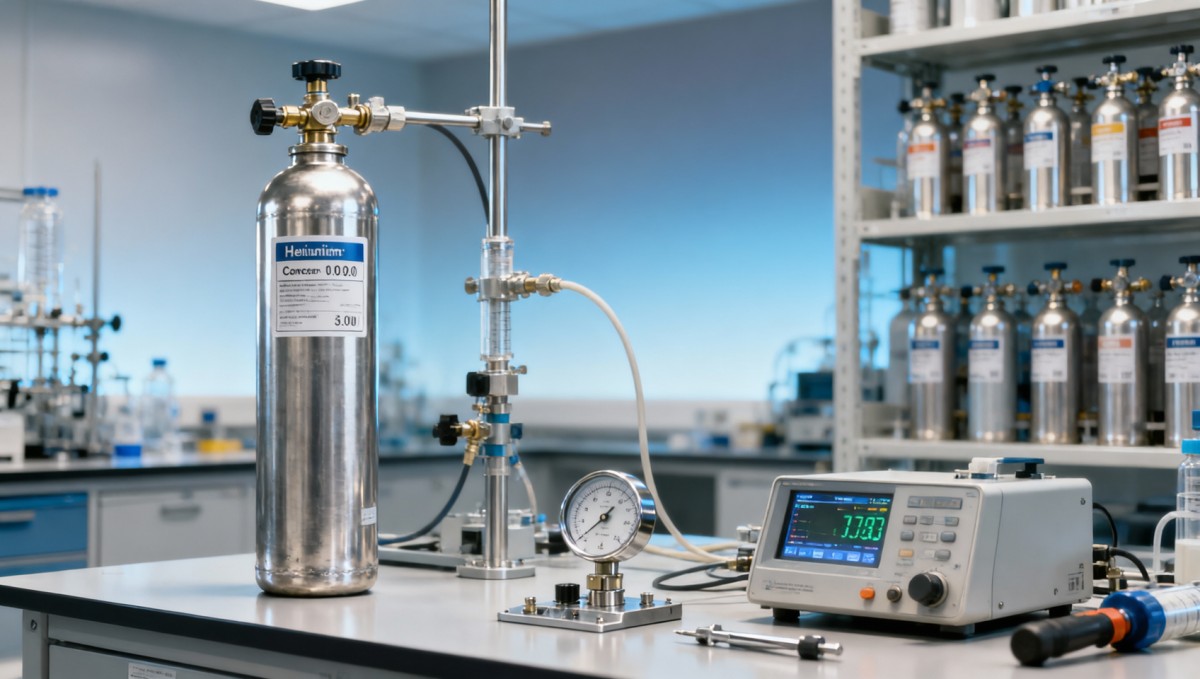
Helium (He) analyzer calibration gases are precision mixtures used to verify the accuracy of gas detection systems across industries like semiconductor manufacturing, petrochemical plants, and medical facilities. These certified reference materials typically contain helium concentrations ranging from 1 ppm to 50% balanced in nitrogen or air, depending on application requirements.
The selection of appropriate calibration gas directly impacts measurement reliability. Industry studies show that improper gas selection accounts for 23% of analyzer calibration failures. Key parameters include:
For critical applications like leak detection in LNG facilities, ISO 6142-certified gases with ≤±1% uncertainty are recommended. The table above demonstrates how technical specifications correlate with operational performance.
Selection Criteria for Optimal Performance
Procurement teams should evaluate calibration gases against five key dimensions:
- Application Match - Select concentrations covering 20-80% of analyzer range
- Certification Level - NIST-traceable vs. ISO-certified requirements
- Gas Compatibility - Avoid reactive mixtures (e.g., He/H2S combinations)
- Delivery Format - Disposable vs. refillable cylinders (17L common)
- Supplier Audit - Verify ISO 17025 accredited production facilities
For semiconductor fabs using He analyzers in tool purge monitoring, the industry standard recommends maintaining three calibration points (zero, mid-range, and span) with gases certified to SEMI C10-0703 standards.
Special Considerations for Toxic Gas Mixtures
When handling calibration gases containing AsH3, PH3 or HCN, additional safety protocols apply:
- Require double-stage regulators with ≤0.5 psi outlet pressure
- Use cylinder valves with ≤0.25" CGA connections for leak minimization
- Implement continuous area monitoring during calibration procedures
Storage and Handling Protocols
Proper storage extends calibration gas shelf life by 30-50% according to CGA P-9 guidelines. Implement these best practices:
For facilities storing >20 cylinders, NFPA 55 requires dedicated gas cabinets with continuous ventilation (≥1 cfm/sq ft) and seismic restraints in earthquake zones.
Inventory Rotation System
Implement FIFO (First-In-First-Out) tracking with these parameters:
- Color-coded labels indicating quarter/year of receipt
- Digital log with ≥3-month expiration alerts
- Quarterly verification of certification documents
Calibration Procedure Optimization
Effective calibration requires balancing frequency with operational constraints. Industry benchmarks suggest:
- Routine Maintenance: Quarterly calibrations for most industrial applications
- Critical Systems: Monthly or per 500 operating hours for safety monitors
- Post-Event: Immediate calibration after exposure to ≥50% of full scale
A 2023 study by the International Safety Equipment Association showed that optimized calibration intervals reduced false alarms by 42% in refinery gas detection systems.
Documentation Requirements
Maintain calibration records containing:
- Gas certificate number and expiration date
- Pre- and post-calibration readings
- Technician credentials and calibration date
- Next scheduled calibration date
Frequently Asked Questions
How often should calibration gas cylinders be replaced?
Replace cylinders when either condition occurs: 1) Certification expires (typically 12-36 months), or 2) Pressure drops below 200 psi (1.38 MPa) to ensure mixture integrity. For toxic gases like H2S, replace every 6 months regardless.
Can different analyzer brands use the same calibration gas?
While possible, always verify with manufacturer specifications. Some laser-based analyzers require proprietary gas mixtures with specific buffer gases. Cross-reference the analyzer's manual against the gas certificate's composition table.
What's the typical lead time for specialty calibration gases?
Standard mixtures ship in 3-5 business days. Custom formulations (e.g., He/SF6 blends) require 2-4 weeks for gravimetric preparation and certification. Emergency orders may incur 25-40% expedite fees.
Conclusion and Next Steps
Proper selection and storage of He analyzer calibration gases directly impacts measurement accuracy, regulatory compliance, and operational safety. By implementing these best practices—from certified gas procurement to disciplined inventory management—facilities can maintain optimal analyzer performance while reducing costly recalibration events.
For a customized calibration gas recommendation based on your specific analyzer models and application requirements, consult with our instrumentation specialists today. We provide NIST-traceable gas mixtures with complete documentation packages for audit compliance.
Recommended for You
 How to Choose an Oxygen Sensor That LastsOxygen sensor selection made practical: learn how to choose a durable sensor for oxygen analysis, combustion analysis, environmental analysis, safety analysis, and air monitoring.
 Monitoring Sensor Prices in 2026: What Is Changing and WhyMonitoring sensor prices in 2026: compare portable sensor, fixed sensor, oxygen detector, infrared detector, electrochemical detector and paramagnetic detector options to choose a high accuracy sensor with better lifecycle value.
 Monitoring Sensor Data Looks Stable Until These Errors Show UpMonitoring sensor errors can hide behind stable data. Compare paramagnetic detector, electrochemical detector, infrared detector, and oxygen detector options for safer, high accuracy sensor selection.
 What Makes a Control Sensor Reliable in Harsh Environments?Control sensor reliability in harsh environments starts with the right oxygen detector, infrared detector, electrochemical detector, or paramagnetic detector for accurate, dependable monitoring.
 Control Sensor Delays Can Undermine Process StabilityControl sensor delays can destabilize operations. Compare paramagnetic detector, electrochemical detector, infrared detector, and oxygen detector options to find a high accuracy sensor for fixed, portable, laboratory, and monitoring sensor needs.
 Laboratory Sensor Repeatability Problems Often Start With SamplingLaboratory sensor repeatability issues often begin with sampling. Compare paramagnetic detector, electrochemical detector, infrared detector, and oxygen detector solutions to improve accuracy.
 Laboratory Sensor Selection Gets Harder With Lower Detection LimitsLaboratory sensor selection gets harder at lower limits. Compare paramagnetic detector, electrochemical detector, infrared detector, oxygen detector, fixed and portable sensor options for high accuracy monitoring and control.
 Portable Sensor Battery Loss Can Distort Long Shift MonitoringPortable sensor battery loss can distort long-shift monitoring. Compare paramagnetic detector, electrochemical detector, infrared detector and oxygen detector options for high accuracy sensor performance.
 Portable Sensor Accuracy in the Field Is Not Always What It SeemsPortable sensor accuracy can differ sharply from lab results. Compare paramagnetic detector, electrochemical detector, infrared detector, and oxygen detector performance to choose a high accuracy sensor for real field use.
 Fixed Sensor vs Portable Checks: Where Results Often DivergeExplore why fixed sensor and portable sensor readings diverge in oxygen detector systems using paramagnetic detector, electrochemical detector, and infrared detector technology.
 Fixed Sensor Installation Mistakes That Lead to Unstable DataFixed sensor installation mistakes can destabilize data from paramagnetic detector, electrochemical detector, infrared detector, and oxygen detector systems. Learn how high accuracy sensor setup improves monitoring sensor and control sensor performance.
 Why a High Accuracy Sensor May Still Miss Critical ChangesHigh accuracy sensor limits explained: compare paramagnetic detector, electrochemical detector, infrared detector and oxygen detector options to choose the right fixed, portable, laboratory or monitoring sensor.
 High Accuracy Sensor Claims: Which Specs Actually Prove It?High accuracy sensor selection starts with the right specs. Compare paramagnetic detector, electrochemical detector, infrared detector, and oxygen detector options for fixed, portable, laboratory, control, and monitoring sensor use.
 What Shortens the Service Life of an Oxygen Detector?Oxygen detector service life can drop fast due to heat, moisture, contamination, and poor calibration. Compare paramagnetic detector, electrochemical detector, and infrared detector solutions now.
 Oxygen Detector False Alarms Often Start With Sensor PlacementOxygen detector false alarms often start with sensor placement. Compare paramagnetic detector, electrochemical detector, and infrared detector options to improve accuracy and safety.
 Infrared Detector Response Time Can Change Your ReadingInfrared detector response time shapes alarm accuracy and stable readings. Compare paramagnetic detector, electrochemical detector, and oxygen detector options for every high accuracy sensor need.
 Infrared Detector Limits That Matter in Mixed Gas ApplicationsInfrared detector limits in mixed gas applications: compare paramagnetic detector, electrochemical detector, and oxygen detector options to choose a high accuracy sensor for portable, fixed, laboratory, control, and monitoring sensor use.
 Why Electrochemical Detector Calibration Fails More Often Than ExpectedElectrochemical detector calibration fails more often than expected—learn how a paramagnetic detector, infrared detector, or oxygen detector comparison helps you choose a high accuracy sensor for fixed, portable, laboratory, control, and monitoring sensor applications.
 Electrochemical Detector Lifespan Drops Fast Under These ConditionsElectrochemical detector lifespan can drop fast in heat, humidity, and corrosive gas. Compare paramagnetic detector, infrared detector, and oxygen detector options to choose a high accuracy sensor with lower lifecycle risk.
 Paramagnetic Detector Drift: What Usually Causes It?Paramagnetic detector drift explained: learn what causes oxygen detector errors, how it compares with electrochemical detector and infrared detector options, and how to keep a high accuracy sensor stable.
 When Does a Paramagnetic Detector Outperform Other O2 Methods?Paramagnetic detector vs electrochemical detector and infrared detector: learn when this oxygen detector delivers high accuracy sensor performance for fixed, portable, laboratory, control, and monitoring sensor applications.
 Portable Detector Trends to WatchPortable detector trends: explore explosion proof monitor, laser monitor, infrared monitor, oxygen monitor, and high accuracy detector solutions that integrate with fixed detector systems.
 Fixed Detector Setup Mistakes to AvoidFixed detector setup mistakes can impact safety and costs. Learn how explosion proof monitor, oxygen monitor, infrared monitor, and portable detector users avoid false readings.
 High Accuracy Detector Selection TipsHigh accuracy detector selection tips for fixed detector and portable detector needs, covering explosion proof monitor, oxygen monitor, infrared monitor, and more for safer, smarter buying.
 Oxygen Monitor Export Trends in 2026Oxygen monitor export trends in 2026: explore explosion proof monitor, laser monitor, portable detector, fixed detector, and high accuracy detector demand shaping smarter buying decisions.
 Infrared Monitor Market Outlook 2026Infrared monitor market outlook 2026: compare explosion proof monitor, laser monitor, oxygen monitor, fixed detector and portable detector solutions for safer, smarter industrial projects.
 Where Electrochemical Monitors Work BestElectrochemical monitor guide: compare explosion proof monitor, infrared monitor, laser monitor, oxygen monitor, fixed detector, and portable detector for safer, smarter gas detection choices.
 Paramagnetic Monitor Import Outlook 2026Paramagnetic monitor import outlook 2026: compare explosion proof monitor, laser monitor, infrared monitor, oxygen monitor, and high accuracy detector solutions to source the right fixed or portable detector.
 Thermal Conductivity Monitor Price ShiftThermal conductivity monitor price trends explained with explosion proof monitor, laser monitor, oxygen monitor, and fixed or portable detector options for smarter, safer buying.
 How Laser Monitor Demand Is ChangingLaser monitor demand is changing as buyers compare explosion proof monitor, infrared, electrochemical, and oxygen monitor options for safer, high accuracy detector solutions.
 Oxygen Measurement System Export Demand in 2026Oxygen measurement system demand in 2026 is rising across industrial control equipment, gas quality measurement, emission control system, and process monitoring system markets. Explore key trends and smarter sourcing insights.
 Industrial Control System Trends to Watch in 2026Industrial control system trends for 2026: explore industrial control equipment, process monitoring system, gas quality measurement, oxygen measurement system, and emission control system upgrades.

Search Categories
Search Categories
Latest Article
- How to Choose an Oxygen Sensor That LastsOxygen sensor selection made practical: learn how to choose a durable sensor for oxygen analysis, combustion analysis, environmental analysis, safety analysis, and air monitoring.Posted by:
- Monitoring Sensor Prices in 2026: What Is Changing and WhyMonitoring sensor prices in 2026: compare portable sensor, fixed sensor, oxygen detector, infrared detector, electrochemical detector and paramagnetic detector options to choose a high accuracy sensor with better lifecycle value.Posted by:
- Monitoring Sensor Data Looks Stable Until These Errors Show UpMonitoring sensor errors can hide behind stable data. Compare paramagnetic detector, electrochemical detector, infrared detector, and oxygen detector options for safer, high accuracy sensor selection.Posted by:
Please give us a message
