C10H20O Concentration Analyzer Price Range and What Affects It


For procurement teams comparing a C10H20O concentration analyzer, price is only one part of the decision. Costs can vary widely depending on detection technology, measurement accuracy, material compatibility, installation requirements, automation features, and after-sales support. Understanding what drives the C10H20O concentration analyzer price range helps buyers evaluate total value, reduce procurement risk, and select equipment that fits both process demands and budget.
What is a C10H20O concentration analyzer, and why does its price vary so much?
A C10H20O concentration analyzer is used to measure the concentration of a target compound with the molecular formula C10H20O in a process stream, storage system, laboratory sample, or online production environment. In the instrumentation industry, this type of analyzer may be configured for continuous monitoring, batch verification, or quality control testing. Procurement teams often see wide pricing gaps because instruments that appear similar on the surface may differ significantly in detection principle, wetted materials, process integration level, and calibration stability.
In practical purchasing, the lowest entry-level units may support basic offline measurement with moderate repeatability, while higher-tier systems are built for 24/7 operation, hazardous locations, corrosive process media, or tight accuracy targets such as ±0.1% to ±0.5% of reading. Once explosion-proof enclosures, automatic temperature compensation, self-diagnostics, digital communications, and customized sampling systems are added, the final project price can increase by 30% to 150% compared with a standard benchtop or basic inline model.
Another reason prices vary is that the term C10H20O concentration analyzer does not point to only one fixed instrument design. Some buyers need optical methods such as NIR or IR-based analysis, while others require density, refractive index, chromatography-linked, or electrochemical approaches depending on the matrix and interference profile. A unit intended for clean solvent lines is not priced the same as one designed for high-temperature pipelines, variable pressure, multiphase samples, or CIP/SIP environments.
Which cost layers are usually included?
When comparing quotations, buyers should separate instrument price from project price. A basic analyzer quote may include only the core measuring unit, while a complete package may also include sampling panel, transmitter, control cabinet, software license, calibration kit, mounting accessories, and commissioning service. In many industrial projects, the analyzer body itself accounts for only 45% to 70% of the total delivered cost.
- Core measuring module and sensor or optical cell
- Process connection parts, valves, tubing, or bypass assembly
- Signal output options such as 4–20 mA, Modbus, or Ethernet
- Environmental protection features including IP rating or purge system
- Calibration, FAT support, commissioning, and operator training
This is why two suppliers can appear far apart on price while actually offering different scopes. Procurement teams should always request a line-by-line quotation and a clarified bill of supply before making any comparison.
How should buyers interpret “cheap” and “expensive” offers?
A lower quote is not automatically a better commercial option if it excludes consumables, requires manual calibration every 2 weeks, or lacks local technical support. A higher quote is not automatically excessive either if it reduces sample conditioning complexity, cuts downtime risk, and extends recalibration intervals from 1 month to 6 months. In instrumentation procurement, price should be reviewed together with lifecycle cost, process suitability, and service accessibility.
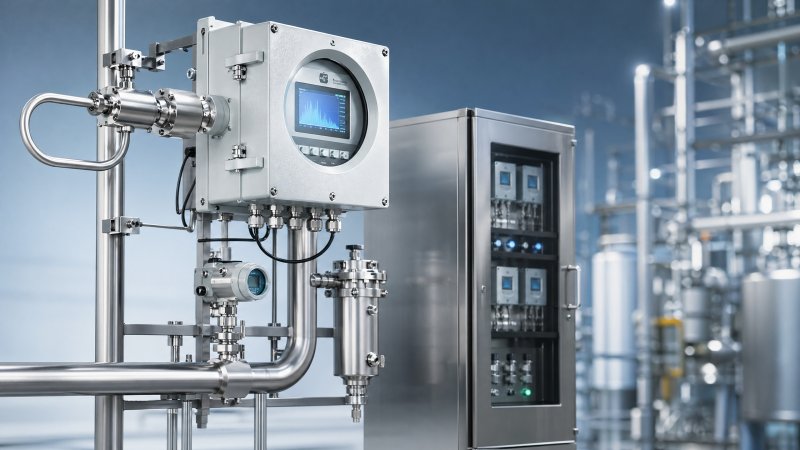
What is the typical C10H20O concentration analyzer price range buyers may encounter?
Although pricing differs by region, application complexity, and configuration depth, procurement teams can use broad market ranges for budgeting. Basic laboratory or portable systems generally sit in a lower band, while industrial online analyzers with automation and compliance-oriented features move into a much higher range. These figures are best treated as planning references rather than fixed market rates, especially for customized projects.
As a rough guideline, a simple C10H20O concentration analyzer for non-hazardous, low-complexity use may start in the lower thousands of US dollars. Mid-range inline or at-line units with better compensation, improved stability, and industrial communications often fall into a moderate five-figure range. High-spec process analyzers with sample systems, special metallurgy, explosion protection, or validated software can move substantially beyond that. Lead times also change with price tier, commonly from 2–4 weeks for standard stock configurations to 8–16 weeks for engineered systems.
The table below helps procurement teams understand how typical pricing bands relate to configuration level, use case, and purchase considerations for a C10H20O concentration analyzer.
This range-based view helps avoid a common mistake: asking for a “price” before clarifying application conditions. A supplier cannot accurately position the right C10H20O concentration analyzer unless process phase, concentration range, pressure, temperature, and required output format are known. For procurement teams, budget planning is more reliable when linked to at least 5 key application parameters.
Why do some quotes escalate quickly after the first proposal?
Initial quotes are often based on standard assumptions. Once the supplier learns that the medium is flammable, the sample contains suspended solids, the pipeline runs above 80°C, or the site needs PLC connectivity and remote diagnostics, accessory and engineering costs rise. In many projects, revisions between the first budgetary quote and the final technical-commercial offer can reach 20% to 60%.
For this reason, purchasing teams should issue a concise data sheet early. Even a one-page specification covering medium name, concentration span, operating temperature, process pressure, installation point, and required turnaround time can shorten supplier back-and-forth and reduce quotation drift.
Which technical factors have the biggest impact on C10H20O concentration analyzer pricing?
Detection technology is one of the strongest pricing drivers. Optical methods can provide fast response and non-destructive measurement, but they may require more advanced signal processing, spectral modeling, and environmental compensation. Density- or refractive index-based approaches may be cost-effective in stable matrices, yet they can become unreliable when multiple dissolved components shift the same physical property. More specialized methods generally increase both capital cost and application engineering effort.
Accuracy and repeatability also affect price directly. A system intended for a broad 0%–100% concentration screening task is different from one expected to control a narrow process window such as 48%–52% with fast response and low drift. As precision requirements tighten, the analyzer may need better thermal stability, higher-grade sensors, stronger algorithms, and more rigorous calibration procedures. Those upgrades raise both manufacturing cost and factory testing workload.
Material compatibility is another major variable. If the process contains aggressive solvents, cleaning agents, or elevated temperatures, standard stainless components may not be sufficient. Upgrading to specialized seals, corrosion-resistant alloys, sapphire windows, or chemically compatible tubing can materially change the quote. This is common in integrated industrial environments where one analyzer must survive continuous operation for 8,000 hours or more per year.
What technical checklist should procurement review before requesting quotations?
A structured checklist reduces the risk of comparing unsuitable offers. It also helps technical and commercial teams align before supplier discussions. Even where final process details are incomplete, defining acceptable ranges is better than leaving critical points open.
- Required concentration range, such as 0%–10%, 10%–60%, or full-range monitoring
- Target accuracy, repeatability, and allowable response time, for example under 30 seconds or under 2 minutes
- Sample condition including temperature, pressure, viscosity, solids content, and gas bubbles
- Installation mode: inline, bypass, at-line, portable, or laboratory bench
- Material compatibility needs for sensor body, seals, windows, and tubing
- Output and integration needs such as relay alarm, 4–20 mA, Modbus RTU, or Ethernet
The comparison table below summarizes how several technical choices usually affect cost, implementation difficulty, and buyer attention points for a C10H20O concentration analyzer.
For procurement, the key is matching technical value to process value. If an analyzer protects product quality, reduces raw material loss, or supports compliance documentation, paying more for a stable platform can be justified. If use frequency is low and offline verification is acceptable, a simpler setup may deliver better purchasing efficiency.
Do installation and integration requirements matter as much as the analyzer itself?
Yes. Integration often changes project economics more than expected. A C10H20O concentration analyzer installed in a clean, accessible line may require minimal support work, while a unit deployed in a hazardous or remote process area can require enclosure upgrades, purging, heat tracing, junction boxes, and control logic modifications. In some plants, installation and commissioning account for 15% to 40% of total project spend.
If the analyzer must connect to existing DCS or SCADA systems, buyers should verify protocol compatibility early. Late-stage changes to communication cards, software tags, or panel wiring can delay startup by 1–3 weeks and add avoidable cost.
How can procurement teams compare suppliers without focusing only on unit price?
A strong procurement comparison combines commercial, technical, and service factors. For a C10H20O concentration analyzer, supplier evaluation should consider not only the quoted instrument but also application understanding, customization capability, documentation quality, and support responsiveness. A low initial quote may become expensive if the supplier cannot support calibration transfer, spare parts planning, or troubleshooting during startup.
Procurement teams in the instrumentation sector often benefit from scoring suppliers across 6 to 8 dimensions rather than using price as the sole decision criterion. This approach is especially useful when analyzers will be integrated into production lines, utility systems, or compliance-sensitive monitoring points where downtime can carry disproportionate operational cost.
The following FAQ-style comparison table provides a practical framework for evaluating supplier offers side by side.
This style of comparison is useful because it translates technical uncertainty into procurement questions. Instead of negotiating only on price, buyers can discuss calibration burden, startup support, documentation completeness, and integration risk. That often leads to better total value and fewer disputes after delivery.
Which commercial terms should be reviewed carefully?
Commercial details influence the real cost of a C10H20O concentration analyzer more than many buyers expect. Review warranty scope, excluded wear parts, software update policy, packing standard, Incoterms, and acceptance conditions. Also verify whether calibration certificates, material certificates, or test reports are included or optional. These items may add cost or affect project approval schedules.
Lead time commitments should be confirmed in writing, especially for custom process connections or special material options. If your shutdown window is fixed within a 2-week or 4-week maintenance cycle, a late analyzer can delay the whole installation plan. Procurement teams should align supplier lead time with construction and automation schedules before PO release.
What common mistakes increase cost or create procurement risk?
One frequent mistake is specifying a C10H20O concentration analyzer by desired output only, without describing the sample matrix. A supplier may provide a technically valid analyzer that performs poorly because the medium contains additional components, entrained gas, or temperature swings outside the assumed compensation range. This can lead to post-installation disputes, delayed acceptance, or costly redesign of the sampling method.
Another mistake is over-specification. Some teams request maximum precision, advanced communications, and hazardous area options by default, even when the instrument will be used for periodic non-critical checks. This inflates project cost and extends lead time unnecessarily. In many cases, buyers can reduce capital expense by selecting only the features tied to measurable operational benefit.
Underestimating maintenance is also risky. If optical windows foul every few days, if calibration fluids must be replaced monthly, or if spare parts have a 10–12 week supply cycle, the analyzer may become a hidden operating burden. Procurement should ask not only “What does it cost to buy?” but also “What does it cost to keep accurate for the next 3 to 5 years?”
What are practical ways to reduce risk before placing the order?
Buyers can reduce uncertainty by collecting representative sample information, clarifying the control objective, and asking suppliers to state application assumptions clearly in the quotation. If the process is complex, ask whether a sample test, feasibility review, or configuration confirmation is recommended before final order placement. This step is often less costly than replacing an unsuitable analyzer after installation.
- Define whether the analyzer is for process control, product release, safety monitoring, or trend observation.
- Provide concentration range, process conditions, and expected interference components.
- Request a detailed scope of supply and a list of buyer-side responsibilities.
- Confirm service plan, spare parts list, and recommended calibration interval.
- Align delivery schedule with installation, electrical, and automation milestones.
These steps do not eliminate every risk, but they significantly improve decision quality. In procurement terms, a well-defined RFQ usually produces faster quotations, fewer clarification rounds, and stronger comparability between offers.
Before requesting a quote, what should buyers confirm first?
Before asking for a formal C10H20O concentration analyzer quotation, procurement teams should confirm the intended measurement point, operating range, and required action after measurement. The right instrument for incoming material verification may not be the right one for inline feedback control. A short internal alignment between production, engineering, quality, and purchasing can prevent expensive specification changes later.
At minimum, gather 6 core inputs: process medium description, concentration range, temperature, pressure, installation mode, and data interface requirement. If the project involves compliance review or international shipment, also check whether documentation such as operation manuals, calibration records, packing details, or standard inspection reports are expected at delivery. Early clarity speeds up commercial response and technical matching.
Why choose us? We support procurement teams with practical pre-sales communication focused on parameter confirmation, product selection, delivery planning, customization scope, and quotation transparency. If you are comparing a C10H20O concentration analyzer and want to understand which configuration fits your process and budget, contact us to discuss application conditions, available options, lead time, sample support, interface requirements, and a tailored quote structure before you place the order.
Recommended for You
 How to choose metrics for sustainable monitoringSustainable Monitoring starts with metrics that drive action. Learn how to define boundaries, assess data quality, and track meaningful improvements.
 How to verify a trusted manufacturer's production capacityTrusted Manufacturer capacity claims need proof. Learn how to verify production plans, bottlenecks, quality records and supply risks before you place an order.
 How to choose an emission controller for an industrial boilerChoose the right emission controller for your industrial boiler. Compare technologies, operating conditions, compliance needs, and costs.
 How to choose composition analyzers for low-concentration measurementsChoose composition analyzers with confidence. Discover how quantification limits, sample handling and matrix effects shape reliable low-concentration measurements.
 How does online analysis compare with laboratory testing for water quality monitoring?Online analysis vs. laboratory testing: compare speed, accuracy, costs, and compliance to find the right water quality monitoring strategy.
 How to choose the right detection range for a custom gas analyzerChoose the right custom gas analyzer detection range with practical guidance on accuracy, exposure limits, calibration, and supplier evaluation.
 How does multi component monitoring detect gases in stack emissions?Discover how multi component monitoring detects stack gases, manages interference and supports reliable emissions reporting. Explore key CEMS selection factors.
 How bright should an industrial monitor be for outdoor use?Choosing an outdoor industrial monitor? Learn why 1,000 nits is a starting point and how glare, contrast, and heat affect sunlight readability.
 How does water vapor affect infrared gas analyzers?Infrared gas analyzers can be affected by humidity, condensation and spectral interference. Learn how to protect sample integrity and achieve reliable results.
 How to reduce customer support response timesReduce Customer Support response times with actionable tips for reporting equipment faults, choosing the right channel, and getting expert help faster.
 How to choose a low range analyzer for trace-level measurementsChoose the right low range analyzer for trace-level measurements. Compare detection limits, sampling, calibration and support to make a confident decision.
 How to choose combustible gas detectors for a specific gasChoose combustible gas detectors with confidence. Compare sensor technologies, gas response, calibration, placement, and certification for your application.
 How to choose an air quality analyzer for the pollutants you need to measureChoose an air quality analyzer with confidence. Compare pollutant measurement methods, sampling, accuracy and calibration to find the right fit for your needs.
 How to choose industrial metrology tools for tight tolerancesChoose industrial metrology tools for tight tolerances with confidence. Compare uncertainty, calibration, tool types, and costs to reduce inspection risk.
 How moisture affects fixed analyzer accuracy in stack gas monitoringImprove fixed analyzer accuracy in stack gas monitoring. Discover how moisture causes dilution, interference, and sample loss—and learn practical ways to protect emissions data.
 How does production line speed affect in-line measurement accuracy?Discover how production line speed affects in-line measurement accuracy. Explore sensor response, sampling, and timing to boost throughput without compromising quality.
 How condensation affects HCl concentration analyzer accuracyHCl concentration analyzer accuracy can suffer when condensation traps HCl. Learn how to spot sampling losses, prevent low readings, and improve measurement reliability.
 How does cross-interference affect multi-component gas analyzers?How does cross-interference affect multi component gas analyzers? Explore measurement errors, compensation limits, and validation tips to choose the right system for your process.
 How does temperature affect high-accuracy sensor performance?Explore how temperature affects high accuracy sensor performance. Learn to reduce thermal drift, evaluate compensation, and select the right sensor for reliable measurements.
 Can a C4H8O concentration analyzer distinguish between isomers?Can a C4H8O concentration analyzer distinguish isomers? Compare GC, FTIR and MS methods, uncover selectivity limits, and learn what to validate before choosing your instrument.
 How to identify a reliable supplier using on-time delivery recordsIdentify a Reliable Supplier by verifying on-time delivery records, original commitments, and complete shipments. Learn practical checks to reduce purchasing risk and protect your project schedule.
 How sensitive should a portable hydrogen analyzer be for lab use?Choose a portable hydrogen analyzer for laboratory use with the right quantification limit, accuracy, and range. Learn how to verify performance and avoid costly buying mistakes.
 How to set industrial calibration intervals based on equipment riskSet industrial calibration intervals based on equipment risk, drift, and as-found data. Learn when to shorten or extend schedules to improve reliability and avoid unnecessary costs.
 How to choose electrochemical analyzers for low-current measurementsCompare electrochemical analyzers for precise low-current measurements. Learn how noise, leakage, bandwidth, and real-cell testing help you choose the right instrument.
 What tolerance does a custom gas mixture need for calibration?Choose the right custom gas tolerance for calibration. Learn how blending tolerance, certified uncertainty, and stability affect accuracy—and avoid paying for precision you don’t need.
 How condensation affects stack detector readings in wet flue gasStack detector readings can drift when wet flue gas condenses. Learn how to identify moisture interference, prevent sample losses, and improve emissions monitoring reliability.
 How to prevent condensation in a CO2 analyzer sampling systemPrevent condensation in your CO2 analyzer sampling system. Learn how to control dew point, eliminate cold spots, and manage moisture for reliable readings and fewer costly disruptions.
 How to verify accuracy claims for industrial quality analyzersVerify accuracy claims for industrial quality analyzers with calibration checks, independent testing, and clear acceptance criteria. Learn how to reduce risk and buy with confidence.
 How to calculate cooling loads for an industrial analyzer shelterSize industrial analyzer shelter cooling with confidence. Learn to calculate equipment heat, solar gains, and ventilation loads, then select HVAC capacity for reliable analyzer performance.
 Hydrogen Analyzers for Energy Storage: Purity Monitoring vs. Leak DetectionChoosing a hydrogen analyzer for energy storage systems? Compare purity monitoring and leak detection to select the right sensors, improve safety, and protect fuel cell performance.
 NH3 Monitoring in Fertilizer Plants: Where Should Leak Analyzers Be Installed?NH3 analyzer for fertilizer production: discover where to place leak detectors around storage, compressors, and loading areas to reduce blind spots and improve early warning.
 Diesel Engine NOx Analyzers: Response Time and NO2 Conversion ExplainedChoosing a NOX analyzer for diesel engines? Learn how response time, NO2 conversion, and sampling design affect accuracy—and make a smarter, evidence-based purchase.
Search Categories
Search Categories
- Smart Meters & Power Quality
- Transformer Gas Analyzers
- BESS Thermal Runaway Detectors
- Energy, Power & Smart Grid Monitoring
- Optical Profilers & CMM
- Ultrasonic & X-Ray NDT
- Calibration Standards
- Precision Metrology & NDT
- Water Quality Analyzers
- CEMS & VOCs Monitors
- Price Trends
- Import & Export Updates
- Market Trends
- Industry News
- Industry Insights
Latest Article
- How to choose metrics for sustainable monitoringSustainable Monitoring starts with metrics that drive action. Learn how to define boundaries, assess data quality, and track meaningful improvements.Posted by:
- How to verify a trusted manufacturer's production capacityTrusted Manufacturer capacity claims need proof. Learn how to verify production plans, bottlenecks, quality records and supply risks before you place an order.Posted by:
- How to choose an emission controller for an industrial boilerChoose the right emission controller for your industrial boiler. Compare technologies, operating conditions, compliance needs, and costs.Posted by:
Please give us a message