Explosive Proof Gas Analyzer Costs: What Impacts Total Budget Most


When evaluating an Explosive Proof Gas Analyzer, the sticker price is only part of the total investment. For financial decision-makers, the real budget impact often comes from certification level, installation environment, maintenance frequency, integration needs, and long-term operating reliability. Understanding these cost drivers early helps control procurement risk, improve budget accuracy, and ensure the analyzer delivers measurable value across safety, compliance, and operational performance.
Understanding What an Explosive Proof Gas Analyzer Includes
An Explosive Proof Gas Analyzer is a measurement and monitoring instrument designed for hazardous areas where flammable gases, vapors, or dust may be present during normal operation or under abnormal process conditions. In the broader instrumentation industry, it sits at the intersection of process analysis, industrial safety, compliance control, and automation. For finance teams, this matters because the device cost is influenced not only by sensing technology, but also by enclosure design, certification pathway, installation method, and data integration requirements.
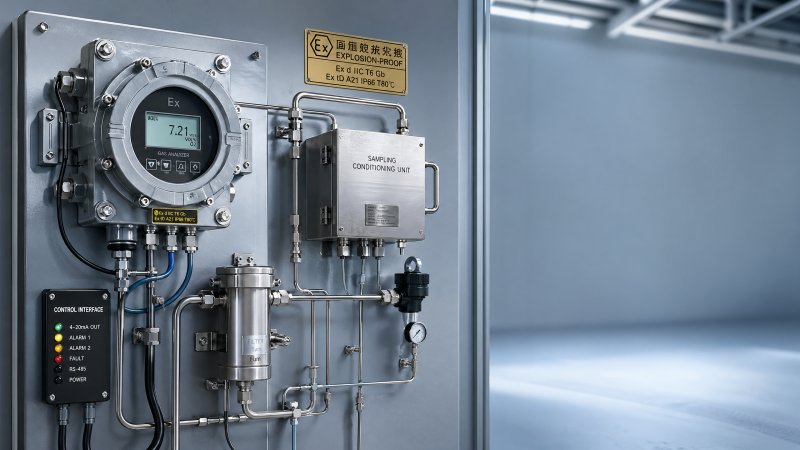
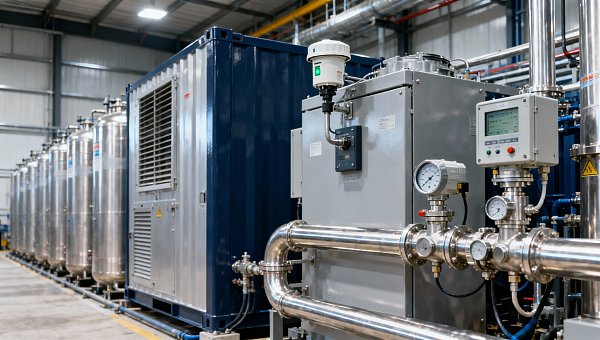
In practical terms, a complete analyzer package is rarely just one box. A typical system may include the analyzer core, explosion-proof housing, sampling system, filtration components, calibration accessories, signal output modules, local display, mounting hardware, and engineering documentation. In many industrial projects, these supporting items can represent 20% to 45% of the total purchase package before installation labor is even considered.
For hazardous industries such as refining, chemicals, energy, wastewater treatment, mining, and power generation, the Explosive Proof Gas Analyzer is often selected to monitor oxygen, combustible gases, toxic gases, or process composition in environments where standard analyzers cannot be safely deployed. That is why financial approval should start with system scope definition, not just unit price comparison. A low initial quote can become a high-cost asset if accessories, protection methods, and field adaptation were underestimated.
Core Cost Elements Behind the Equipment
The largest budget shifts usually come from how the analyzer is specified. A compact analyzer for a lightly corrosive indoor zone may fall into one budget category, while a heated sample system for an outdoor process unit with aggressive gases and low ambient temperatures can move the project into a much higher range. Delivery lead time can also vary significantly, often from 6 to 18 weeks depending on configuration complexity and component availability.
- Hazardous area certification and enclosure requirements can add substantial manufacturing and testing cost.
- Sampling and conditioning systems often determine reliability more than the analyzer sensor alone.
- Signal integration with DCS, PLC, SCADA, or plant historians may require extra interface modules and engineering hours.
- Service access, calibration frequency, and spare part strategy affect the total budget over 3 to 7 years.
From a budget control perspective, the Explosive Proof Gas Analyzer should be evaluated as a lifecycle instrument asset. In many plants, the first-year cost includes procurement, installation, commissioning, and operator training, while years 2 through 5 reveal the true economics through downtime risk, maintenance effort, calibration gas use, and replacement cycles for filters, pumps, or sensors.
Why Finance Teams Should Look Beyond Base Price
A finance approver typically needs budget predictability, depreciation clarity, and reduced change-order exposure. For this reason, the right question is not “What does the analyzer cost?” but “What operating and project variables will expand the approved budget by 10%, 25%, or more?” Once that lens is applied, hidden costs become easier to identify before purchase commitments are locked in.
Why the Instrumentation Industry Pays Close Attention to Total Budget
In modern instrumentation projects, analyzers are no longer isolated devices. They are part of wider systems that support industrial automation, digital monitoring, environmental compliance, and process optimization. An Explosive Proof Gas Analyzer may directly affect shutdown prevention, personnel protection, emission control, or product quality. Because of that, its financial impact spreads across capital expenditure, operating expenditure, and risk management.
For budget owners in manufacturing and utility environments, one important industry trend is the move from simple local indication to connected online analysis. That shift means the analyzer may need remote diagnostics, multiple analog outputs, digital communication, alarm relays, and cybersecurity-aware integration planning. Each additional function may appear minor in isolation, yet together they can expand the project budget by several thousand dollars or more in engineering and commissioning effort.
The instrumentation sector also faces stricter expectations around documentation, traceability, and lifecycle support. As a result, procurement packages often require factory testing records, wiring drawings, hazardous area labeling, material compatibility confirmation, and startup assistance. These are valuable cost items because they reduce installation errors and audit risk, but they should be recognized early instead of being treated as unexpected extras.
Industry Factors That Commonly Change Budget Assumptions
The following overview shows why similar analyzers can land in different cost bands depending on industrial conditions and project expectations.
This table highlights a key financial point: the Explosive Proof Gas Analyzer budget is shaped by operating context more than by product label alone. In many industrial settings, the same sensing principle can require different packaging and support infrastructure, creating cost differences that are operationally justified rather than commercially arbitrary.
For finance teams reviewing multiple quotations, alignment of scope is essential. One supplier may include calibration kits, purge components, and commissioning documentation, while another may list only the core analyzer. Without a normalized scope matrix, what appears to be a 15% savings can later become a higher total commitment after add-ons and site corrections.
What Impacts the Total Budget Most in Real Projects
Among all variables, five drivers usually have the greatest effect on total cost for an Explosive Proof Gas Analyzer: certification level, installation environment, sample conditioning, maintenance strategy, and systems integration. These drivers influence not only the invoice amount, but also lead time, installation risk, and expected service life. For a capital approval process, they deserve line-by-line review.
Certification level is often the first major lever. Hazardous area compliance can involve increased enclosure strength, heat dissipation control, special cable glands, documentation packages, and region-specific marking practices. If the project spans export markets or multinational standards alignment, review cycles may take several extra weeks and introduce incremental engineering cost. Even before site work begins, this can materially affect cash flow timing and project scheduling.
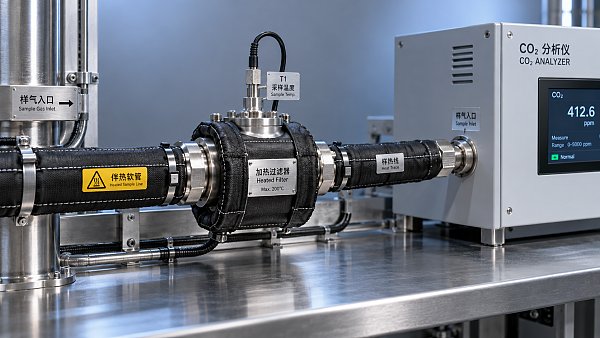
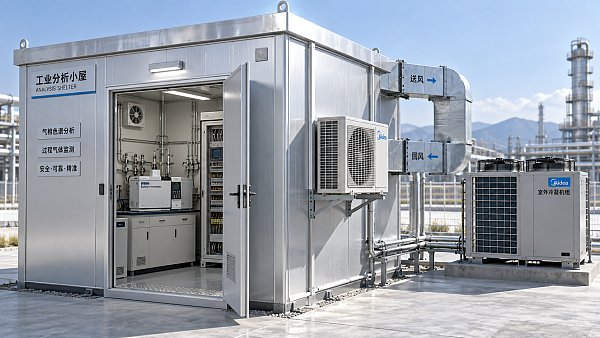
Installation environment is the second major lever. Outdoor mounting in temperatures from -20°C to 50°C, high humidity, coastal corrosion zones, vibration-prone skids, or washdown areas usually demands more robust materials and protection. These factors may also change the preferred installation method, such as analyzer shelter mounting, heated lines, or remote sample draw systems. Each adaptation improves reliability, but it also shifts the budget upward.
The Cost Drivers Finance Should Examine First
A practical way to review budget exposure is to separate direct purchase cost from project-side cost and ownership cost. The table below helps create that distinction.
For many operators, maintenance becomes the hidden cost center. If calibration is required monthly instead of quarterly, annual labor and consumables can rise sharply. If spare parts are site-specific and not standardized, inventory carrying cost increases as well. A more stable analyzer package may cost more upfront yet reduce ownership cost over a 3-year or 5-year period.
Sample Systems Often Decide the Real Economics
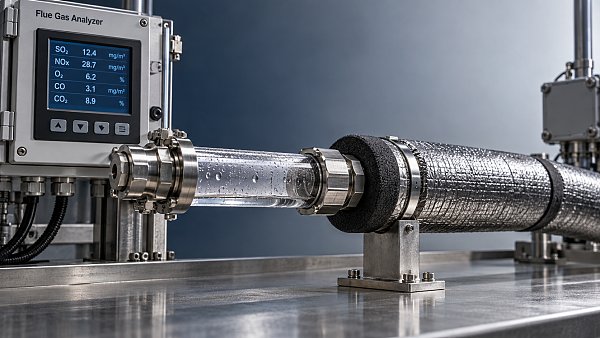
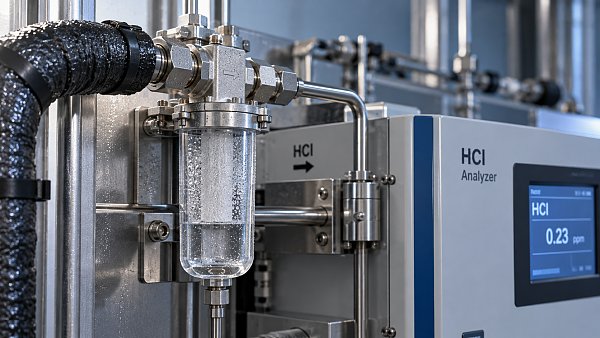
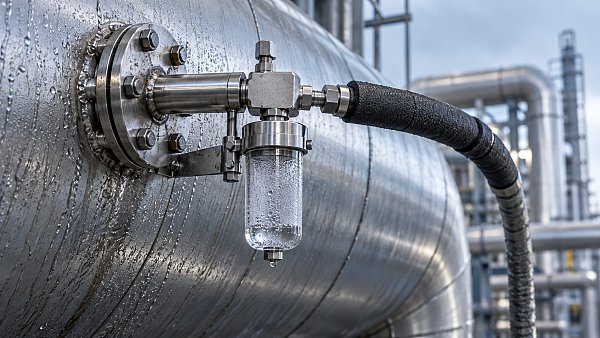
Finance teams sometimes focus on the analyzer cabinet and overlook the sampling path. In reality, poor sample handling is one of the most common reasons for inaccurate readings, maintenance burden, and premature component replacement. Filters, regulators, moisture control, heated lines, and condensate protection are not optional details in many applications; they are what allow the Explosive Proof Gas Analyzer to deliver dependable data with acceptable service intervals.
Application Value Across Industrial Scenarios
The value of an Explosive Proof Gas Analyzer is best understood by looking at the operational role it plays in different industrial environments. In process plants, it supports safe gas composition monitoring and can help reduce the chance of process deviation. In utilities and energy systems, it can support combustion control, emissions-related observation, or confined-area monitoring. In environmental and treatment facilities, it can improve visibility into hazardous gas conditions that affect both compliance and personnel safety.
For financial decision-makers, value is not limited to avoiding incidents. The analyzer also contributes to measurable control benefits such as fewer unplanned interventions, better operating continuity, lower investigation time after alarms, and more reliable records for audit or reporting purposes. When viewed over 12 to 36 months, these advantages often justify a more carefully specified system rather than the lowest short-term bid.
The instrumentation industry treats analyzers as data-producing assets, and that perspective is especially relevant in hazardous areas. If the analyzer output is stable, traceable, and integrated into control workflows, it becomes more than a safety device. It supports maintenance planning, trend analysis, and operational decision-making, all of which have budget implications that finance teams can appreciate.
Typical Scenarios and Budget Relevance
Different use cases create different value profiles. The following classification helps connect application type with budget logic.
This comparison shows that the same Explosive Proof Gas Analyzer category can support very different business outcomes. A finance reviewer should therefore ask which cost components directly support the intended use case, and which are optional features with limited economic benefit in that setting.
Practical Evaluation Guidance for Financial Approvers
A sound approval process for an Explosive Proof Gas Analyzer should combine technical validation with budget discipline. The objective is not to minimize spend at any cost, but to ensure the approved configuration is aligned with safety class, process conditions, service interval expectations, and integration scope. In most industrial organizations, this means finance should request a normalized technical-commercial review before release of purchase order.
One useful approach is to evaluate the analyzer in three layers: acquisition, deployment, and ownership. Acquisition covers the supplied hardware and documentation. Deployment includes installation materials, control system connection, testing, and startup. Ownership includes calibration, spare parts, preventive maintenance, and replacement risk over the expected service period. Looking only at layer one can create approval blind spots.
It is also wise to compare expected service effort. If one system needs quarterly intervention and another can operate for 6 to 12 months between major maintenance actions, the labor impact may become meaningful across multiple sites. For organizations managing 5, 10, or more analyzer points, standardization can create further savings in training, spare parts, and troubleshooting response.
Approval Checklist Before Budget Release
- Confirm hazardous area classification and required certification scope for the actual installation point.
- Verify whether the quotation includes sample conditioning, calibration accessories, mounting hardware, and documentation.
- Check environmental conditions such as ambient temperature, humidity, corrosive exposure, and vibration level.
- Review integration needs, including output signals, communication protocol, alarms, and control system mapping.
- Estimate annual maintenance frequency, consumable cost, and spare part strategy for at least 3 years.
- Ask for realistic lead time, commissioning support scope, and any exclusions that may trigger change orders.
This checklist reduces the chance of approving an incomplete package. It also helps procurement and engineering teams speak the same language when discussing the Explosive Proof Gas Analyzer budget. In many cases, early clarification of 6 to 8 specification points can prevent later project expansion that is much harder to absorb financially.
Why Early Clarification Protects Budget Accuracy
The earlier the project team identifies area classification, gas characteristics, and support expectations, the more accurately the supplier can define the package. That reduces rework, shortens approval cycles, and improves budget confidence. For finance teams responsible for cash planning and capital governance, this is often more valuable than negotiating a narrow discount on an incomplete specification.
Why Choose Us for Explosive Proof Gas Analyzer Support
In the instrumentation industry, successful analyzer projects depend on more than supplying hardware. They require clear understanding of measurement purpose, hazardous location needs, environmental constraints, and downstream integration. We support customers by helping translate these technical factors into practical budget clarity, so financial approvers can evaluate an Explosive Proof Gas Analyzer with fewer assumptions and better scope visibility.
If you are reviewing a new project or replacing an existing system, we can assist with parameter confirmation, product selection, configuration review, expected delivery window, installation considerations, certification-related questions, and customized solution discussions. We can also help you compare included and excluded items across supplier quotations to reduce the risk of hidden project costs.
Contact us to discuss your gas type, operating environment, required outputs, maintenance expectations, and target budget range. Whether you need support for sample system definition, application matching, quotation communication, or lead-time planning, we can help you build a more accurate and decision-ready Explosive Proof Gas Analyzer proposal.
Recommended for You
 How to verify a trusted manufacturer's production capacityTrusted Manufacturer capacity claims need proof. Learn how to verify production plans, bottlenecks, quality records and supply risks before you place an order.
 How to choose an emission controller for an industrial boilerChoose the right emission controller for your industrial boiler. Compare technologies, operating conditions, compliance needs, and costs.
 How to choose composition analyzers for low-concentration measurementsChoose composition analyzers with confidence. Discover how quantification limits, sample handling and matrix effects shape reliable low-concentration measurements.
 How does online analysis compare with laboratory testing for water quality monitoring?Online analysis vs. laboratory testing: compare speed, accuracy, costs, and compliance to find the right water quality monitoring strategy.
 How to choose the right detection range for a custom gas analyzerChoose the right custom gas analyzer detection range with practical guidance on accuracy, exposure limits, calibration, and supplier evaluation.
 How does multi component monitoring detect gases in stack emissions?Discover how multi component monitoring detects stack gases, manages interference and supports reliable emissions reporting. Explore key CEMS selection factors.
 How bright should an industrial monitor be for outdoor use?Choosing an outdoor industrial monitor? Learn why 1,000 nits is a starting point and how glare, contrast, and heat affect sunlight readability.
 How does water vapor affect infrared gas analyzers?Infrared gas analyzers can be affected by humidity, condensation and spectral interference. Learn how to protect sample integrity and achieve reliable results.
 How to reduce customer support response timesReduce Customer Support response times with actionable tips for reporting equipment faults, choosing the right channel, and getting expert help faster.
 How to choose a low range analyzer for trace-level measurementsChoose the right low range analyzer for trace-level measurements. Compare detection limits, sampling, calibration and support to make a confident decision.
 How to choose combustible gas detectors for a specific gasChoose combustible gas detectors with confidence. Compare sensor technologies, gas response, calibration, placement, and certification for your application.
 How to choose an air quality analyzer for the pollutants you need to measureChoose an air quality analyzer with confidence. Compare pollutant measurement methods, sampling, accuracy and calibration to find the right fit for your needs.
 How to choose industrial metrology tools for tight tolerancesChoose industrial metrology tools for tight tolerances with confidence. Compare uncertainty, calibration, tool types, and costs to reduce inspection risk.
 How moisture affects fixed analyzer accuracy in stack gas monitoringImprove fixed analyzer accuracy in stack gas monitoring. Discover how moisture causes dilution, interference, and sample loss—and learn practical ways to protect emissions data.
 How does production line speed affect in-line measurement accuracy?Discover how production line speed affects in-line measurement accuracy. Explore sensor response, sampling, and timing to boost throughput without compromising quality.
 How condensation affects HCl concentration analyzer accuracyHCl concentration analyzer accuracy can suffer when condensation traps HCl. Learn how to spot sampling losses, prevent low readings, and improve measurement reliability.
 How does cross-interference affect multi-component gas analyzers?How does cross-interference affect multi component gas analyzers? Explore measurement errors, compensation limits, and validation tips to choose the right system for your process.
 How does temperature affect high-accuracy sensor performance?Explore how temperature affects high accuracy sensor performance. Learn to reduce thermal drift, evaluate compensation, and select the right sensor for reliable measurements.
 Can a C4H8O concentration analyzer distinguish between isomers?Can a C4H8O concentration analyzer distinguish isomers? Compare GC, FTIR and MS methods, uncover selectivity limits, and learn what to validate before choosing your instrument.
 How to identify a reliable supplier using on-time delivery recordsIdentify a Reliable Supplier by verifying on-time delivery records, original commitments, and complete shipments. Learn practical checks to reduce purchasing risk and protect your project schedule.
 How sensitive should a portable hydrogen analyzer be for lab use?Choose a portable hydrogen analyzer for laboratory use with the right quantification limit, accuracy, and range. Learn how to verify performance and avoid costly buying mistakes.
 How to set industrial calibration intervals based on equipment riskSet industrial calibration intervals based on equipment risk, drift, and as-found data. Learn when to shorten or extend schedules to improve reliability and avoid unnecessary costs.
 How to choose electrochemical analyzers for low-current measurementsCompare electrochemical analyzers for precise low-current measurements. Learn how noise, leakage, bandwidth, and real-cell testing help you choose the right instrument.
 What tolerance does a custom gas mixture need for calibration?Choose the right custom gas tolerance for calibration. Learn how blending tolerance, certified uncertainty, and stability affect accuracy—and avoid paying for precision you don’t need.
 How condensation affects stack detector readings in wet flue gasStack detector readings can drift when wet flue gas condenses. Learn how to identify moisture interference, prevent sample losses, and improve emissions monitoring reliability.
 How to prevent condensation in a CO2 analyzer sampling systemPrevent condensation in your CO2 analyzer sampling system. Learn how to control dew point, eliminate cold spots, and manage moisture for reliable readings and fewer costly disruptions.
 How to verify accuracy claims for industrial quality analyzersVerify accuracy claims for industrial quality analyzers with calibration checks, independent testing, and clear acceptance criteria. Learn how to reduce risk and buy with confidence.
 How to calculate cooling loads for an industrial analyzer shelterSize industrial analyzer shelter cooling with confidence. Learn to calculate equipment heat, solar gains, and ventilation loads, then select HVAC capacity for reliable analyzer performance.
 Hydrogen Analyzers for Energy Storage: Purity Monitoring vs. Leak DetectionChoosing a hydrogen analyzer for energy storage systems? Compare purity monitoring and leak detection to select the right sensors, improve safety, and protect fuel cell performance.
 NH3 Monitoring in Fertilizer Plants: Where Should Leak Analyzers Be Installed?NH3 analyzer for fertilizer production: discover where to place leak detectors around storage, compressors, and loading areas to reduce blind spots and improve early warning.
 Diesel Engine NOx Analyzers: Response Time and NO2 Conversion ExplainedChoosing a NOX analyzer for diesel engines? Learn how response time, NO2 conversion, and sampling design affect accuracy—and make a smarter, evidence-based purchase.
 SO2 Analyzers for Smelter Emissions: Sampling Hot, Dust-Laden Flue GasSelect an SO2 analyzer for smelting industry applications. Discover how to handle hot, dust-laden flue gas, prevent sample losses, and achieve reliable emissions monitoring.


Search Categories
Search Categories
- Smart Meters & Power Quality
- Transformer Gas Analyzers
- BESS Thermal Runaway Detectors
- Energy, Power & Smart Grid Monitoring
- Optical Profilers & CMM
- Ultrasonic & X-Ray NDT
- Calibration Standards
- Precision Metrology & NDT
- Water Quality Analyzers
- CEMS & VOCs Monitors
- Price Trends
- Import & Export Updates
- Market Trends
- Industry News
- Industry Insights
Latest Article
- How to verify a trusted manufacturer's production capacityTrusted Manufacturer capacity claims need proof. Learn how to verify production plans, bottlenecks, quality records and supply risks before you place an order.Posted by:
- How to choose an emission controller for an industrial boilerChoose the right emission controller for your industrial boiler. Compare technologies, operating conditions, compliance needs, and costs.Posted by:
- How to choose composition analyzers for low-concentration measurementsChoose composition analyzers with confidence. Discover how quantification limits, sample handling and matrix effects shape reliable low-concentration measurements.Posted by:
Please give us a message