Process Analyzer Service Contracts Can Reduce Unplanned Shutdowns


For business evaluators in industrial operations, a reliable process analyzer service contract is more than a maintenance expense—it is a practical strategy to reduce unplanned shutdowns, protect asset performance, and improve cost predictability. By ensuring timely calibration, diagnostics, and technical support, process analyzer programs help facilities maintain compliance, stabilize production, and make smarter long-term investment decisions.
Why do process analyzer service contracts matter so much in shutdown prevention?
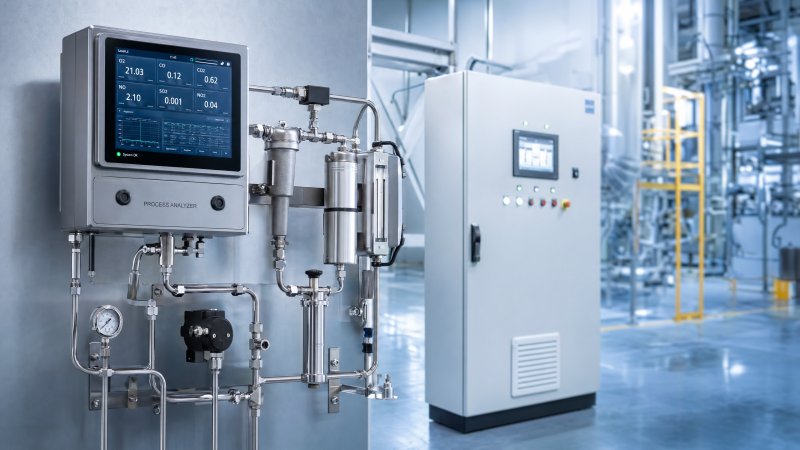
In the instrumentation industry, a process analyzer is rarely an isolated device. It often sits inside a broader measurement and control chain that includes sampling systems, transmitters, valves, control logic, data interfaces, and compliance reporting. When that chain weakens, the commercial impact can appear quickly through lost production hours, unstable quality, off-spec output, or delayed maintenance decisions.
For business evaluators, the key issue is not simply whether a process analyzer can run today. The real question is whether the analyzer can continue delivering reliable readings over 6 months, 12 months, and beyond, especially in demanding sectors such as power generation, industrial manufacturing, environmental monitoring, laboratory-linked production, and automation control.
A service contract creates structure around that risk. Instead of reacting only after a failure, facilities can schedule inspection intervals, define spare-part responsibilities, set calibration frequency, and clarify remote or on-site response expectations. In practice, that changes maintenance from a reactive event into a managed operating process with 3 core goals: uptime, measurement integrity, and cost visibility.
This matters because many unplanned shutdowns do not start with a catastrophic breakdown. They begin with drift, contamination, sample conditioning problems, sensor aging, communication faults, or missed calibration windows. If these issues are caught every month, every quarter, or at another planned service point, shutdown risk is usually easier to control than when the site waits for a full analyzer failure.
What business evaluators should look at first
- Whether the process analyzer is critical to safety, emissions, product quality, or custody-related decisions.
- How long the facility can operate if the analyzer is offline for 8 hours, 24 hours, or 72 hours.
- Whether internal staff can perform calibration, diagnostics, and parts replacement without vendor support.
- How service response terms align with planned maintenance cycles, production peaks, and compliance deadlines.
In cross-industry operations, these questions are especially important because analyzer fleets often include gas analyzers, liquid composition analyzers, online monitors, and lab-connected systems. A good contract should fit that operational diversity rather than treat all instruments as if they carry the same service risk.
Which failure points usually lead to unplanned shutdowns?
A process analyzer may fail because of the instrument itself, but just as often the cause sits around it. Sample line blockage, moisture ingress, thermal instability, improper calibration gas handling, dirty filters, unstable power, or outdated firmware can all degrade performance. For evaluators, understanding this broader failure map is essential when comparing service contract value against a simple break-fix approach.
In many plants, the most expensive outage is not the analyzer replacement cost. It is the chain reaction. One analyzer problem can trigger manual verification, temporary derating, operator intervention, delayed reporting, and in some cases a process trip. That is why contract design should cover the full service scope, not just sensor repair.
Business evaluators should also distinguish between high-frequency service issues and low-frequency but high-impact risks. High-frequency issues include routine calibration deviation and consumable replacement. High-impact risks include sample system damage, noncompliant reporting, or analyzer downtime during critical production windows. The right service model addresses both types through planned inspections and response escalation paths.
The table below helps translate common analyzer failure points into business-level assessment criteria for procurement and contract review.
This framework is useful because it moves the process analyzer discussion away from unit price alone. It shows how contract scope affects production continuity, compliance confidence, and maintenance planning across sectors where monitoring accuracy supports automation and digital operations.
A practical way to classify service risk
Tier 1: Critical analyzers
These support safety, emissions, continuous process control, or high-value product quality. They typically need tighter response expectations, documented service routines, and more frequent verification, often every 1–3 months depending on process conditions.
Tier 2: Important analyzers
These affect production efficiency, maintenance optimization, or internal reporting. They may be suitable for quarterly or semiannual service if process exposure is moderate and plant staff can handle first-line troubleshooting.
Tier 3: Support analyzers
These are less likely to force an immediate shutdown but still influence decision quality. A lighter service package may work, provided the contract still includes basic health checks, parts guidance, and escalation support.
How should you compare service contract models for a process analyzer?
Not every service contract delivers the same value. Some focus only on annual inspection. Others include preventive maintenance, calibration support, remote diagnostics, training, spare-parts planning, and defined on-site response windows. For a business evaluator, the most important comparison is whether the contract matches the financial consequence of downtime.
A low-cost plan may look attractive in budget review, but it can become expensive if it excludes critical consumables, emergency support, or travel time. In contrast, a broader agreement may reduce total cost exposure by limiting production interruption, improving maintenance planning, and extending analyzer life through timely service actions.
The most useful comparison method is to review 4 dimensions together: scope, response, responsibility, and documentation. If one of these is vague, the contract may be difficult to enforce when a shutdown risk appears.
The following comparison table can support internal review when evaluating process analyzer service options across manufacturing, energy, environmental, and automation-focused sites.
For many facilities, the preventive maintenance model is the most balanced starting point. It reduces hidden operating risk without requiring the highest service spend. However, if a process analyzer directly supports continuous production, emissions monitoring, or automated quality control, a more comprehensive contract often makes stronger commercial sense.
4 contract clauses that deserve extra attention
- Response window definition: Clarify whether support means phone response in 2–4 hours, remote login in the same day, or on-site arrival within 24–72 hours.
- Calibration responsibility: Confirm who provides standards, gases, traceability records, and acceptance criteria after each service event.
- Consumables and spare parts: Identify what is included, what is excluded, and what lead times apply to common wear components.
- Documentation and escalation: Require service reports, recommendations, unresolved issue logs, and a defined path for repeated analyzer faults.
These clauses directly affect budget predictability. They also improve internal accountability when procurement, operations, engineering, and maintenance teams need a shared view of service value.
What should be included in a practical procurement and implementation plan?
A strong process analyzer contract does not begin with the vendor quotation. It begins with an internal service map. Business evaluators should first document analyzer quantity, criticality, current fault history, calibration frequency, environmental conditions, and internal maintenance capability. Without that baseline, comparing proposals becomes difficult and often misleading.
In integrated industrial settings, service design should also reflect how instruments support modernization goals. Online analyzers feed automation systems, compliance workflows, quality programs, and digital monitoring dashboards. If service terms fail to protect data continuity, the analyzer may still function physically while the business loses operational value.
A typical implementation plan can be structured in 4 steps over 2–6 weeks, depending on fleet size and site access. The process is usually faster for a single analyzer and more detailed for multi-site contracts with mixed technologies.
The table below summarizes a practical procurement checklist for evaluating process analyzer service contracts in broad industrial applications.
This checklist is especially useful for cross-functional review. Procurement may focus on contract cost, maintenance on workload, operations on uptime, and quality teams on records. A structured evaluation matrix helps align these priorities before vendor selection.
Suggested implementation flow
- Step 1: Inventory the analyzer fleet and separate critical from noncritical assets within 5–10 working days.
- Step 2: Define service scope, response expectations, and documentation needs for each asset group.
- Step 3: Compare proposals using total support value, not just annual contract price.
- Step 4: Launch with acceptance criteria, service calendar, escalation contacts, and a 6–12 month review point.
When this process is documented early, service contracts become easier to defend internally because they are linked to measurable operating outcomes rather than generic maintenance language.
How do compliance, lifecycle cost, and future readiness affect the decision?
For many facilities, process analyzer performance is tied to more than equipment uptime. It also affects traceability, audit readiness, and digital reliability. Even when a site is not bound to one specific standard, service records should support general good practice in calibration control, safe maintenance, and documented change management. That is especially relevant in environmental monitoring, medical-related testing environments, and quality-driven production lines.
Lifecycle cost should be assessed over at least 12–36 months, not just the first contract year. A process analyzer that receives regular preventive care may avoid emergency visits, rushed parts orders, and prolonged troubleshooting. In addition, properly maintained analyzers often provide more stable data for automation and intelligent upgrade programs, which matters as industrial systems become more interconnected.
A common mistake is to compare a service contract only against doing nothing. The better comparison is between planned service, break-fix support, and partial in-house maintenance. Each option has a different cost profile, staffing requirement, and operational risk. Business evaluators should request a transparent scope so that exclusions do not become hidden costs later.
Looking ahead, service contracts are becoming more valuable because analyzers are increasingly part of digital transformation initiatives. Remote diagnostics, trend analysis, and better integration with control and monitoring systems can help detect degradation earlier. That does not eliminate hardware issues, but it can shorten fault isolation time and improve maintenance timing.
FAQ for business evaluators
How often should a process analyzer be serviced?
There is no single interval for every process analyzer. High-criticality systems may need monthly or quarterly attention, while lower-risk installations may fit semiannual or annual plans. The right frequency depends on process conditions, contamination exposure, drift behavior, regulatory expectations, and whether the analyzer directly affects shutdown decisions.
Is a service contract still necessary if our maintenance team is experienced?
Often yes, especially when analyzers involve specialized sensing elements, software tools, calibration methods, or sample systems. Internal teams may handle daily inspection and first-level troubleshooting, while the service provider supports deeper diagnostics, periodic calibration review, lifecycle planning, and hard-to-source spare components.
What is the biggest contract mistake during procurement?
The most common mistake is accepting broad service language without defining deliverables. If response time, consumables, reporting, calibration scope, or excluded components are not written clearly, the contract may look complete but fail during a real process analyzer fault.
Can a contract really reduce unplanned shutdowns?
It can reduce the risk significantly when it includes preventive inspections, calibration control, diagnostics, and escalation support. A contract does not guarantee zero downtime, but it improves the chance of catching drift, contamination, or component wear before these issues force a process interruption.
Why choose us for process analyzer service planning and quotation support?
We understand that business evaluators need more than a maintenance brochure. You need a clear basis for comparing service scope, cost exposure, analyzer criticality, and implementation feasibility across industrial, energy, environmental, laboratory, construction, and automation-related applications. That is where structured instrumentation expertise becomes commercially useful.
Our support approach focuses on practical decision inputs: process analyzer asset review, service scope clarification, calibration and diagnostics planning, spare-parts logic, response expectation mapping, and contract alignment with production and compliance needs. This helps procurement teams avoid under-scoped agreements and helps operations teams reduce avoidable shutdown risk.
If you are reviewing a new process analyzer contract or reassessing an existing one, you can contact us for specific discussion on 6 key topics: parameter confirmation, analyzer type matching, service interval planning, delivery and response timeline, compliance documentation needs, and quotation comparison. We can also help structure a customized support plan for single-site or multi-site instrument fleets.
Share your analyzer list, application scenario, current pain points, and expected support window. We can help you evaluate whether inspection-only, preventive maintenance, or a broader uptime-focused service model is the better fit for your budget, risk tolerance, and long-term operating goals.
Recommended for You
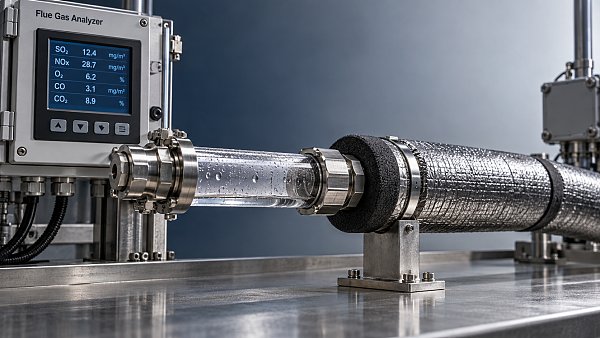
 How moisture affects fixed analyzer accuracy in stack gas monitoringImprove fixed analyzer accuracy in stack gas monitoring. Discover how moisture causes dilution, interference, and sample loss—and learn practical ways to protect emissions data.
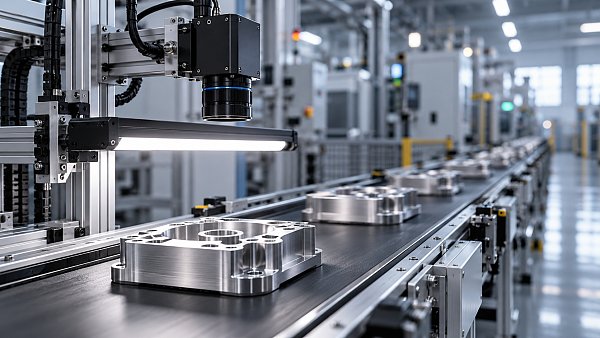
 How does production line speed affect in-line measurement accuracy?Discover how production line speed affects in-line measurement accuracy. Explore sensor response, sampling, and timing to boost throughput without compromising quality.
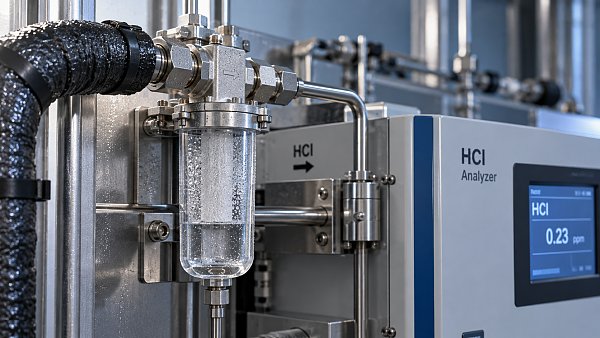
 How condensation affects HCl concentration analyzer accuracyHCl concentration analyzer accuracy can suffer when condensation traps HCl. Learn how to spot sampling losses, prevent low readings, and improve measurement reliability.
 How does cross-interference affect multi-component gas analyzers?How does cross-interference affect multi component gas analyzers? Explore measurement errors, compensation limits, and validation tips to choose the right system for your process.
 How does temperature affect high-accuracy sensor performance?Explore how temperature affects high accuracy sensor performance. Learn to reduce thermal drift, evaluate compensation, and select the right sensor for reliable measurements.
 Can a C4H8O concentration analyzer distinguish between isomers?Can a C4H8O concentration analyzer distinguish isomers? Compare GC, FTIR and MS methods, uncover selectivity limits, and learn what to validate before choosing your instrument.
 How to identify a reliable supplier using on-time delivery recordsIdentify a Reliable Supplier by verifying on-time delivery records, original commitments, and complete shipments. Learn practical checks to reduce purchasing risk and protect your project schedule.
 How sensitive should a portable hydrogen analyzer be for lab use?Choose a portable hydrogen analyzer for laboratory use with the right quantification limit, accuracy, and range. Learn how to verify performance and avoid costly buying mistakes.
 How to set industrial calibration intervals based on equipment riskSet industrial calibration intervals based on equipment risk, drift, and as-found data. Learn when to shorten or extend schedules to improve reliability and avoid unnecessary costs.
 How to choose electrochemical analyzers for low-current measurementsCompare electrochemical analyzers for precise low-current measurements. Learn how noise, leakage, bandwidth, and real-cell testing help you choose the right instrument.
 What tolerance does a custom gas mixture need for calibration?Choose the right custom gas tolerance for calibration. Learn how blending tolerance, certified uncertainty, and stability affect accuracy—and avoid paying for precision you don’t need.
 How condensation affects stack detector readings in wet flue gasStack detector readings can drift when wet flue gas condenses. Learn how to identify moisture interference, prevent sample losses, and improve emissions monitoring reliability.
 How to prevent condensation in a CO2 analyzer sampling systemPrevent condensation in your CO2 analyzer sampling system. Learn how to control dew point, eliminate cold spots, and manage moisture for reliable readings and fewer costly disruptions.
 How to verify accuracy claims for industrial quality analyzersVerify accuracy claims for industrial quality analyzers with calibration checks, independent testing, and clear acceptance criteria. Learn how to reduce risk and buy with confidence.
 How to calculate cooling loads for an industrial analyzer shelterSize industrial analyzer shelter cooling with confidence. Learn to calculate equipment heat, solar gains, and ventilation loads, then select HVAC capacity for reliable analyzer performance.
 Hydrogen Analyzers for Energy Storage: Purity Monitoring vs. Leak DetectionChoosing a hydrogen analyzer for energy storage systems? Compare purity monitoring and leak detection to select the right sensors, improve safety, and protect fuel cell performance.
 NH3 Monitoring in Fertilizer Plants: Where Should Leak Analyzers Be Installed?NH3 analyzer for fertilizer production: discover where to place leak detectors around storage, compressors, and loading areas to reduce blind spots and improve early warning.
 Diesel Engine NOx Analyzers: Response Time and NO2 Conversion ExplainedChoosing a NOX analyzer for diesel engines? Learn how response time, NO2 conversion, and sampling design affect accuracy—and make a smarter, evidence-based purchase.
 SO2 Analyzers for Smelter Emissions: Sampling Hot, Dust-Laden Flue GasSelect an SO2 analyzer for smelting industry applications. Discover how to handle hot, dust-laden flue gas, prevent sample losses, and achieve reliable emissions monitoring.
 Unstable CH4 Readings in Biogas Monitoring? Check Moisture and Sample FlowCH4 analyzer for biogas monitoring giving unstable readings? Discover how moisture, sample flow, and pressure checks help pinpoint faults and restore reliable methane measurements.
 Buying a CO2 Analyzer for Brewery Gas Recovery: Costs Beyond the Purchase PriceBuying a CO2 analyzer for brewery applications? Compare sampling, installation, calibration, and downtime costs to uncover hidden expenses and make a smarter gas recovery investment.
 Where to Place CO Analyzers for Effective Parking Garage VentilationOptimize your CO analyzer for parking garage ventilation with practical placement tips. Learn how sensor height, airflow, and zone coverage support timely detection and effective fan control.
 NDIR vs. FTIR Gas Analyzers: Which Fits Your Environmental Research?Find the right infrared gas analyzer for environmental research. Compare NDIR vs. FTIR on sensitivity, gas coverage, sampling needs, and cost to choose confidently for your study.
 Oxygen Analyzers for Diving: Calibration Checks Before Nitrox BlendingUsing an oxygen analyzer for diving applications? Discover essential calibration, sensor, and sampling checks before nitrox blending to support reliable readings.
 How Paramagnetic Oxygen Analyzers Work and Why Sample Pressure MattersLearn how a paramagnetic oxygen analyzer works, why sample pressure affects accuracy, and what to check in compensation and calibration before choosing your system.
 How Much Does a Complete CEMS Integration Project Typically Cost?How much does a complete CEMS integration project typically cost? Explore budget ranges, hidden installation costs, and compliance needs to compare quotes and plan confidently.
 What Is the Typical Response Time for Industrial Air Monitors?What is the typical response time for industrial air monitors? Explore T90, sampling delays, and alarm settings to compare performance and choose the right monitor with confidence.
 Do Regulatory Monitoring Systems Need Third-Party Certification?Do regulatory monitoring systems need third-party certification? Learn when it is required, what certificates prove, and how to verify compliance before buying.
 How Do You Choose Wired or Wireless for Stack Monitoring?Learn how to choose between wired and wireless for stack monitoring. Compare reliability, lifecycle costs, and data recovery to find the right CEMS setup for your site.
 What Happens When Combustible Gas Sensor Calibration Is Overdue?What happens if combustible gas sensor is not recalibrated on time? Discover the risks of inaccurate readings and missed alarms, plus steps to restore reliable protection.
 Can One Multi-Gas Detector Replace Four Separate Analyzers?Find out: can a single multi-gas detector replace four separate analyzers? Compare accuracy, safety, compliance, and lifetime costs to make a confident buying decision.
 Industrial Safety vs. Emission Monitoring: What Are the Differences?What are the main differences between industrial safety and emission monitoring? Compare goals, sensors, response times, and compliance needs to choose the right systems for your facility.

Search Categories
Search Categories
- Smart Meters & Power Quality
- Transformer Gas Analyzers
- BESS Thermal Runaway Detectors
- Energy, Power & Smart Grid Monitoring
- Optical Profilers & CMM
- Ultrasonic & X-Ray NDT
- Calibration Standards
- Precision Metrology & NDT
- Water Quality Analyzers
- CEMS & VOCs Monitors
- Price Trends
- Import & Export Updates
- Market Trends
- Industry News
- Industry Insights
Latest Article
- How moisture affects fixed analyzer accuracy in stack gas monitoringImprove fixed analyzer accuracy in stack gas monitoring. Discover how moisture causes dilution, interference, and sample loss—and learn practical ways to protect emissions data.Posted by:
- How does production line speed affect in-line measurement accuracy?Discover how production line speed affects in-line measurement accuracy. Explore sensor response, sampling, and timing to boost throughput without compromising quality.Posted by:
- How condensation affects HCl concentration analyzer accuracyHCl concentration analyzer accuracy can suffer when condensation traps HCl. Learn how to spot sampling losses, prevent low readings, and improve measurement reliability.Posted by:
Please give us a message