Safety Monitoring Analyzer Installations Often Miss Ventilation Effects


Many safety monitoring analyzer installations perform well on paper but fail in real operating conditions because ventilation effects are underestimated. For users and operators, poor airflow planning can distort readings, delay alarms, and weaken overall safety protection. Understanding how ventilation interacts with analyzer placement is essential to achieving accurate monitoring, stable performance, and reliable response in demanding industrial environments.
Why does ventilation matter so much for a safety monitoring analyzer?
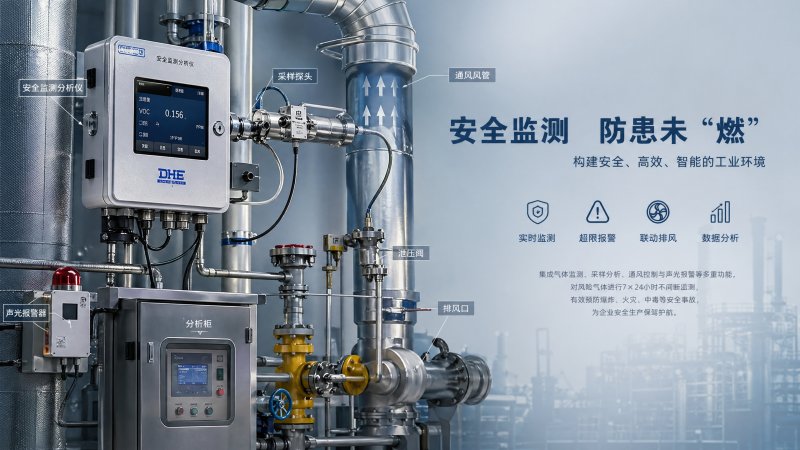
A safety monitoring analyzer is expected to detect process changes, gas leaks, hazardous concentrations, or abnormal environmental conditions before they become dangerous. In practice, however, the analyzer only sees what actually reaches its sensor, sampling point, or measurement chamber. If ventilation pushes contaminated air away too quickly, dilutes it before detection, or creates dead zones where gas accumulates outside the analyzer’s reach, the device may report normal values while the surrounding area is already moving toward risk.
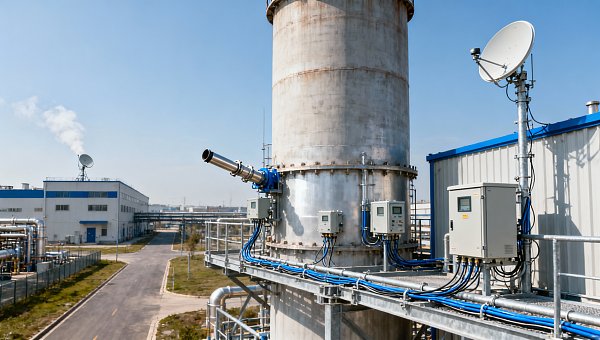
This problem is common across the instrumentation industry because monitoring equipment is often selected correctly but installed according to mechanical convenience rather than airflow behavior. A unit mounted 2 to 5 meters from a likely leak point may appear acceptable in a layout drawing, yet a supply fan, exhaust duct, open shutter, or process enclosure can completely change gas travel direction. For users and operators, that means installation quality is not just about wiring, power, and calibration. It also depends on how air moves every minute of operation.
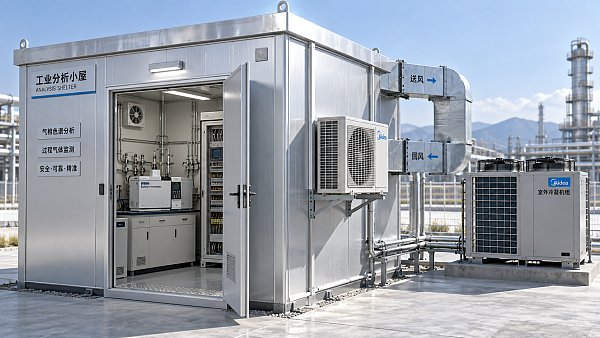
Ventilation affects more than gas concentration. It can influence sensor response time, sample transport delay, cross-sensitivity exposure, condensation risk, and maintenance frequency. In enclosed skids, shelters, analyzer houses, battery rooms, laboratories, and process buildings, air exchange rates may vary from 6 to 20 air changes per hour depending on design intent. A safety monitoring analyzer that performs well in still air can behave very differently under continuous forced ventilation.
What can go wrong when airflow is ignored?
The most common failure is delayed detection. A hazardous release may occur, but the air stream carries it toward an exhaust point instead of across the sensor. In other cases, turbulence creates unstable readings, so operators see fluctuating values that are hard to interpret. False confidence is especially dangerous because the analyzer seems healthy, the display looks normal, and routine bump tests may still pass.
- Dilution by supply air can reduce the measured concentration below alarm thresholds even when a local hazard exists.
- Dead spaces behind equipment, cable trays, or structural steel can trap heavier-than-air gases outside the analyzer’s effective zone.
- High-velocity streams may cool, dry, or contaminate the sensing area, affecting stability and shortening maintenance intervals from 6 months to 1 to 3 months.
- Sample line systems can show lag times of 10 to 60 seconds or more if routing and extraction points are not matched to actual airflow conditions.
For operators, the key lesson is simple: the performance of a safety monitoring analyzer cannot be judged only by instrument specification. It must be judged by the combined behavior of sensor technology, ventilation pattern, and installation geometry.
Which installation scenarios are most likely to miss ventilation effects?
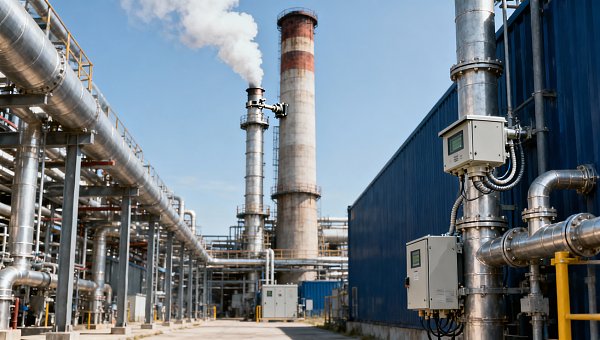
Ventilation-related errors are especially likely in mixed-use industrial spaces where process safety, equipment cooling, and personnel comfort all compete. This includes analyzer shelters, compressor houses, chemical dosing rooms, boiler areas, storage enclosures, wastewater treatment stations, and indoor process skids. In these environments, a safety monitoring analyzer may be positioned by structural availability while ventilation is designed by a separate team with different priorities.
The highest-risk situations usually involve either strong forced airflow or poorly understood natural airflow. For example, heavy gases can settle near floor level when air movement is weak, while lighter gases can collect near roof structures or beam pockets. Yet many installations still place all devices at one standard height, such as 1.5 to 2 meters, without confirming gas density, release behavior, or exhaust direction.
Temporary operating modes also matter. During startup, purge cycles, maintenance ventilation, seasonal door opening, or emergency extraction, airflow may be very different from normal production conditions. A safety monitoring analyzer positioned for steady-state operation can underperform when process risk is actually higher. That is why operators should review monitoring points against at least three conditions: normal running, maintenance mode, and upset or leak scenarios.
What are typical high-risk locations?
The table below summarizes common locations where ventilation effects frequently reduce the practical value of a safety monitoring analyzer. It can be used as a quick field review tool during installation checks or upgrade planning.
These examples show that placement should follow release path and airflow path together. If either factor is missing from the review, the safety monitoring analyzer may be technically correct but operationally weak.
How should operators check the site before trusting the readings?
A practical site check does not always require advanced simulation. Operators can start with simple observation and recorded operating patterns. Smoke visualization, portable gas tracing, fan on-off comparison, and trend review during shift changes can reveal whether the analyzer location actually sees the expected air mass.
- Identify the likely release points, including flanges, valves, seals, drains, vents, and sample conditioning components.
- Observe airflow during at least 2 to 3 operating states, not only during stable production.
- Compare sensor height with gas density behavior and local obstructions.
- Review whether the nearest exhaust opening removes contaminants before they pass the monitoring point.
- Check whether maintenance access is practical; unreachable sensors are often poorly cleaned and poorly calibrated.
This operator-led verification is valuable because installation drawings rarely show micro-airflow effects around skids, wall corners, pipe racks, or fan discharges.
How can users judge whether a safety monitoring analyzer is installed in the right place?
The best location is not always the nearest wall, the easiest cable route, or the highest visible position. Users should judge installation quality by asking whether the analyzer can detect the hazard in a realistic time window. In many industrial applications, a response difference of 15 to 30 seconds can matter, especially in confined spaces, enclosed machinery rooms, or process areas with fast release dispersion.
Good placement usually balances five factors: source proximity, airflow path, gas density, maintenance accessibility, and interference avoidance. A safety monitoring analyzer mounted too close to process heat, washdown spray, or dust discharge may suffer nuisance problems even if it is close to the risk source. Conversely, a very protected location may be too disconnected from the hazard to detect it promptly.
Users should also distinguish between point detection and area representation. One detector does not automatically cover a whole room. Ventilation partitions the air space into zones, and each zone may need separate assessment. In larger spaces above roughly 50 to 100 square meters, airflow variations often make single-point assumptions unreliable.
What practical selection and placement criteria should be reviewed?
The following table can help operators and project teams review whether a safety monitoring analyzer location is likely to deliver useful real-world performance rather than only nominal compliance.
If a location fails two or more of these checks, relocation or additional monitoring points should be considered. In many facilities, adding one extra safety monitoring analyzer in a critical airflow zone is more effective than relying on one poorly located unit with a broader detection claim.
Is sampled analysis different from direct sensor mounting?
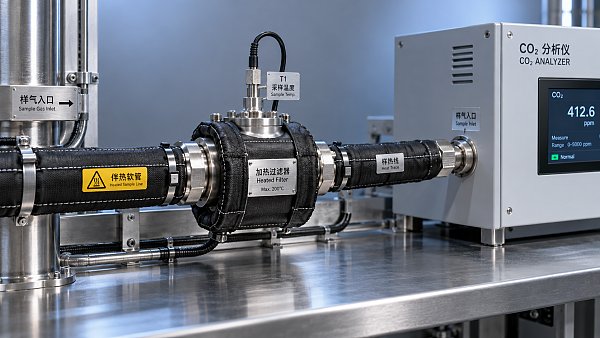
Yes. Sampled systems can improve access and environmental protection, but they introduce transport delay, line losses, filter loading, and condensation concerns. If the sample take-off point is poorly chosen relative to ventilation, the analyzer may receive an unrepresentative sample no matter how advanced the instrument is. For line lengths above 5 to 15 meters, response review becomes even more important.
Direct-mount units avoid some lag but can be more exposed to washdown, vibration, heat, and local turbulence. The right choice depends on the process, enclosure type, maintenance resources, and alarm philosophy. Operators should ask not only which analyzer technology is better, but which installation method preserves the most realistic detection path.
What are the most common mistakes users and operators should avoid?
One major mistake is assuming that any visible central position provides representative monitoring. In reality, central positions can sit in clean airflow corridors, especially near fresh air inlets. Another frequent mistake is copying detector height from a previous project without checking whether the target gas or vapor behaves the same way. A safety monitoring analyzer for one hazard may be ineffective for another if density, temperature, or release mechanics are different.
A second mistake is treating ventilation as always beneficial. Ventilation often reduces average concentration, which is good for exposure control, but it can also reduce local detectability or redirect the hazard away from the sensor. Strong extraction near a leak path may make an area safer overall while simultaneously making a single analyzer less informative unless placement is updated.
A third mistake is neglecting maintenance feedback. If operators repeatedly notice slow alarm response, unusual zero drift, frequent false low readings, or a mismatch between portable detector results and the fixed safety monitoring analyzer, installation conditions should be re-examined. Instrument symptoms often point to airflow issues rather than sensor failure alone.
Which warning signs suggest the current setup needs review?
- Alarm activation happens only after the release has visibly spread beyond the expected zone.
- Readings drop sharply whenever ventilation starts, even though process conditions remain unchanged.
- Portable checks near suspected leak points show values 20% to 50% higher than the fixed reading.
- Sensor surfaces foul rapidly because they are mounted in direct airflow carrying dust, mist, or corrosive residue.
- Frequent recalibration is needed after seasonal airflow changes such as winter closure or summer ventilation increase.
These signs do not automatically mean the analyzer is wrong, but they do justify a ventilation-focused review. In many cases, a relatively small change in mounting position, shield orientation, or sample point location can significantly improve practical reliability.
How should a facility plan implementation, testing, and ongoing operation?
A strong implementation plan starts before installation. Project teams should define what the safety monitoring analyzer must detect, how quickly the alarm is expected to respond, and under which operating modes performance matters most. For many facilities, this means reviewing at least normal operation, cleaning or maintenance mode, and an abnormal release scenario. Without this step, placement decisions tend to follow convenience rather than detection logic.
Commissioning should include more than power-up, loop checks, and calibration gas verification. It should also confirm that the monitored medium can reach the analyzer under realistic ventilation conditions. Functional verification can be scheduled during startup and repeated after major ventilation changes, process modifications, or enclosure reconfiguration. A 6- to 12-month review cycle is often practical for stable facilities, while high-change sites may require quarterly checks.
Operators benefit when monitoring logic is documented clearly. This includes detector purpose, expected airflow behavior, maintenance access route, alarm thresholds, and known limitations. Good documentation reduces confusion when teams change shifts or when maintenance personnel need to decide whether a drifting reading is caused by the process, the sensor, or the ventilation system.
What should be included in a practical operator checklist?
The checklist below helps turn planning into routine action. It is especially useful when installing a new safety monitoring analyzer or reviewing an older point after layout changes.
- Confirm the target hazard, likely release source, and expected movement pattern.
- Map nearby fans, louvers, doors, hoods, and exhaust points within the local area.
- Verify whether the selected mounting height matches the behavior of the monitored substance.
- Measure or estimate whether sample transport or dilution could delay alarm response beyond the acceptable window.
- Test access for calibration, bump checks, and cleaning without unsafe reach or production interference.
- Recheck after any process rerouting, enclosure modification, or ventilation balancing adjustment.
This approach supports better long-term performance because the safety monitoring analyzer is treated as part of an active protection system, not just a standalone device mounted once and forgotten.
What should you confirm before selecting, upgrading, or ordering a safety monitoring analyzer solution?
Before moving forward with procurement or retrofit, users should gather the operating details that most affect detection quality. These include the monitored medium, concentration range, temperature and humidity conditions, enclosure type, ventilation method, service interval expectation, and output or integration requirements. If sampled analysis is being considered, sample line length, filtration needs, and expected response time should also be defined early.
In the broader instrumentation industry, successful projects usually depend on matching analyzer capability with site reality. That means selection should not stop at sensor principle or signal type. A good supplier discussion should cover airflow influence, mounting strategy, installation restrictions, and maintenance practicality. This is particularly important when a safety monitoring analyzer is expected to support industrial automation, environmental monitoring, power systems, laboratory operations, or process safety functions.
If you need to refine a new installation or troubleshoot an existing one, contact us to discuss the details that matter before finalizing the plan. We can help you confirm key parameters, review placement logic, compare direct-mount and sampled options, estimate delivery timing, discuss customization direction, and clarify support for certification-related requirements, sample evaluation, and quotation planning. A well-positioned safety monitoring analyzer begins with the right questions, and those questions are best answered before the equipment is fixed in place.
Recommended for You
 How does production line speed affect in-line measurement accuracy?Discover how production line speed affects in-line measurement accuracy. Explore sensor response, sampling, and timing to boost throughput without compromising quality.
 How condensation affects HCl concentration analyzer accuracyHCl concentration analyzer accuracy can suffer when condensation traps HCl. Learn how to spot sampling losses, prevent low readings, and improve measurement reliability.
 How does cross-interference affect multi-component gas analyzers?How does cross-interference affect multi component gas analyzers? Explore measurement errors, compensation limits, and validation tips to choose the right system for your process.
 How does temperature affect high-accuracy sensor performance?Explore how temperature affects high accuracy sensor performance. Learn to reduce thermal drift, evaluate compensation, and select the right sensor for reliable measurements.
 Can a C4H8O concentration analyzer distinguish between isomers?Can a C4H8O concentration analyzer distinguish isomers? Compare GC, FTIR and MS methods, uncover selectivity limits, and learn what to validate before choosing your instrument.
 How to identify a reliable supplier using on-time delivery recordsIdentify a Reliable Supplier by verifying on-time delivery records, original commitments, and complete shipments. Learn practical checks to reduce purchasing risk and protect your project schedule.
 How sensitive should a portable hydrogen analyzer be for lab use?Choose a portable hydrogen analyzer for laboratory use with the right quantification limit, accuracy, and range. Learn how to verify performance and avoid costly buying mistakes.
 How to set industrial calibration intervals based on equipment riskSet industrial calibration intervals based on equipment risk, drift, and as-found data. Learn when to shorten or extend schedules to improve reliability and avoid unnecessary costs.
 How to choose electrochemical analyzers for low-current measurementsCompare electrochemical analyzers for precise low-current measurements. Learn how noise, leakage, bandwidth, and real-cell testing help you choose the right instrument.
 What tolerance does a custom gas mixture need for calibration?Choose the right custom gas tolerance for calibration. Learn how blending tolerance, certified uncertainty, and stability affect accuracy—and avoid paying for precision you don’t need.
 How condensation affects stack detector readings in wet flue gasStack detector readings can drift when wet flue gas condenses. Learn how to identify moisture interference, prevent sample losses, and improve emissions monitoring reliability.
 How to prevent condensation in a CO2 analyzer sampling systemPrevent condensation in your CO2 analyzer sampling system. Learn how to control dew point, eliminate cold spots, and manage moisture for reliable readings and fewer costly disruptions.
 How to verify accuracy claims for industrial quality analyzersVerify accuracy claims for industrial quality analyzers with calibration checks, independent testing, and clear acceptance criteria. Learn how to reduce risk and buy with confidence.
 How to calculate cooling loads for an industrial analyzer shelterSize industrial analyzer shelter cooling with confidence. Learn to calculate equipment heat, solar gains, and ventilation loads, then select HVAC capacity for reliable analyzer performance.
 Hydrogen Analyzers for Energy Storage: Purity Monitoring vs. Leak DetectionChoosing a hydrogen analyzer for energy storage systems? Compare purity monitoring and leak detection to select the right sensors, improve safety, and protect fuel cell performance.
 NH3 Monitoring in Fertilizer Plants: Where Should Leak Analyzers Be Installed?NH3 analyzer for fertilizer production: discover where to place leak detectors around storage, compressors, and loading areas to reduce blind spots and improve early warning.
 Diesel Engine NOx Analyzers: Response Time and NO2 Conversion ExplainedChoosing a NOX analyzer for diesel engines? Learn how response time, NO2 conversion, and sampling design affect accuracy—and make a smarter, evidence-based purchase.
 SO2 Analyzers for Smelter Emissions: Sampling Hot, Dust-Laden Flue GasSelect an SO2 analyzer for smelting industry applications. Discover how to handle hot, dust-laden flue gas, prevent sample losses, and achieve reliable emissions monitoring.
 Unstable CH4 Readings in Biogas Monitoring? Check Moisture and Sample FlowCH4 analyzer for biogas monitoring giving unstable readings? Discover how moisture, sample flow, and pressure checks help pinpoint faults and restore reliable methane measurements.
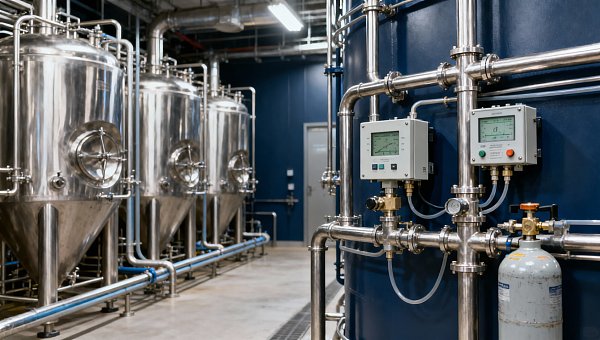
 Buying a CO2 Analyzer for Brewery Gas Recovery: Costs Beyond the Purchase PriceBuying a CO2 analyzer for brewery applications? Compare sampling, installation, calibration, and downtime costs to uncover hidden expenses and make a smarter gas recovery investment.
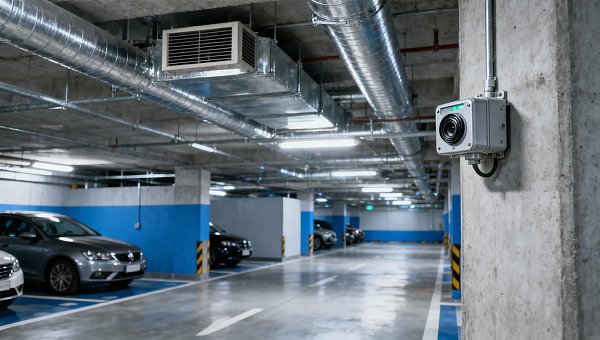
 Where to Place CO Analyzers for Effective Parking Garage VentilationOptimize your CO analyzer for parking garage ventilation with practical placement tips. Learn how sensor height, airflow, and zone coverage support timely detection and effective fan control.
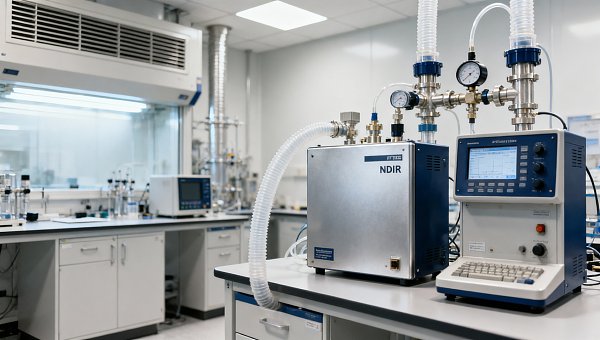
 NDIR vs. FTIR Gas Analyzers: Which Fits Your Environmental Research?Find the right infrared gas analyzer for environmental research. Compare NDIR vs. FTIR on sensitivity, gas coverage, sampling needs, and cost to choose confidently for your study.
 Oxygen Analyzers for Diving: Calibration Checks Before Nitrox BlendingUsing an oxygen analyzer for diving applications? Discover essential calibration, sensor, and sampling checks before nitrox blending to support reliable readings.
 How Paramagnetic Oxygen Analyzers Work and Why Sample Pressure MattersLearn how a paramagnetic oxygen analyzer works, why sample pressure affects accuracy, and what to check in compensation and calibration before choosing your system.
 How Much Does a Complete CEMS Integration Project Typically Cost?How much does a complete CEMS integration project typically cost? Explore budget ranges, hidden installation costs, and compliance needs to compare quotes and plan confidently.
 What Is the Typical Response Time for Industrial Air Monitors?What is the typical response time for industrial air monitors? Explore T90, sampling delays, and alarm settings to compare performance and choose the right monitor with confidence.
 Do Regulatory Monitoring Systems Need Third-Party Certification?Do regulatory monitoring systems need third-party certification? Learn when it is required, what certificates prove, and how to verify compliance before buying.
 How Do You Choose Wired or Wireless for Stack Monitoring?Learn how to choose between wired and wireless for stack monitoring. Compare reliability, lifecycle costs, and data recovery to find the right CEMS setup for your site.
 What Happens When Combustible Gas Sensor Calibration Is Overdue?What happens if combustible gas sensor is not recalibrated on time? Discover the risks of inaccurate readings and missed alarms, plus steps to restore reliable protection.
 Can One Multi-Gas Detector Replace Four Separate Analyzers?Find out: can a single multi-gas detector replace four separate analyzers? Compare accuracy, safety, compliance, and lifetime costs to make a confident buying decision.
 Industrial Safety vs. Emission Monitoring: What Are the Differences?What are the main differences between industrial safety and emission monitoring? Compare goals, sensors, response times, and compliance needs to choose the right systems for your facility.
 Is Remote Monitoring Worth the Cost for Small Emission Sources?Is it worth investing in remote monitoring for small emission sources? Compare costs, compliance needs, and potential savings to choose the right solution for your operation.
Search Categories
Search Categories
- Smart Meters & Power Quality
- Transformer Gas Analyzers
- BESS Thermal Runaway Detectors
- Energy, Power & Smart Grid Monitoring
- Optical Profilers & CMM
- Ultrasonic & X-Ray NDT
- Calibration Standards
- Precision Metrology & NDT
- Water Quality Analyzers
- CEMS & VOCs Monitors
- Price Trends
- Import & Export Updates
- Market Trends
- Industry News
- Industry Insights
Latest Article
- How does production line speed affect in-line measurement accuracy?Discover how production line speed affects in-line measurement accuracy. Explore sensor response, sampling, and timing to boost throughput without compromising quality.Posted by:
- How condensation affects HCl concentration analyzer accuracyHCl concentration analyzer accuracy can suffer when condensation traps HCl. Learn how to spot sampling losses, prevent low readings, and improve measurement reliability.Posted by:
- How does cross-interference affect multi-component gas analyzers?How does cross-interference affect multi component gas analyzers? Explore measurement errors, compensation limits, and validation tips to choose the right system for your process.Posted by:
Please give us a message