Emission Monitoring Analyzer Price Pressure Is Growing Again


As budgets tighten and compliance expectations rise, the emission monitoring analyzer market is facing renewed price pressure. For financial decision-makers, this shift is no longer just a procurement issue but a strategic cost and risk consideration. Understanding what drives emission monitoring analyzer pricing can help businesses balance regulatory demands, operational reliability, and long-term investment value.
Why scenario differences now matter more in emission monitoring analyzer purchasing
Price pressure is not affecting every buyer in the same way. A plant adding one stack monitoring point, a power facility replacing an aging analyzer cabinet, and an environmental service contractor bidding on a multi-site package will face very different cost structures. For a financial approver, the key question is not whether an emission monitoring analyzer is expensive in absolute terms, but whether the proposed configuration matches the risk, reporting duty, and operating profile of the actual application.
In many industrial settings, analyzer cost is only one part of the budget line. Installation, sample conditioning, calibration gas use, maintenance labor, software integration, and downtime exposure can represent 30% to 60% of the 3-year ownership cost. That is why scenario-based evaluation is increasingly important. A lower purchase price may make sense for a stable, low-dust process with periodic reporting, but it may become a false economy in corrosive, high-moisture, or continuously audited operations.
The instrumentation industry serves a broad range of sectors, from industrial manufacturing and energy to laboratory analysis and environmental monitoring. Within that broad base, the emission monitoring analyzer sits at the intersection of compliance, process visibility, and asset reliability. Financial decision-makers should therefore compare not only unit price, but also expected service intervals, spare part cycles, analyzer uptime targets, and integration complexity across different operating scenes.
Three budget realities shaping current decisions
- Compliance costs are becoming less negotiable, especially where reporting frequency is monthly, weekly, or continuous.
- Supply-chain and component volatility can still affect lead times, often ranging from 6 to 16 weeks for configured systems.
- Maintenance capability differs by site, making the same emission monitoring analyzer more or less economical depending on local technical support.
For this reason, scenario suitability should be reviewed before comparing quotations. A financially sound decision starts with identifying where the analyzer will be installed, how often data must be trusted, and what failure would cost in penalties, rework, or production interruption.
Typical application scenarios and how price pressure affects each one
The same emission monitoring analyzer category can serve very different industries, but price sensitivity depends heavily on application conditions. The table below highlights several common scenarios seen across integrated industrial markets and shows why financial reviewers should avoid one-price-fits-all assumptions.
This comparison shows why a basic quotation can be misleading. In power and boiler applications, 24/7 availability often matters more than a 10% lower upfront price. In incineration or waste gas treatment, sample conditioning and corrosion protection may determine whether the analyzer remains accurate after 12 months or starts generating unplanned service calls within one quarter.
Scenario 1: Continuous emission compliance in energy and power
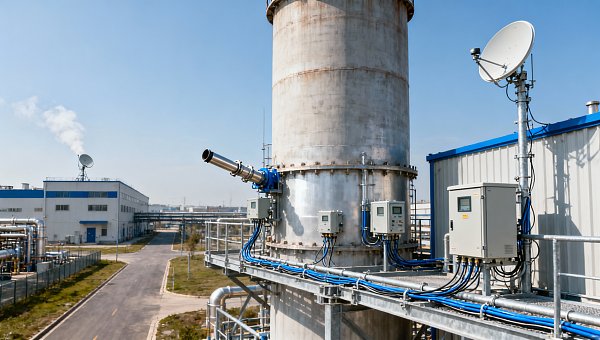
Energy and power operators usually place the highest value on continuity. Where stacks are subject to continuous monitoring expectations, the emission monitoring analyzer is not just a sensor package but part of the compliance record. Financial approval in this setting should account for analyzer redundancy, serviceability, and calibration stability over 6-month to 12-month operating windows.
A low-entry-price system may appear attractive during annual capex reviews, but repeated drift checks, high consumable use, or difficult field maintenance can raise opex quickly. If one failure event creates reporting gaps, manual substitution procedures and audit exposure can cost more than the original equipment savings. In these scenarios, a higher-spec emission monitoring analyzer often provides better budget predictability.
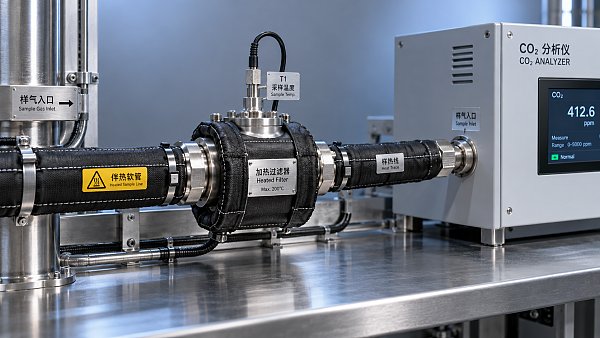
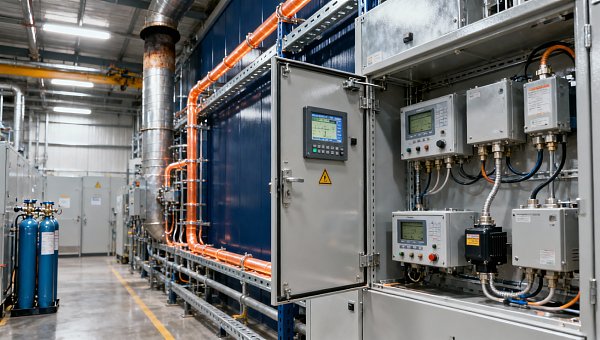
Typical parameters to verify include gas components measured, ambient temperature range, sample line heating need, enclosure suitability, and integration with plant control or environmental data platforms. These details strongly affect final price.
Scenario 2: Harsh-gas treatment in waste and environmental facilities
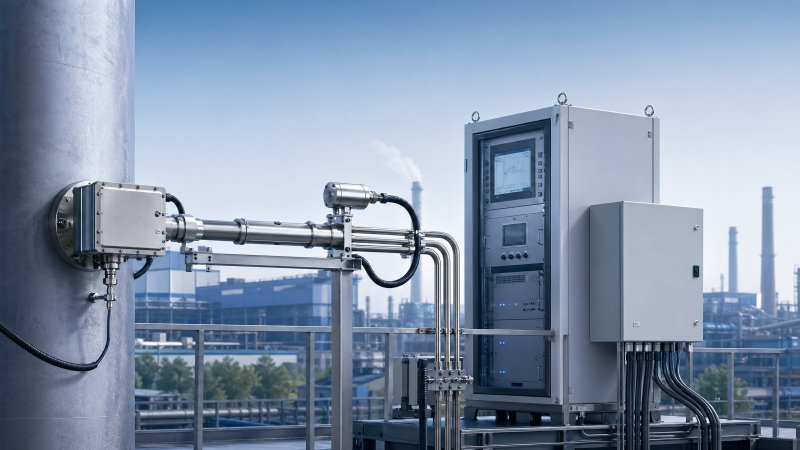
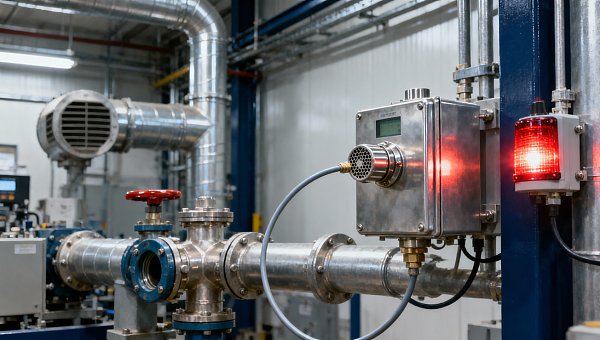
In waste treatment, incineration, and some chemical exhaust applications, gas streams often carry moisture, acid components, and particulate challenges. Here, the analyzer body may be less problematic than the sample path. Financial approvers should watch for hidden cost additions such as filters, probes, heated lines, coolers, corrosion-resistant materials, and more frequent preventive maintenance schedules.
When suppliers cut price aggressively, they may simplify the sample conditioning package. That can reduce invoice value in the short term, but it may shorten maintenance intervals from every 6 months to every 4 to 8 weeks. For sites with limited maintenance staff, this difference directly affects labor cost, consumables use, and risk of non-compliant readings.
A financially balanced proposal in this scenario should therefore include service interval assumptions, recommended spare kits, and realistic commissioning support. Without these, the apparent savings of a lower-priced emission monitoring analyzer may not survive the first year of operation.
Scenario 3: Heavy manufacturing with variable process loads
Cement, steel, thermal processing, and large manufacturing lines often face fluctuating production loads. Emission levels, dust concentration, and process temperatures can shift quickly. In this context, the best emission monitoring analyzer is often the one that maintains stable performance during changing conditions, not simply the one with the shortest price list.
Financially, the concern is that process variability increases the cost of under-specification. If an analyzer performs well only under nominal conditions, then false alarms, unstable readings, or frequent cleaning can generate hidden costs through operator intervention. A system designed for wider operating ranges may carry a 15% to 25% higher capital price, yet lower field service burden across 2 to 5 years.
This is where application fit should override generic price comparison. One site may need robust particulate protection and broad measurement flexibility, while another needs only stable baseline compliance checks on a predictable exhaust stream.
What drives price differences in practice, not just on paper
An emission monitoring analyzer quote usually reflects more than the analyzer core. Financial approvers should separate equipment price into measurable cost blocks, because price pressure often enters through specification trimming rather than direct discounting. That trimming may affect performance, maintenance demand, or future upgradeability.
In practical procurement reviews, five cost drivers appear repeatedly: gas components measured, sample handling complexity, enclosure and environmental protection, automation and communication interfaces, and service support scope. A single-gas package for a clean process stream is naturally different from a multi-gas system with heated sampling, alarm outputs, and integration to supervisory software.
The following table can help finance teams ask sharper questions during bid comparison, especially when quotations differ by 20% or more but all appear to satisfy the same general purpose.
For finance teams, the lesson is simple: if the lower quote omits sampling protection, communication interfaces, or service support, the comparison is incomplete. The right emission monitoring analyzer budget should be based on delivered function and maintainable operation, not on a stripped equipment headline.
How to read a quote beyond the base number
Check the first-year operating assumptions
Ask how many calibration checks are expected per month, what consumables are required, and whether spare filters or pumps are included. A low initial number may exclude routine items that become mandatory within the first 90 to 180 days.
Review installation boundaries
Clarify whether the quotation includes probe mounting, cabinets, heated tubing, wiring interfaces, and startup assistance. Installation surprises are one of the most common reasons an approved analyzer budget expands after purchase order release.
Estimate the cost of lost data
If reporting gaps trigger manual workarounds, extra validation, or downtime, then analyzer reliability has direct financial value. This is especially relevant where environmental records are reviewed continuously rather than only during annual inspections.
How different buyer types should evaluate scenario fit
Not every financial approver owns the same risk. A factory CFO, a project procurement manager, and an environmental operations contractor all review the emission monitoring analyzer from different angles. Recognizing this difference helps prevent approval delays and mismatched specifications.
For single-site industrial owners, the main concern is often lifecycle predictability. For EPC or project teams, the challenge is balancing bid competitiveness with acceptable performance. For service firms managing multiple client sites, standardization and supportability may be worth more than the lowest per-unit acquisition cost.
The checklist below can be used during internal approval meetings to test whether a proposed analyzer is truly aligned with the intended application scenario.
- Define whether the analyzer supports continuous compliance, periodic verification, or process optimization. These three use cases justify different budgets.
- Confirm the gas stream condition: clean, wet, dusty, corrosive, or variable. Sample handling cost can shift significantly across these profiles.
- Estimate maintenance access. If a site has limited technicians, choose configurations with longer service intervals and easier field replacement.
- Check required interfaces and data records. If digital integration or audit traceability is needed, include that scope at the approval stage.
- Review lead time against project milestones. A 6-week versus 14-week delivery difference can affect installation planning and cash flow.
Common misjudgments under budget pressure
One common mistake is approving a generic analyzer platform without validating the sample system against actual flue gas conditions. Another is comparing only capital cost while ignoring the first 12 months of maintenance effort. A third is assuming all emission monitoring analyzer offerings can be upgraded later at low cost, when field retrofits often require additional cabinets, piping, or software work.
Another frequent issue arises when a plant buys for current compliance only, even though process expansion is likely within 18 to 24 months. In that case, a slightly broader configuration today may avoid a second procurement cycle later. Financially, future compatibility can be more valuable than maximum initial compression of price.
Good approval practice therefore means matching the emission monitoring analyzer to the operating scene, the reporting burden, and the support model available after installation. That is a more reliable framework than selecting on unit price alone.
A practical approval path for financially sound analyzer selection
When price pressure is rising again, the best response is structured review rather than blanket cost cutting. A practical approval path should separate must-have compliance functions from optional enhancements, then evaluate which scenario-specific features truly reduce risk over 1 year, 3 years, and beyond.
For most buyers, the highest-value step is an application review before final quotation comparison. This should cover gas composition, installation environment, reporting frequency, integration needs, maintenance resources, and expected service intervals. Even a 30-minute technical-commercial review can reveal whether two proposals are genuinely comparable.
A well-matched emission monitoring analyzer should support compliance confidence, manageable maintenance, and reasonable lifecycle cost. In financial terms, that means fewer budget surprises after commissioning and a clearer return on reliability.
Why choose us
We understand that financial approvers need more than a product brochure. They need a clear link between application scenario, technical scope, delivery timing, and lifecycle cost. Our support approach is built around practical instrumentation judgment across industrial manufacturing, energy and power, environmental monitoring, laboratory-related requirements, and automation integration.
If you are reviewing an emission monitoring analyzer project, we can help you confirm key parameters, compare suitable configurations, discuss typical delivery periods, and identify which options are essential for your specific operating scenario. We can also support quotation clarification, customization direction, interface requirements, and spare or maintenance planning before approval is finalized.
Contact us to discuss your stack conditions, measured components, installation environment, reporting needs, certification expectations, sample handling requirements, and target budget range. A focused pre-selection conversation can help you reduce procurement risk, avoid over-specification or under-specification, and move toward a more confident emission monitoring analyzer decision.
Recommended for You
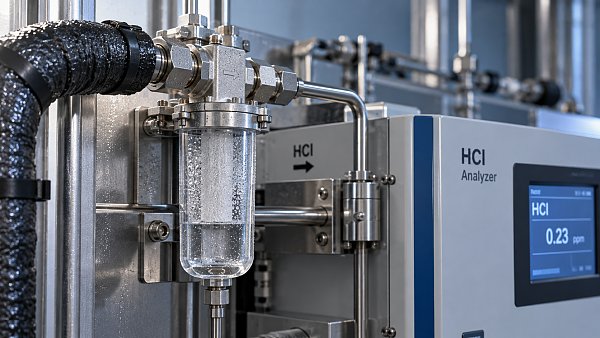
 How condensation affects HCl concentration analyzer accuracyHCl concentration analyzer accuracy can suffer when condensation traps HCl. Learn how to spot sampling losses, prevent low readings, and improve measurement reliability.
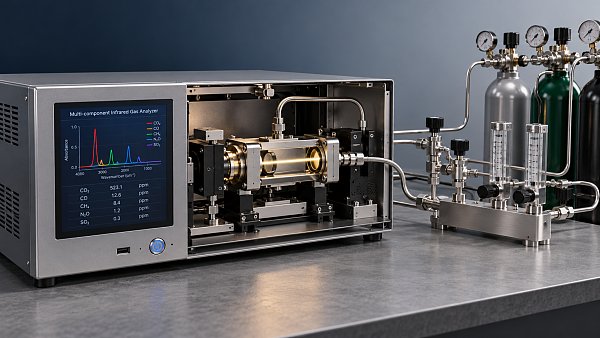
 How does cross-interference affect multi-component gas analyzers?How does cross-interference affect multi component gas analyzers? Explore measurement errors, compensation limits, and validation tips to choose the right system for your process.
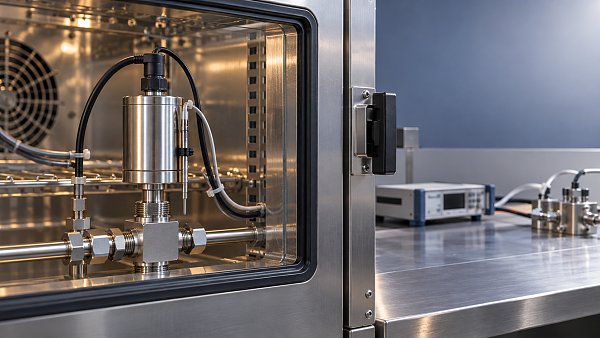
 How does temperature affect high-accuracy sensor performance?Explore how temperature affects high accuracy sensor performance. Learn to reduce thermal drift, evaluate compensation, and select the right sensor for reliable measurements.
 Can a C4H8O concentration analyzer distinguish between isomers?Can a C4H8O concentration analyzer distinguish isomers? Compare GC, FTIR and MS methods, uncover selectivity limits, and learn what to validate before choosing your instrument.
 How to identify a reliable supplier using on-time delivery recordsIdentify a Reliable Supplier by verifying on-time delivery records, original commitments, and complete shipments. Learn practical checks to reduce purchasing risk and protect your project schedule.
 How sensitive should a portable hydrogen analyzer be for lab use?Choose a portable hydrogen analyzer for laboratory use with the right quantification limit, accuracy, and range. Learn how to verify performance and avoid costly buying mistakes.
 How to set industrial calibration intervals based on equipment riskSet industrial calibration intervals based on equipment risk, drift, and as-found data. Learn when to shorten or extend schedules to improve reliability and avoid unnecessary costs.
 How to choose electrochemical analyzers for low-current measurementsCompare electrochemical analyzers for precise low-current measurements. Learn how noise, leakage, bandwidth, and real-cell testing help you choose the right instrument.
 What tolerance does a custom gas mixture need for calibration?Choose the right custom gas tolerance for calibration. Learn how blending tolerance, certified uncertainty, and stability affect accuracy—and avoid paying for precision you don’t need.
 How condensation affects stack detector readings in wet flue gasStack detector readings can drift when wet flue gas condenses. Learn how to identify moisture interference, prevent sample losses, and improve emissions monitoring reliability.
 How to prevent condensation in a CO2 analyzer sampling systemPrevent condensation in your CO2 analyzer sampling system. Learn how to control dew point, eliminate cold spots, and manage moisture for reliable readings and fewer costly disruptions.
 How to verify accuracy claims for industrial quality analyzersVerify accuracy claims for industrial quality analyzers with calibration checks, independent testing, and clear acceptance criteria. Learn how to reduce risk and buy with confidence.
 How to calculate cooling loads for an industrial analyzer shelterSize industrial analyzer shelter cooling with confidence. Learn to calculate equipment heat, solar gains, and ventilation loads, then select HVAC capacity for reliable analyzer performance.
 Hydrogen Analyzers for Energy Storage: Purity Monitoring vs. Leak DetectionChoosing a hydrogen analyzer for energy storage systems? Compare purity monitoring and leak detection to select the right sensors, improve safety, and protect fuel cell performance.
 NH3 Monitoring in Fertilizer Plants: Where Should Leak Analyzers Be Installed?NH3 analyzer for fertilizer production: discover where to place leak detectors around storage, compressors, and loading areas to reduce blind spots and improve early warning.
 Diesel Engine NOx Analyzers: Response Time and NO2 Conversion ExplainedChoosing a NOX analyzer for diesel engines? Learn how response time, NO2 conversion, and sampling design affect accuracy—and make a smarter, evidence-based purchase.
 SO2 Analyzers for Smelter Emissions: Sampling Hot, Dust-Laden Flue GasSelect an SO2 analyzer for smelting industry applications. Discover how to handle hot, dust-laden flue gas, prevent sample losses, and achieve reliable emissions monitoring.
 Unstable CH4 Readings in Biogas Monitoring? Check Moisture and Sample FlowCH4 analyzer for biogas monitoring giving unstable readings? Discover how moisture, sample flow, and pressure checks help pinpoint faults and restore reliable methane measurements.
 Buying a CO2 Analyzer for Brewery Gas Recovery: Costs Beyond the Purchase PriceBuying a CO2 analyzer for brewery applications? Compare sampling, installation, calibration, and downtime costs to uncover hidden expenses and make a smarter gas recovery investment.
 Where to Place CO Analyzers for Effective Parking Garage VentilationOptimize your CO analyzer for parking garage ventilation with practical placement tips. Learn how sensor height, airflow, and zone coverage support timely detection and effective fan control.
 NDIR vs. FTIR Gas Analyzers: Which Fits Your Environmental Research?Find the right infrared gas analyzer for environmental research. Compare NDIR vs. FTIR on sensitivity, gas coverage, sampling needs, and cost to choose confidently for your study.
 Oxygen Analyzers for Diving: Calibration Checks Before Nitrox BlendingUsing an oxygen analyzer for diving applications? Discover essential calibration, sensor, and sampling checks before nitrox blending to support reliable readings.
 How Paramagnetic Oxygen Analyzers Work and Why Sample Pressure MattersLearn how a paramagnetic oxygen analyzer works, why sample pressure affects accuracy, and what to check in compensation and calibration before choosing your system.
 How Much Does a Complete CEMS Integration Project Typically Cost?How much does a complete CEMS integration project typically cost? Explore budget ranges, hidden installation costs, and compliance needs to compare quotes and plan confidently.
 What Is the Typical Response Time for Industrial Air Monitors?What is the typical response time for industrial air monitors? Explore T90, sampling delays, and alarm settings to compare performance and choose the right monitor with confidence.
 Do Regulatory Monitoring Systems Need Third-Party Certification?Do regulatory monitoring systems need third-party certification? Learn when it is required, what certificates prove, and how to verify compliance before buying.
 How Do You Choose Wired or Wireless for Stack Monitoring?Learn how to choose between wired and wireless for stack monitoring. Compare reliability, lifecycle costs, and data recovery to find the right CEMS setup for your site.
 What Happens When Combustible Gas Sensor Calibration Is Overdue?What happens if combustible gas sensor is not recalibrated on time? Discover the risks of inaccurate readings and missed alarms, plus steps to restore reliable protection.
 Can One Multi-Gas Detector Replace Four Separate Analyzers?Find out: can a single multi-gas detector replace four separate analyzers? Compare accuracy, safety, compliance, and lifetime costs to make a confident buying decision.
 Industrial Safety vs. Emission Monitoring: What Are the Differences?What are the main differences between industrial safety and emission monitoring? Compare goals, sensors, response times, and compliance needs to choose the right systems for your facility.
 Is Remote Monitoring Worth the Cost for Small Emission Sources?Is it worth investing in remote monitoring for small emission sources? Compare costs, compliance needs, and potential savings to choose the right solution for your operation.
 How Do You Handle Analyzer Failure During an Environmental Audit?Learn how to handle analyzer failure during environmental compliance audit procedures. Protect evidence, verify data, and restore monitoring with this practical response guide.
Search Categories
Search Categories
- Smart Meters & Power Quality
- Transformer Gas Analyzers
- BESS Thermal Runaway Detectors
- Energy, Power & Smart Grid Monitoring
- Optical Profilers & CMM
- Ultrasonic & X-Ray NDT
- Calibration Standards
- Precision Metrology & NDT
- Water Quality Analyzers
- CEMS & VOCs Monitors
- Price Trends
- Import & Export Updates
- Market Trends
- Industry News
- Industry Insights
Latest Article
- How condensation affects HCl concentration analyzer accuracyHCl concentration analyzer accuracy can suffer when condensation traps HCl. Learn how to spot sampling losses, prevent low readings, and improve measurement reliability.Posted by:
- How does cross-interference affect multi-component gas analyzers?How does cross-interference affect multi component gas analyzers? Explore measurement errors, compensation limits, and validation tips to choose the right system for your process.Posted by:
- How does temperature affect high-accuracy sensor performance?Explore how temperature affects high accuracy sensor performance. Learn to reduce thermal drift, evaluate compensation, and select the right sensor for reliable measurements.Posted by:
Please give us a message