
Industrial Monitoring Analyzer Specs That Look Similar but Aren't


At first glance, many industrial monitoring analyzer specifications seem interchangeable, but small differences can lead to major gaps in performance, integration, and long-term operating cost. For technical evaluators, understanding what these similar-looking specs really mean is critical to making reliable comparisons, reducing selection risk, and ensuring the chosen solution fits real industrial monitoring demands.
Why similar industrial monitoring analyzer specs can lead to different field results
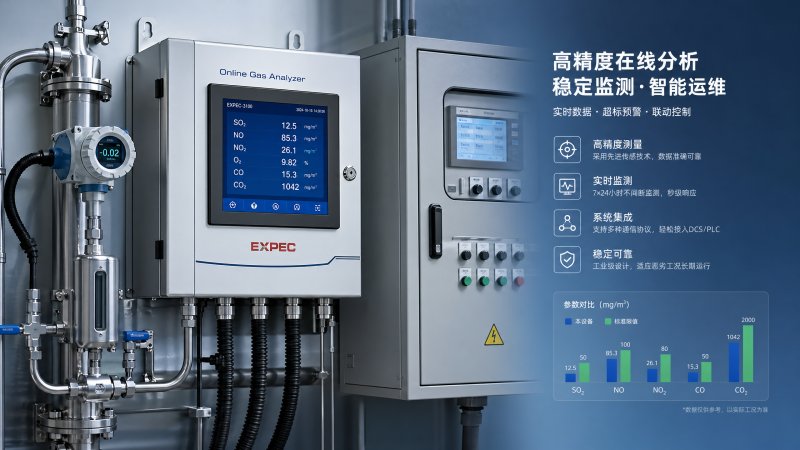
In the instrumentation industry, a spec sheet often compresses complex behavior into a few numbers. Resolution, repeatability, response time, drift, ingress protection, and communication compatibility may appear easy to compare, yet they rarely describe performance under the same operating assumptions. A technical evaluator reviewing an industrial monitoring analyzer for power, environmental, process, or laboratory-linked monitoring must ask one basic question: under what conditions was each value established?
This matters because industrial use is rarely static. One installation may run 24/7 in a dusty utility room at 10°C–40°C, while another works near vibration sources, washdown zones, or corrosive sampling points. Two analyzers may both state a response time of less than 60 seconds, but one value may be measured at the sensor head and the other at the full sample conditioning system outlet. In practice, that difference can change alarm reliability, control loop stability, and maintenance planning.
Technical evaluation teams also face cross-functional pressure. Procurement wants price clarity, operations wants uptime, engineering wants integration, and compliance teams want traceable records. When similar-looking specs are read without context, buyers can underestimate lifecycle cost over 3–5 years, overrate laboratory accuracy that does not hold online, or miss hidden integration work during commissioning.
A practical review of any industrial monitoring analyzer should separate headline values from application values. That means checking at least 5 core dimensions: measurement principle, environmental suitability, calibration method, system integration, and maintainability. Without that structure, comparisons remain superficial even when data sheets look detailed.
Where confusion usually starts
- Accuracy is quoted as a percentage, but it may be based on full scale, reading, or a limited calibrated range.
- Response time is shown as T90 or T95, but not all suppliers define it from the same sample path location.
- Operating temperature may describe electronics only, while sample system limits are narrower.
- Communication support may list Modbus, Ethernet, or 4–20 mA, yet omit mapping depth, diagnostics, or historian compatibility.
Which industrial monitoring analyzer parameters deserve deeper comparison?
For technical evaluators, not all parameters carry equal weight. Some determine whether the analyzer can produce stable data in the process environment; others mainly affect reporting granularity. A better evaluation method is to classify parameters into 3 layers: measurement credibility, system survivability, and integration efficiency. This approach is especially useful in mixed-industry applications where analyzers support manufacturing, energy, environmental, and automated process control workflows.
Measurement credibility covers the values most often misread: range, limit of detection, repeatability, linearity, and drift interval. A low detection limit is not automatically useful if the process normal range is far above it. Likewise, a wide measurement span can reduce practical sensitivity if the industrial monitoring analyzer is expected to control a narrow process window. In many applications, repeatability over a weekly or monthly operating cycle matters more than a single laboratory-style accuracy point.
System survivability includes enclosure protection, vibration tolerance, material compatibility, sample conditioning burden, and maintenance access. An analyzer installed in industrial manufacturing or wastewater monitoring may operate in high humidity, airborne particulates, or temperature swings. A nominal IP rating is only one part of that picture. Evaluators should also check whether tubing materials, seals, filters, and wetted components fit the actual media and cleaning practices used onsite.
Integration efficiency focuses on what happens during the first 2–4 weeks after delivery. Here, communication registers, alarm logic, remote diagnostics, calibration logs, and spare part standardization often matter more than one decimal place of advertised precision. If the analyzer cannot be integrated cleanly into PLC, DCS, SCADA, or cloud-monitoring architecture, the project cost can rise well beyond the equipment price.
A practical parameter review matrix
The table below helps technical evaluators distinguish between parameters that look similar on paper and parameters that change real operating performance for an industrial monitoring analyzer.
This matrix shows why a disciplined review saves time. Instead of comparing only brochure values, evaluators can test whether the industrial monitoring analyzer is aligned with actual control, compliance, and maintenance needs. That reduces late-stage surprises during FAT, SAT, or startup.
Three parameter groups that should never be reviewed alone
1. Accuracy, drift, and calibration interval
These three values define data trust over time. A tighter stated accuracy is less meaningful if drift forces calibration every 7 days instead of every 30–90 days. In remote or distributed monitoring points, service frequency can have a larger cost impact than nominal precision.
2. Response time, sample path, and alarm use
An analyzer used for trend reporting can tolerate a slower sample loop than one used for interlock or process correction. Evaluators should confirm whether time delay comes from sensing, transport, filtration, or signal averaging.
3. Communications, diagnostics, and data architecture
Basic output support is not enough. The right industrial monitoring analyzer should provide usable diagnostics, timestamp consistency, and data points that fit the site architecture, whether the plant relies on analog loops, Modbus networks, or layered digital monitoring systems.
How should technical evaluators compare options across different industrial scenarios?
An industrial monitoring analyzer that performs well in one sector may not be the right choice in another. The instrumentation industry serves industrial manufacturing, power generation, environmental monitoring, laboratory-linked process control, construction systems, and automation platforms. Because each environment sets different demands on sample quality, data continuity, and service access, scenario-based comparison is more reliable than a generic ranking.
For example, in energy and power applications, evaluators often prioritize continuous availability, signal stability, and rugged operation over maximum analytical sensitivity. In environmental monitoring, traceability, calibration recordkeeping, and low-level detection windows may carry more weight. In automation control, communication latency and protocol consistency can be decisive because the analyzer becomes part of a wider digital decision chain.
A useful method is to compare candidate systems against 4 operating questions: What is being measured? How fast must the value be trusted? How often can the analyzer be serviced? How tightly must it integrate with existing control or reporting infrastructure? Those questions help teams choose the right industrial monitoring analyzer without overbuying features that never deliver practical value.
The following table summarizes common scenario differences that can alter specification priorities, budget assumptions, and acceptance criteria during selection.
This comparison makes one point clear: the best industrial monitoring analyzer is not the one with the longest data sheet. It is the one whose specification structure matches the monitoring objective, service model, and control environment over the expected operating life.
A 4-step scenario comparison method
- Define the real process window, not only the theoretical full range.
- Map site conditions such as dust, vibration, washdown, temperature, and utility quality.
- Confirm data destination: local display, PLC, DCS, historian, MES, or remote platform.
- Estimate support frequency over 12 months, including calibration gas, filters, reagent, and spare parts.
What should procurement and engineering check before approving an analyzer?
Selection risk usually rises in the handoff between engineering review and commercial approval. Procurement teams may compare quotation totals, while technical teams focus on analytical performance. For an industrial monitoring analyzer, the stronger method is a shared approval checklist with 6 review items: process fit, installation fit, integration fit, maintenance fit, compliance fit, and delivery fit. This creates a practical bridge between specification review and project execution.
Process fit means confirming sample composition, pressure, temperature, moisture, particulates, and expected upset conditions. Installation fit covers panel space, utilities, mounting orientation, cable routing, and service access clearances. Integration fit includes I/O count, protocol details, tagging logic, and diagnostic mapping. Maintenance fit should estimate the real intervention pattern over monthly, quarterly, and annual cycles.
Compliance fit is often underestimated. Even when no project-specific certification is named at the early stage, evaluators should still check whether the proposed industrial monitoring analyzer can align with common industrial expectations such as electrical safety requirements, enclosure suitability, calibration traceability practices, and documentation completeness. Delivery fit then addresses lead time, factory testing scope, spare part readiness, and startup support expectations.
When these checks are done early, buyers can avoid a common problem: selecting a lower initial price that later requires add-on signal converters, extra sample conditioning, enclosure modifications, or more frequent service visits. In many B2B projects, those hidden additions become visible only after PO release, when options are limited and schedules are already compressed.
Pre-approval checklist for an industrial monitoring analyzer
- Confirm whether the quoted performance applies to the full system or only the sensing element.
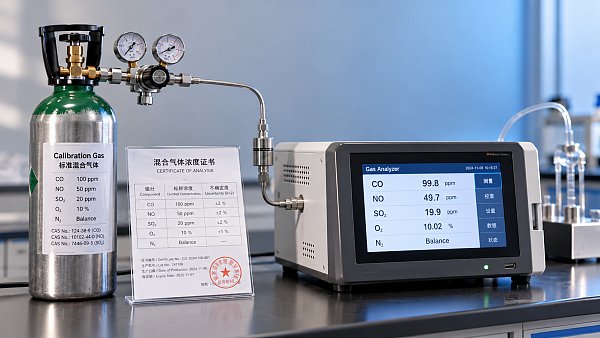
- Check if the stated calibration interval is realistic for your media cleanliness and operating cycle.
- Review whether spare consumables are standard items and whether replacement can be done onsite in under 30–60 minutes.
- Verify communication details beyond protocol name, including register structure and alarm diagnostics.
- Ask for documentation scope covering installation, calibration, maintenance, wiring, and commissioning guidance.
Lead time and implementation realities
For standard configurations, typical project timing may involve 1–2 weeks for technical clarification, 2–6 weeks for equipment preparation depending on customization level, and several days to 2 weeks for installation and commissioning planning. If sampling systems, cabinets, or software mapping are included, the schedule should be reviewed as a complete package rather than as an analyzer-only delivery.
This is where experienced instrumentation support matters. The supplier or engineering partner should be able to translate process conditions into a realistic analyzer package, not simply forward a catalog model. That capability lowers rework, improves acceptance testing efficiency, and helps technical evaluators defend the final choice internally.
Common mistakes, compliance concerns, and final decision guidance
One of the most common mistakes in industrial monitoring analyzer selection is assuming that a stronger laboratory-style number automatically means a better industrial solution. In online monitoring, robustness, serviceability, and data continuity often outperform ultra-fine sensitivity that cannot be maintained in the field. Another mistake is treating communications as a checkbox rather than a commissioning workload. A supported protocol does not guarantee smooth integration.
Compliance should also be reviewed with discipline. Technical evaluators do not need to invent unnecessary requirements, but they should verify alignment with common industrial documentation and quality practices. These may include calibration records, wiring documentation, maintenance instructions, traceable setup parameters, and suitability for the site’s electrical and environmental conditions. In regulated or audit-sensitive environments, weak documentation can be as problematic as weak measurement performance.
A final decision is usually strongest when it combines 3 views: technical adequacy, lifecycle effort, and project execution readiness. If two analyzers appear close in price and range, ask which one will need fewer interventions over the next 12 months, which one integrates faster into the current control architecture, and which one provides clearer diagnostic visibility for operators. Those are the differences that protect uptime and budget.
For organizations managing modernization, digital transformation, or smart industrial upgrades, the right industrial monitoring analyzer is more than an instrument. It is part of a data reliability chain that influences control quality, compliance confidence, and maintenance efficiency across the plant lifecycle.
FAQ for technical evaluators
How do I compare two analyzers with the same accuracy claim?
Check whether the claim is based on full scale, reading, or a narrower calibrated segment. Then compare drift behavior, recalibration interval, and actual process operating band. In many cases, an analyzer with a slightly broader stated tolerance but longer stable operation is the more useful industrial choice.
What is the biggest hidden cost in industrial monitoring analyzer projects?
Often it is not the instrument body itself, but the extras around it: sample conditioning, integration engineering, recurring consumables, calibration effort, and service access time. A lower purchase price can become more expensive over 1–3 years if maintenance frequency is high.
When should response time be treated as a critical parameter?
It becomes critical when analyzer data drives process adjustment, alarm management, or interlock logic. In trend-only applications, a slower response may be acceptable. The key is to confirm whether the stated response includes the full sample path and signal filtering.
Why choose us for specification review and solution discussion?
If you are evaluating an industrial monitoring analyzer across manufacturing, energy, environmental, laboratory-linked, or automation applications, we can support a more decision-ready review process. Our focus is not only on comparing numbers, but on clarifying what those numbers mean in real operation, integration, and maintenance terms.
You can contact us for parameter confirmation, model selection support, sample path discussion, communication and control integration checks, typical delivery cycle assessment, documentation scope review, and configuration suggestions for different industrial scenarios. If your team is narrowing multiple options, we can also help structure a side-by-side technical comparison before quotation finalization.
A useful next step is to prepare 5 inputs: process medium, operating range, site environment, control system interface, and expected maintenance interval. With that information, the industrial monitoring analyzer discussion becomes faster, clearer, and far more aligned with project success.
Recommended for You
 How does cross-interference affect multi-component gas analyzers?How does cross-interference affect multi component gas analyzers? Explore measurement errors, compensation limits, and validation tips to choose the right system for your process.
 How does temperature affect high-accuracy sensor performance?Explore how temperature affects high accuracy sensor performance. Learn to reduce thermal drift, evaluate compensation, and select the right sensor for reliable measurements.
 Can a C4H8O concentration analyzer distinguish between isomers?Can a C4H8O concentration analyzer distinguish isomers? Compare GC, FTIR and MS methods, uncover selectivity limits, and learn what to validate before choosing your instrument.
 How to identify a reliable supplier using on-time delivery recordsIdentify a Reliable Supplier by verifying on-time delivery records, original commitments, and complete shipments. Learn practical checks to reduce purchasing risk and protect your project schedule.
 How sensitive should a portable hydrogen analyzer be for lab use?Choose a portable hydrogen analyzer for laboratory use with the right quantification limit, accuracy, and range. Learn how to verify performance and avoid costly buying mistakes.
 How to set industrial calibration intervals based on equipment riskSet industrial calibration intervals based on equipment risk, drift, and as-found data. Learn when to shorten or extend schedules to improve reliability and avoid unnecessary costs.
 How to choose electrochemical analyzers for low-current measurementsCompare electrochemical analyzers for precise low-current measurements. Learn how noise, leakage, bandwidth, and real-cell testing help you choose the right instrument.
 What tolerance does a custom gas mixture need for calibration?Choose the right custom gas tolerance for calibration. Learn how blending tolerance, certified uncertainty, and stability affect accuracy—and avoid paying for precision you don’t need.
 How condensation affects stack detector readings in wet flue gasStack detector readings can drift when wet flue gas condenses. Learn how to identify moisture interference, prevent sample losses, and improve emissions monitoring reliability.
 How to prevent condensation in a CO2 analyzer sampling systemPrevent condensation in your CO2 analyzer sampling system. Learn how to control dew point, eliminate cold spots, and manage moisture for reliable readings and fewer costly disruptions.
 How to verify accuracy claims for industrial quality analyzersVerify accuracy claims for industrial quality analyzers with calibration checks, independent testing, and clear acceptance criteria. Learn how to reduce risk and buy with confidence.
 How to calculate cooling loads for an industrial analyzer shelterSize industrial analyzer shelter cooling with confidence. Learn to calculate equipment heat, solar gains, and ventilation loads, then select HVAC capacity for reliable analyzer performance.
 Hydrogen Analyzers for Energy Storage: Purity Monitoring vs. Leak DetectionChoosing a hydrogen analyzer for energy storage systems? Compare purity monitoring and leak detection to select the right sensors, improve safety, and protect fuel cell performance.
 NH3 Monitoring in Fertilizer Plants: Where Should Leak Analyzers Be Installed?NH3 analyzer for fertilizer production: discover where to place leak detectors around storage, compressors, and loading areas to reduce blind spots and improve early warning.
 Diesel Engine NOx Analyzers: Response Time and NO2 Conversion ExplainedChoosing a NOX analyzer for diesel engines? Learn how response time, NO2 conversion, and sampling design affect accuracy—and make a smarter, evidence-based purchase.
 SO2 Analyzers for Smelter Emissions: Sampling Hot, Dust-Laden Flue GasSelect an SO2 analyzer for smelting industry applications. Discover how to handle hot, dust-laden flue gas, prevent sample losses, and achieve reliable emissions monitoring.
 Unstable CH4 Readings in Biogas Monitoring? Check Moisture and Sample FlowCH4 analyzer for biogas monitoring giving unstable readings? Discover how moisture, sample flow, and pressure checks help pinpoint faults and restore reliable methane measurements.
 Buying a CO2 Analyzer for Brewery Gas Recovery: Costs Beyond the Purchase PriceBuying a CO2 analyzer for brewery applications? Compare sampling, installation, calibration, and downtime costs to uncover hidden expenses and make a smarter gas recovery investment.
 Where to Place CO Analyzers for Effective Parking Garage VentilationOptimize your CO analyzer for parking garage ventilation with practical placement tips. Learn how sensor height, airflow, and zone coverage support timely detection and effective fan control.
 NDIR vs. FTIR Gas Analyzers: Which Fits Your Environmental Research?Find the right infrared gas analyzer for environmental research. Compare NDIR vs. FTIR on sensitivity, gas coverage, sampling needs, and cost to choose confidently for your study.
 Oxygen Analyzers for Diving: Calibration Checks Before Nitrox BlendingUsing an oxygen analyzer for diving applications? Discover essential calibration, sensor, and sampling checks before nitrox blending to support reliable readings.
 How Paramagnetic Oxygen Analyzers Work and Why Sample Pressure MattersLearn how a paramagnetic oxygen analyzer works, why sample pressure affects accuracy, and what to check in compensation and calibration before choosing your system.
 How Much Does a Complete CEMS Integration Project Typically Cost?How much does a complete CEMS integration project typically cost? Explore budget ranges, hidden installation costs, and compliance needs to compare quotes and plan confidently.
 What Is the Typical Response Time for Industrial Air Monitors?What is the typical response time for industrial air monitors? Explore T90, sampling delays, and alarm settings to compare performance and choose the right monitor with confidence.
 Do Regulatory Monitoring Systems Need Third-Party Certification?Do regulatory monitoring systems need third-party certification? Learn when it is required, what certificates prove, and how to verify compliance before buying.
 How Do You Choose Wired or Wireless for Stack Monitoring?Learn how to choose between wired and wireless for stack monitoring. Compare reliability, lifecycle costs, and data recovery to find the right CEMS setup for your site.
 What Happens When Combustible Gas Sensor Calibration Is Overdue?What happens if combustible gas sensor is not recalibrated on time? Discover the risks of inaccurate readings and missed alarms, plus steps to restore reliable protection.
 Can One Multi-Gas Detector Replace Four Separate Analyzers?Find out: can a single multi-gas detector replace four separate analyzers? Compare accuracy, safety, compliance, and lifetime costs to make a confident buying decision.
 Industrial Safety vs. Emission Monitoring: What Are the Differences?What are the main differences between industrial safety and emission monitoring? Compare goals, sensors, response times, and compliance needs to choose the right systems for your facility.
 Is Remote Monitoring Worth the Cost for Small Emission Sources?Is it worth investing in remote monitoring for small emission sources? Compare costs, compliance needs, and potential savings to choose the right solution for your operation.
 How Do You Handle Analyzer Failure During an Environmental Audit?Learn how to handle analyzer failure during environmental compliance audit procedures. Protect evidence, verify data, and restore monitoring with this practical response guide.
 Do VOC Monitors Require Explosion-Proof Certification?Does VOC monitoring require explosion-proof certification? Learn when approval is needed, compare ATEX and IECEx, and choose the right monitor for your site.

Search Categories
Search Categories
- Smart Meters & Power Quality
- Transformer Gas Analyzers
- BESS Thermal Runaway Detectors
- Energy, Power & Smart Grid Monitoring
- Optical Profilers & CMM
- Ultrasonic & X-Ray NDT
- Calibration Standards
- Precision Metrology & NDT
- Water Quality Analyzers
- CEMS & VOCs Monitors
- Price Trends
- Import & Export Updates
- Market Trends
- Industry News
- Industry Insights
Latest Article
- How does cross-interference affect multi-component gas analyzers?How does cross-interference affect multi component gas analyzers? Explore measurement errors, compensation limits, and validation tips to choose the right system for your process.Posted by:
- How does temperature affect high-accuracy sensor performance?Explore how temperature affects high accuracy sensor performance. Learn to reduce thermal drift, evaluate compensation, and select the right sensor for reliable measurements.Posted by:
- Can a C4H8O concentration analyzer distinguish between isomers?Can a C4H8O concentration analyzer distinguish isomers? Compare GC, FTIR and MS methods, uncover selectivity limits, and learn what to validate before choosing your instrument.Posted by:
Please give us a message
