
Portable Control Systems: Key Features to Compare Before Deployment


Portable Control Systems: Key Features to Compare Before Deployment
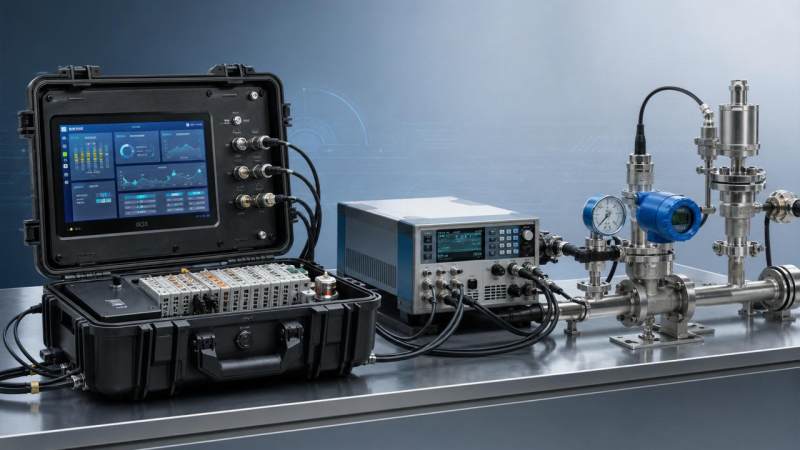
For project managers and engineering leads, choosing the right portable control system can directly affect deployment speed, operational safety, and long-term scalability.
Before committing resources, it is essential to compare the core features of portable control solutions.
That includes connectivity, ruggedness, integration, compliance, and real-time performance in demanding industrial environments.
A portable control setup looks simple on paper.
In practice, it sits at the intersection of field operations, automation strategy, cybersecurity, and lifecycle cost.
That is why the best buying decisions rarely focus on price alone.
They focus on fit, risk, and deployment readiness.
From recent market shifts, one signal is clear.
Portable control is no longer a niche option for temporary jobs only.
It is increasingly used for mobile skids, test benches, retrofit projects, remote assets, emergency response, and fast-track commissioning.
Start With the Deployment Context
The first comparison step is not technical.
It is operational.
A portable control system for a water treatment pilot behaves differently from one used in oil and gas maintenance.
The same applies to food processing, utility substations, and laboratory process packages.
In actual projects, mismatch usually begins when teams skip the use-case definition.
Ask a few direct questions early.
- Will the portable control unit move daily, weekly, or only during shutdowns?
- Will operators use it indoors, outdoors, or in hazardous areas?
- Does it need local control only, or remote visibility too?
- Is the application temporary, repeatable, or evolving into permanent automation?
- How critical is uptime during transport, startup, and field handover?
These answers shape every later decision, from enclosure design to protocol support.
Compare Mobility, Ruggedness, and Power Flexibility
A portable control system must survive movement without becoming a maintenance burden.
That sounds obvious, but many systems are only portable in a brochure sense.
Look beyond size and weight.
Check handle strength, cable protection, connector durability, shock resistance, ingress protection, and thermal performance.
Portable control often works where clean utility power is not guaranteed.
That makes power flexibility a serious selection factor.
- Support for multiple voltage inputs reduces site adaptation delays.
- Battery backup or UPS integration protects data and process continuity.
- Low-power architecture helps in remote or generator-fed locations.
- Thermal management matters when enclosures face heat, dust, or rain.
If field teams must improvise power arrangements, deployment risk rises quickly.
Evaluate Real-Time Performance and Control Stability
Not every portable control application needs millisecond-level precision.
But every deployment needs predictable performance.
That means stable scan times, reliable I/O processing, and fast operator response.
This becomes more important when the portable control platform handles alarms, interlocks, or closed-loop control.
Compare the controller architecture carefully.
- Processor capacity should match current logic and future expansion.
- I/O update rates should align with process dynamics.
- Data logging should not slow active control tasks.
- HMI responsiveness should remain smooth under alarm load.
A useful vendor question is simple.
What happens when communications degrade, devices disconnect, or the operator screen freezes?
The answer reveals how mature the portable control design really is.
Prioritize Connectivity and Integration Early
Connectivity is where many portable control projects either accelerate or stall.
If the system cannot talk smoothly to plant assets, the mobility advantage fades.
Look at both present integration and future interoperability.
Common protocol support is a starting point, not the finish line.
In real operations, teams often need a portable control platform to bridge legacy and modern environments.
- Check support for Modbus, EtherNet/IP, PROFINET, OPC UA, or serial devices.
- Confirm how easily sensors, analyzers, drives, and skids can be added.
- Review edge data export for SCADA, MES, cloud dashboards, or historians.
- Verify network segmentation and secure remote access options.
This is where GIH often sees hidden cost emerge.
A lower-priced portable control unit can become expensive if every site needs custom gateway work.
Do Not Treat Compliance as a Final Checkbox
Compliance should be screened at the beginning, not before purchase order release.
Portable control deployments often cross locations, teams, and operating conditions.
That creates extra exposure around electrical safety, hazardous areas, and data handling.
Depending on the site, requirements may involve CE, UL, ATEX, IECEx, EMC, or industry-specific validation.
A strong portable control supplier should provide clear documentation without delays.
- Certification status for enclosure, components, and assembled system.
- Environmental limits for humidity, vibration, and temperature.
- Cybersecurity controls for accounts, patching, and remote sessions.
- Traceable documents for audits, commissioning, and maintenance records.
If compliance evidence is vague, deployment schedules usually slip later.
Assess Serviceability, Training, and Lifecycle Economics
A portable control decision should include what happens after startup.
This is especially true for repeat deployments across regions or contractors.
The easier the system is to maintain, the more value it creates over time.
Look for standardized wiring, labeled components, modular I/O, and accessible spare parts.
Also compare software licensing models, update policies, and training needs.
A technically advanced portable control package can still fail commercially if only one expert can operate it.
- Estimate commissioning time with average field staff, not ideal specialists.
- Price spare modules, connectors, batteries, and HMI replacements.
- Review vendor support response times across your active regions.
- Check whether future scaling needs software rewrites or simple configuration.
This broader view usually separates a cheap purchase from a smart investment.
A Practical Comparison Framework
To make selection easier, score each portable control option against the same criteria.
Keep the framework short enough to use in real procurement discussions.
A matrix like this keeps conversations evidence-based.
It also helps teams explain why one portable control system wins over another.
Final Takeaway Before You Deploy
The best portable control decision is rarely the one with the longest feature list.
It is the one that fits the process, the site, and the growth path.
A strong comparison should balance mobility, ruggedness, real-time behavior, integration, compliance, and lifecycle support.
When those areas are reviewed together, portable control becomes easier to scale and safer to deploy.
This is also where reliable market intelligence matters.
GIH tracks instrumentation trends, technical standards, and supplier capability signals across global industrial markets.
That makes it easier to evaluate portable control options with more confidence and less guesswork.
Before the next deployment, compare the practical details first, score the risks honestly, and choose the portable control platform that will still work well after the first startup milestone.
Recommended for You
 When custom gas analysis is the right fit for complex process streamsCustom gas analysis for complex process streams: learn when tailored sampling, interference control, and reliable measurement design deliver confident decisions.
 When does a laser gas analyzer meet stack emissions monitoring needs?Laser gas analyzer for stack emissions: learn when it delivers fast, reliable data, how to assess installation risks, and what to verify for CEMS compliance.
 How to select a hazardous gas analyzer for confined spacesHazardous gas analyzer selection for confined spaces: compare sensors, sampling, certifications, alarms, and maintenance to protect workers and choose with confidence.
 When is a single gas analyzer sufficient for workplace safety monitoring?Discover when a single gas analyzer delivers reliable workplace safety monitoring, and learn the key limits, calibration needs, and risks that require broader detection.
 How to choose an ambient gas analyzer for low-level leak detectionAmbient gas analyzer selection for low-level leak detection: compare sensitivity, cross-sensitivity, sampling design, alarms, and calibration for reliable site performance.
 How to tell when an oxygen sensor needs replacementOxygen sensor replacement signs explained: learn how live data, fault codes, wiring checks, and exhaust inspections pinpoint the real issue before you buy.
 How laser gas analyzers improve combustion control in steel furnacesLaser gas analyzer for steel industry applications delivers fast in-situ O₂ and CO data to optimize furnace combustion, cut fuel waste, and improve steel heating stability.
 How to verify whether explosion proof equipment meets site requirementsExplosion proof equipment verification made practical: match zones, gas or dust groups, temperature classes, certificates, and installation conditions for confident compliance.
 How industrial gas analysis helps detect contamination before releaseIndustrial Gas Analysis helps detect moisture, oil, oxygen, and toxic contaminants before release—protecting processes, ensuring compliance, and reducing costly risks.
 When is electrochemistry detection the right choice for water analysis?Electrochemistry detection for water analysis: learn when fast, reliable monitoring of ions, chlorine, pH, and more delivers actionable results.
 How industrial standards reduce quality risks in supplier selectionIndustrial Standard guidance helps quality and safety managers reduce supplier risks, verify compliance, strengthen traceability, and build resilient instrumentation supply chains.
 When does a multi-component system reduce installation complexity?Multi component systems reduce installation complexity when they eliminate field interfaces, streamline commissioning, and provide proven compatibility. Learn how to assess total cost and supplier accountability.
 How to size an industrial control shelter for outdoor equipmentIndustrial control shelter sizing guide: optimize layout, HVAC, access, safety, and expansion space for reliable outdoor equipment operations.
 How flue analysis helps verify combustion efficiencyFlue analysis verifies combustion efficiency by assessing O2, CO, CO2, and stack temperature to identify excess air, incomplete combustion, and heat losses.
 How to select industrial gas detectors for confined spacesIndustrial gas detectors for confined spaces: learn how to match sensors, sampling methods, alarms, and certifications to real atmospheric hazards.
 When does a laser oxygen analyzer outperform zirconia sensors?Laser oxygen analyzer vs. zirconia sensors: compare speed, selectivity, maintenance, gas chemistry, and installation needs to choose the right oxygen measurement solution.
 How to select a percent range analyzer for process measurementsPercent range analyzer selection made practical: compare accuracy, sample systems, calibration, gas matrix, integration, and lifecycle cost for reliable process measurements.
 How explosion proof analysis verifies safe equipment for hazardous areasExplosion proof analysis verifies hazardous-area equipment by matching certifications, temperature ratings, installation details, and inspection controls for safer compliance.
 When does fixed gas detection need point sensors instead of open-path monitoring?Fixed gas detection: discover when point sensors outperform open-path monitoring for predictable leaks, enclosed zones, local alarms, and safer design decisions.
 How to choose industrial metrology systems for tight-tolerance partsIndustrial metrology guide for tight-tolerance parts: compare CMMs, optical scanners, gauges, uncertainty, workflow, and traceable inspection strategies.
 How process metrology reduces measurement variation in productionProcess metrology reduces production measurement variation by improving traceability, uncertainty control, calibration, and reliable quality decisions.
 How to select an industrial monitoring analyzer for harsh environmentsIndustrial monitoring analyzer selection for harsh environments: evaluate sampling, durability, hazardous-area compliance, accuracy, maintenance, and data reliability.
 How calibration intervals affect test and measurement equipment accuracyTest and measurement equipment calibration intervals directly affect accuracy, risk, compliance, and uptime. Learn how to set evidence-based schedules that protect critical decisions.
 When does process gas monitoring need continuous measurement?Process gas monitoring needs continuous measurement when rapid changes threaten safety, quality, compliance, or uptime. Learn how to specify reliable, actionable monitoring systems.
 How to prevent false alarms in power plant instrumentationPower plant instrumentation guide: prevent false alarms with reliable signal checks, smarter alarm settings, mode-based control, and actionable operator responses.
 How fixed gas detectors help prevent leaks in enclosed workspacesFixed gas detectors provide continuous leak monitoring in enclosed workspaces, enabling faster alarms, safer responses, and stronger protection for people and processes.
 How industrial gas analysis helps detect process contamination earlyIndustrial Gas Analysis helps detect oxygen, moisture, and hydrocarbon contamination early, enabling faster fault isolation, safer operations, and stronger process control.
 What drives environmental compliance continuous monitoring setup cost?Environmental compliance continuous monitoring setup cost: uncover hidden expenses, compare bids accurately, and build a reliable, audit-ready system.
 How to select gas analysis equipment for continuous emissions monitoringGas analysis equipment selection guide for reliable continuous emissions monitoring—compare technologies, sampling, calibration, compliance, and maintenance needs.
 What detection limit is needed for NH3 environmental monitoring?High accuracy NH3 analyzer for environmental monitoring: learn how to set the right detection limit, improve sampling reliability, and make defensible decisions.
 How to select a NOX analyzer for power plant emissions complianceNOX analyzer for power plant emissions: learn how to select a compliant, reliable CEMS solution with the right range, sample handling, calibration, and data integrity.
 How to evaluate a laser gas analyzer manufacturer in GermanyLaser gas analyzer manufacturer in Germany: compare accuracy, sample handling, interference control, calibration, and service to select a reliable solution.









Search Categories
Search Categories
- Smart Meters & Power Quality
- Transformer Gas Analyzers
- BESS Thermal Runaway Detectors
- Energy, Power & Smart Grid Monitoring
- Optical Profilers & CMM
- Ultrasonic & X-Ray NDT
- Calibration Standards
- Precision Metrology & NDT
- Water Quality Analyzers
- CEMS & VOCs Monitors
- Price Trends
- Import & Export Updates
- Market Trends
- Industry News
- Industry Insights
Latest Article
- When custom gas analysis is the right fit for complex process streamsCustom gas analysis for complex process streams: learn when tailored sampling, interference control, and reliable measurement design deliver confident decisions.Posted by:
- When does a laser gas analyzer meet stack emissions monitoring needs?Laser gas analyzer for stack emissions: learn when it delivers fast, reliable data, how to assess installation risks, and what to verify for CEMS compliance.Posted by:
- How to select a hazardous gas analyzer for confined spacesHazardous gas analyzer selection for confined spaces: compare sensors, sampling, certifications, alarms, and maintenance to protect workers and choose with confidence.Posted by:
Please give us a message
