
How to select a hydrogen analyzer for petrochemical process safety


A hydrogen analyzer should be selected from the consequence of a wrong reading backward. In a petrochemical unit, the same reported hydrogen concentration can mean very different things: excess hydrogen in a recycle loop, an oxygen-bearing hazard in a hydrogen-rich system, a small leak accumulating in an enclosed area, or hydrogen impurity that affects catalyst performance and product quality. The measurement objective determines the sensing principle, measuring range, sample system, response expectation, and safety certification.
Start by defining the decision tied to the analyzer signal. A process-control measurement needs stable, repeatable data at normal operating conditions. A safety interlock needs a defined failure response, a response time that matches the hazardous scenario, and diagnostics that reveal loss of measurement. A purity or contaminant measurement may require lower detection capability and stronger protection against cross-sensitivity. Treating these duties as interchangeable is a common source of unsuitable specifications.
Define the hydrogen measurement before comparing instruments
The first question is whether the analyzer measures hydrogen concentration, detects hydrogen as a combustible gas, or measures another component in a hydrogen-containing stream. A detector intended to warn of an external hydrogen release is not automatically suitable for measuring hydrogen purity in a process line. Likewise, a process analyzer that accurately trends recycle-gas composition may be too slow or too remote to serve as a leak alarm.
Write the measurement statement in operational terms: the stream location, expected normal concentration, credible minimum and maximum, pressure, temperature, flow behavior, background gas composition, moisture, condensable hydrocarbons, and the action taken when the reading crosses its relevant limit. Include start-up, shutdown, regeneration, purge, and upset conditions. These are often more demanding than steady-state service. An analyzer that performs well on dry, filtered hydrogen may drift, foul, or create a delayed result when exposed to wet gas, amine carryover, aerosols, sulfur compounds, or heavy hydrocarbon vapor.
Range selection deserves more attention than simply choosing the broadest available span. A very wide range can reduce useful resolution near the point where action is required. A narrow range may saturate during an upset and conceal the magnitude of the deviation. Where normal operation occupies a small part of a wide possible range, separate ranges, a dedicated alarm detector, or an analyzer with verified range-switching behavior may be appropriate. The specification should state accuracy and repeatability at the concentrations that matter, not only as a favorable percentage of full scale.
Match the sensing technology to the gas matrix
No measurement principle is universally best for a hydrogen analyzer for petrochemical industry service. Hydrogen has physical properties that support several techniques, but the surrounding gases and installation conditions govern which method remains dependable.
Thermal conductivity analyzers are frequently considered for bulk hydrogen measurements because hydrogen differs strongly from many common gases. The limitation is not minor: the instrument responds to heat-transfer behavior, not to hydrogen alone. A calibration based on hydrogen in nitrogen will not necessarily produce the same reading when methane, carbon dioxide, steam, or a changing hydrocarbon mixture is present. Before approving this technology, obtain the expected matrix for normal and abnormal conditions and evaluate likely interferents across their credible concentration ranges.
A useful distinction is between a simple binary mixture and a changing multicomponent process gas. Thermal conductivity is often straightforward in the first case. In the second, the same hydrogen value can correspond to different sensor outputs because the non-hydrogen fraction has changed. A more selective method, a matrix compensation strategy, or an additional measurement may be needed when that ambiguity would alter a safety or quality decision.
Response time is a system property
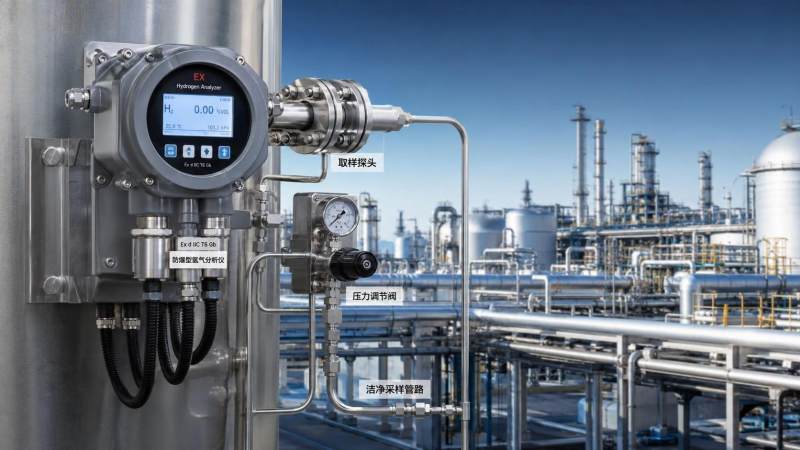
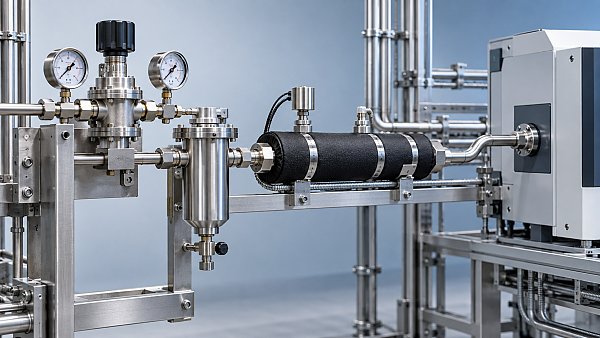
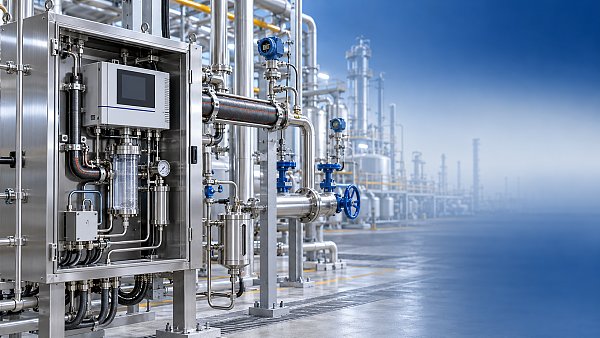
Catalog response time often refers to the sensor or analytical cell after a prepared sample reaches it. The real process response includes the process tap, probe, isolation valve, pressure reduction, filter, heated line where applicable, sample tubing volume, flow control, conditioning vessel, and analyzer cell. A fast sensor connected to a long, low-flow sample line can deliver a slow alarm.
For safety-related use, define the required time from process change or release to usable signal at the control or alarm system. Then examine the complete path. Dead legs, oversized tubing, clogged filters, liquid traps, and low sample flow introduce lag. Increasing sample flow can reduce transport delay, but it can also increase vent handling requirements, waste gas volume, or disturbance of pressure regulation. The answer is engineered sample-system design, not a sensor specification alone.
Direct insertion avoids some sample transport delay, yet it introduces other questions: whether the sensing element is compatible with line pressure and temperature, whether it is exposed to liquid droplets or deposits, whether it can be isolated for maintenance, and whether its location represents the bulk gas rather than a stagnant boundary layer. A probe installed downstream of a quench point or near a poorly mixed injection location may report a local condition rather than the composition controlling the process.
Hazardous-area suitability must cover the complete installation
Petrochemical hydrogen service commonly requires equipment suitable for the classified area in which it is installed. Review the certification basis against the site classification, gas group, temperature class, ambient temperature range, enclosure protection, cable entries, and installation method. ATEX or IECEx markings are meaningful only when the supplied configuration and field installation remain within the certified conditions.
The analyzer cabinet, transmitter, sample pump, solenoid valves, heaters, displays, junction boxes, and cable glands deserve the same scrutiny as the sensing element. A compliant transmitter does not make an adjacent non-rated component acceptable. Where the analyzer is installed in a safe area and receives a sample from a hazardous process, the sample panel still requires a defensible arrangement for isolation, pressure control, ventilation, vent routing, and release containment.
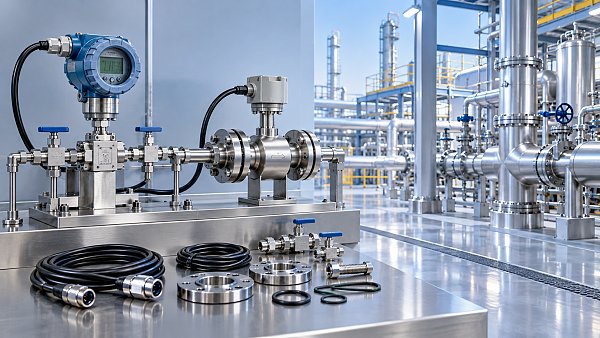
Hydrogen service also raises materials questions. Hydrogen can permeate seals and may escape through fittings that appear satisfactory for heavier gases. At elevated pressure, fitting quality, tubing wall integrity, thread sealing practice, and pressure-relief routing become part of measurement reliability. For wet, sour, or corrosive streams, confirm wetted-material compatibility for probe alloys, tubing, filters, regulators, valve seats, O-rings, and adhesive or potting materials. A sample system built with an incompatible elastomer may first appear as unstable analyzer readings before it becomes an obvious leak or maintenance issue.
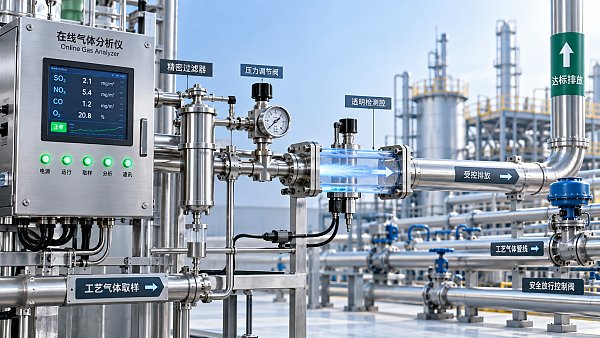
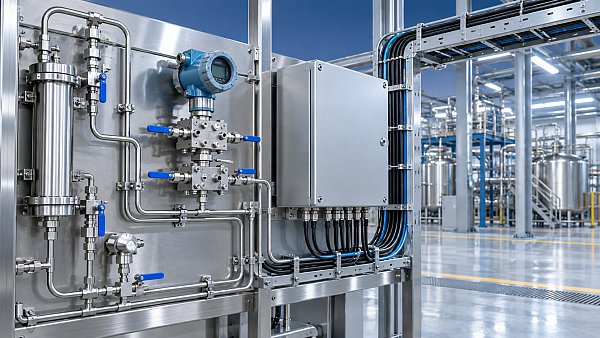
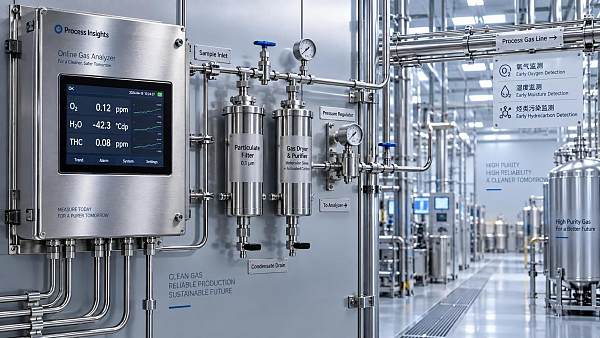
Sample conditioning determines whether the result represents the process
A process stream rarely reaches an analyzer in a condition suitable for direct measurement. Pressure reduction can cause cooling, condensation, flashing, or composition changes. A stream containing water or hydrocarbons may lose part of its heavier fraction in a cold line, while an overly hot line can damage seals or alter sensitive components. The sample system should preserve the intended phase and composition up to the measurement point.
Locate the sample takeoff where the process is sufficiently mixed and where the tap is unlikely to collect liquid or solids. A horizontal line may need careful probe orientation; a low point can draw condensate, while a high point can miss entrained liquid behavior that is genuinely present in the bulk stream. The objective is not always to eliminate every aerosol. It is to ensure the analytical result has a defined relationship to the process condition being controlled.
- Pressure regulation should accommodate normal pressure variation without causing a changing sample flow or uncontrolled cooling at the analyzer inlet.
- Filters need a stated particle-retention purpose and a maintenance indication. Fine filtration protects analytical cells, but a neglected filter can become the dominant source of response delay.
- Heated components should be used only where temperature control prevents condensation or adsorption. Heating a dry, stable sample unnecessarily adds failure points.
- Vent lines must be sized and routed for the actual sample composition, including hydrogen release during calibration, purge, fault conditions, and regulator failure scenarios.
Do not accept “dry sample required” as a complete requirement. Clarify whether the analyzer needs no free liquid, a controlled dew point, no condensable hydrocarbons, or a specific maximum moisture level. These conditions call for different conditioning arrangements and create different risks of changing the sample composition.
Calibration strategy should reflect likely failure modes
Calibration establishes the relationship between response and known gas composition, but it cannot correct a sample that no longer represents the process. A stable verification result with calibration gas does not prove that sample flow is adequate, filters are clean, the probe is unobstructed, or the process matrix has remained within the analyzer’s assumptions.
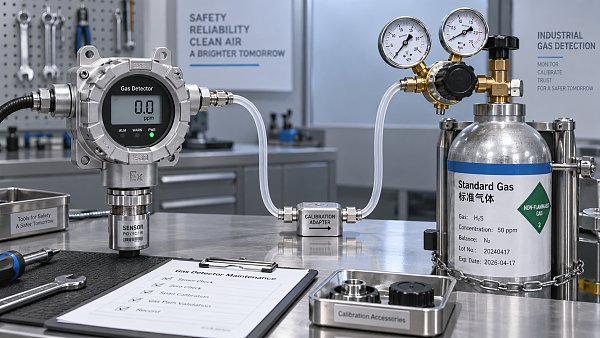
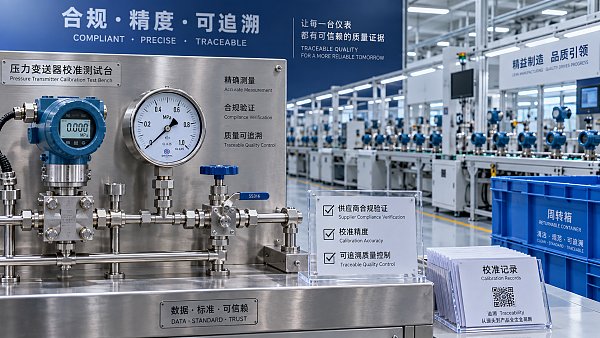
Select calibration gases that bracket the operational region and are traceable through the site’s quality system. For a binary measurement, the balance gas must match the intended application rather than simply being convenient. Where the background matrix changes, a single zero-and-span pair may provide a false sense of confidence. Cross-checking against a laboratory method or an independent analyzer during commissioning can reveal matrix effects, transport delay, and installation bias before the signal is relied upon.
Automatic calibration can reduce exposure and improve consistency, but it adds valves, tubing, pressure control, and logic that must be maintained. A manual arrangement may be more appropriate for low-frequency verification when access is controlled and the procedure is clear. Either arrangement should define what happens after a failed calibration, a failed validation, low sample flow, loss of power, analyzer fault, or communication failure. A signal that freezes at its last good value can be more hazardous than an explicit fault indication.
Integrate the analyzer with the protective function
Alarm setpoints should be based on the process hazard analysis and the meaning of the measurement, rather than copied from an instrument’s range or a generic gas-detection threshold. Consider whether the alarm is intended to identify contamination, prevent entry into a flammable region, warn of a release, protect catalyst activity, or trigger a shutdown. These functions have different tolerances for delay, uncertainty, nuisance alarms, and loss of signal.
For any signal connected to a protective action, document the input scaling, alarm direction, fault state, output behavior, time filtering, and proof-test method. Digital communications can provide rich diagnostics, but the shutdown or alarm path must remain understandable when communications are lost. Excessive damping can make a fluctuating measurement easier to view while delaying recognition of a rapid hazardous change. Conversely, no filtering on a noisy sample stream may create repeated alarms that are eventually bypassed or ignored.
Commissioning should include realistic functional tests of sample flow failure, blocked filters, analyzer fault, calibration mode, output wiring, alarm annunciation, and final action. These tests expose gaps between the instrument data sheet and the installed system. The chosen hydrogen analyzer is suitable only when its measured result, diagnostic behavior, sample handling, and protective response work together under the conditions expected in service.
Recommended for You
 How sample conditioning affects accuracy in petrochemical analyzersImprove accuracy in petrochemical analyzers with smarter sample conditioning. Discover how phase control, filtration, and transport design prevent bias and deliver reliable process data.
 How to troubleshoot sensor drift in industrial gas detectorsIndustrial gas detectors showing sensor drift? Learn how to verify calibration gas, identify root causes, and determine when sensor replacement is needed for reliable monitoring.
 How to judge whether a competitive price reflects real valueCompetitive Price: learn how to compare scope, compliance, performance, and lifecycle costs to identify real value, reduce risk, and make smarter purchasing decisions.
 When custom gas analysis is the right fit for complex process streamsCustom gas analysis for complex process streams: learn when tailored sampling, interference control, and reliable measurement design deliver confident decisions.
 When does a laser gas analyzer meet stack emissions monitoring needs?Laser gas analyzer for stack emissions: learn when it delivers fast, reliable data, how to assess installation risks, and what to verify for CEMS compliance.
 How to select a hazardous gas analyzer for confined spacesHazardous gas analyzer selection for confined spaces: compare sensors, sampling, certifications, alarms, and maintenance to protect workers and choose with confidence.
 When is a single gas analyzer sufficient for workplace safety monitoring?Discover when a single gas analyzer delivers reliable workplace safety monitoring, and learn the key limits, calibration needs, and risks that require broader detection.
 How to choose an ambient gas analyzer for low-level leak detectionAmbient gas analyzer selection for low-level leak detection: compare sensitivity, cross-sensitivity, sampling design, alarms, and calibration for reliable site performance.
 How to tell when an oxygen sensor needs replacementOxygen sensor replacement signs explained: learn how live data, fault codes, wiring checks, and exhaust inspections pinpoint the real issue before you buy.
 How laser gas analyzers improve combustion control in steel furnacesLaser gas analyzer for steel industry applications delivers fast in-situ O₂ and CO data to optimize furnace combustion, cut fuel waste, and improve steel heating stability.
 How to verify whether explosion proof equipment meets site requirementsExplosion proof equipment verification made practical: match zones, gas or dust groups, temperature classes, certificates, and installation conditions for confident compliance.
 How industrial gas analysis helps detect contamination before releaseIndustrial Gas Analysis helps detect moisture, oil, oxygen, and toxic contaminants before release—protecting processes, ensuring compliance, and reducing costly risks.
 When is electrochemistry detection the right choice for water analysis?Electrochemistry detection for water analysis: learn when fast, reliable monitoring of ions, chlorine, pH, and more delivers actionable results.
 How industrial standards reduce quality risks in supplier selectionIndustrial Standard guidance helps quality and safety managers reduce supplier risks, verify compliance, strengthen traceability, and build resilient instrumentation supply chains.
 When does a multi-component system reduce installation complexity?Multi component systems reduce installation complexity when they eliminate field interfaces, streamline commissioning, and provide proven compatibility. Learn how to assess total cost and supplier accountability.
 How to size an industrial control shelter for outdoor equipmentIndustrial control shelter sizing guide: optimize layout, HVAC, access, safety, and expansion space for reliable outdoor equipment operations.
 How flue analysis helps verify combustion efficiencyFlue analysis verifies combustion efficiency by assessing O2, CO, CO2, and stack temperature to identify excess air, incomplete combustion, and heat losses.
 How to select industrial gas detectors for confined spacesIndustrial gas detectors for confined spaces: learn how to match sensors, sampling methods, alarms, and certifications to real atmospheric hazards.
 When does a laser oxygen analyzer outperform zirconia sensors?Laser oxygen analyzer vs. zirconia sensors: compare speed, selectivity, maintenance, gas chemistry, and installation needs to choose the right oxygen measurement solution.
 How to select a percent range analyzer for process measurementsPercent range analyzer selection made practical: compare accuracy, sample systems, calibration, gas matrix, integration, and lifecycle cost for reliable process measurements.
 How explosion proof analysis verifies safe equipment for hazardous areasExplosion proof analysis verifies hazardous-area equipment by matching certifications, temperature ratings, installation details, and inspection controls for safer compliance.
 When does fixed gas detection need point sensors instead of open-path monitoring?Fixed gas detection: discover when point sensors outperform open-path monitoring for predictable leaks, enclosed zones, local alarms, and safer design decisions.
 How to choose industrial metrology systems for tight-tolerance partsIndustrial metrology guide for tight-tolerance parts: compare CMMs, optical scanners, gauges, uncertainty, workflow, and traceable inspection strategies.
 How process metrology reduces measurement variation in productionProcess metrology reduces production measurement variation by improving traceability, uncertainty control, calibration, and reliable quality decisions.
 How to select an industrial monitoring analyzer for harsh environmentsIndustrial monitoring analyzer selection for harsh environments: evaluate sampling, durability, hazardous-area compliance, accuracy, maintenance, and data reliability.
 How calibration intervals affect test and measurement equipment accuracyTest and measurement equipment calibration intervals directly affect accuracy, risk, compliance, and uptime. Learn how to set evidence-based schedules that protect critical decisions.
 When does process gas monitoring need continuous measurement?Process gas monitoring needs continuous measurement when rapid changes threaten safety, quality, compliance, or uptime. Learn how to specify reliable, actionable monitoring systems.
 How to prevent false alarms in power plant instrumentationPower plant instrumentation guide: prevent false alarms with reliable signal checks, smarter alarm settings, mode-based control, and actionable operator responses.
 How fixed gas detectors help prevent leaks in enclosed workspacesFixed gas detectors provide continuous leak monitoring in enclosed workspaces, enabling faster alarms, safer responses, and stronger protection for people and processes.
 How industrial gas analysis helps detect process contamination earlyIndustrial Gas Analysis helps detect oxygen, moisture, and hydrocarbon contamination early, enabling faster fault isolation, safer operations, and stronger process control.
 What drives environmental compliance continuous monitoring setup cost?Environmental compliance continuous monitoring setup cost: uncover hidden expenses, compare bids accurately, and build a reliable, audit-ready system.
 How to select gas analysis equipment for continuous emissions monitoringGas analysis equipment selection guide for reliable continuous emissions monitoring—compare technologies, sampling, calibration, compliance, and maintenance needs.


Search Categories
Search Categories
- Smart Meters & Power Quality
- Transformer Gas Analyzers
- BESS Thermal Runaway Detectors
- Energy, Power & Smart Grid Monitoring
- Optical Profilers & CMM
- Ultrasonic & X-Ray NDT
- Calibration Standards
- Precision Metrology & NDT
- Water Quality Analyzers
- CEMS & VOCs Monitors
- Price Trends
- Import & Export Updates
- Market Trends
- Industry News
- Industry Insights
Latest Article
- How sample conditioning affects accuracy in petrochemical analyzersImprove accuracy in petrochemical analyzers with smarter sample conditioning. Discover how phase control, filtration, and transport design prevent bias and deliver reliable process data.Posted by:
- How to troubleshoot sensor drift in industrial gas detectorsIndustrial gas detectors showing sensor drift? Learn how to verify calibration gas, identify root causes, and determine when sensor replacement is needed for reliable monitoring.Posted by:
- How to judge whether a competitive price reflects real valueCompetitive Price: learn how to compare scope, compliance, performance, and lifecycle costs to identify real value, reduce risk, and make smarter purchasing decisions.Posted by:
Please give us a message
