
When does it make sense to automate a production line?


When automation starts to make business sense
Automating a Production Line is rarely a yes-or-no technology question. In practice, it is a timing question. A line can be technically automatable for years before it becomes financially or operationally worth doing. Many companies get this backwards. They see labor pressure, hear competitors talking about smart factories, and jump straight to robotics, conveyors, sensors, and software. Then six months later they discover the bottleneck was not manual labor at all; it was unstable upstream supply, inconsistent product specs, weak maintenance discipline, or missing process data.
The better way to think about automation is simple: automate when repeatability matters more than improvisation, when data matters as much as motion, and when the line has reached a level of maturity where machines can outperform human work not only in speed, but in consistency, traceability, and risk control.
That applies across sectors, but the trigger points look different in electronics assembly, food processing, chemical dosing, medical consumables, packaging, or component machining. The equipment changes. The logic does not.
The strongest signal: your process is stable enough to be codified
A manual line can survive on operator judgment. An automated line cannot. It needs clear tolerances, stable cycle steps, defined changeover routines, and measurable quality gates. If experienced operators are still “making it work” by listening to machines, adjusting by feel, or compensating for batch variation on the fly, full automation may be premature.
This is especially true where instrumentation is central to process control. If pressure, temperature, flow, level, torque, weight, conductivity, or vision inspection data are not already trusted, automation will only make bad decisions faster. In process industries, this is often where projects succeed or fail. You do not really automate a line; you automate a controlled process. And controlled means measured.
That is one reason industrial buyers increasingly look beyond machinery brochures and into the quality of the sensing and control layer. Platforms such as Global Instrument Hub have grown relevant here because decision-makers are no longer comparing only machine frames or PLC brands. They are comparing the reliability of transmitters, analyzers, calibration logic, communication architecture, and supplier depth behind the whole system.
When labor is a chronic constraint, not just an annual complaint
Rising labor cost alone does not justify automation. High turnover, skill scarcity, safety exposure, and production dependence on a few key operators often do.
A line becomes a serious automation candidate when management sees patterns like these: overtime becoming permanent, quality drifting by shift, training time stretching because the task is hard to standardize, or output dropping whenever a small group of experienced operators is absent. In these situations, labor is not just an expense line. It is a capacity risk.
Some tasks are particularly good candidates: repetitive pick-and-place, high-frequency inspection, hazardous filling, precision dispensing, end-of-line packing, and operations requiring strict cycle time discipline. By contrast, highly variable assembly with frequent engineering changes may still favor semi-automation or assisted workstations.
Quality problems are often a better trigger than headcount reduction
The most convincing automation business cases are often built on scrap, rework, traceability, and compliance pressure rather than simple labor savings. This matters in sectors where every process parameter leaves a quality signature. Think torque in fastening, temperature in curing, pressure in sealing, or flow rate in chemical dosing. If those variables drift, the cost is not just material waste. It can mean warranty claims, failed audits, or lost approvals.
In regulated or high-risk environments, the threshold is even lower. A pharmaceutical packaging line, a food filling line, or a chemical metering skid may justify automation earlier because process records and alarm management are part of the operating requirement, not optional upgrades. Standards and local rules vary, and project teams usually need to verify the exact compliance scope, but the principle is consistent: the tighter the quality window, the stronger the case for automated control and data capture.
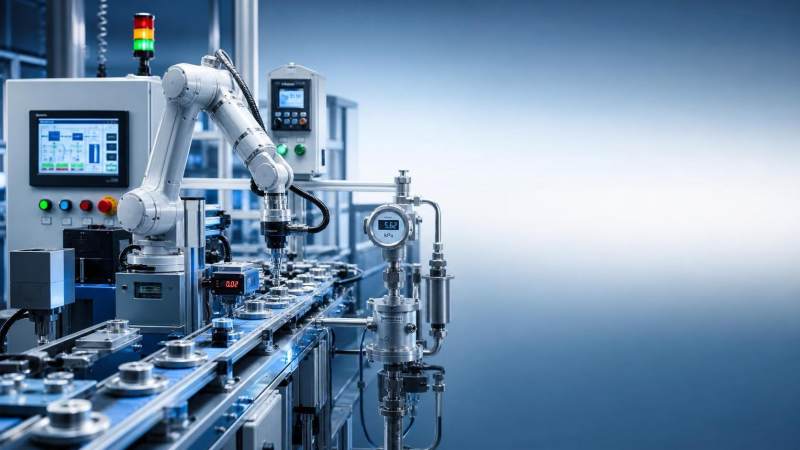
Volume matters, but product mix matters more than many teams expect
There is a persistent myth that high volume automatically means “time to automate.” Sometimes it does. Sometimes it creates the wrong project.
If the Production Line runs a narrow product family with predictable demand, automation is easier to justify. Tooling, fixtures, inspection parameters, and control logic can be optimized around a stable target. If the same line handles frequent SKU changes, custom orders, short runs, or evolving specifications, the automation concept needs to be more flexible from the start. That usually means modular cells, programmable changeovers, recipe management, machine vision, and a stronger software backbone. It also means higher integration complexity.
This is where many capital projects go off course. Teams budget for hardware, but underestimate the engineering needed to manage variation. A manually operated line can absorb product inconsistency through human intervention. An automated line needs those exceptions designed into the control strategy.
If you cannot measure OEE properly, pause before you automate
A surprising number of automation decisions are made with weak baseline data. Management may know that output feels constrained, but not whether the real loss comes from micro-stoppages, unplanned maintenance, changeovers, reject rates, or waiting time between stations.
Before approving major automation, it is worth instrumenting the existing line more carefully. Not necessarily with a full digital overhaul, but enough to establish where time and quality are actually being lost. In many factories, adding sensing, condition monitoring, better weighing, inline inspection, or more reliable flow and pressure measurement produces immediate visibility. Sometimes that reveals a straightforward fix. Sometimes it confirms the need for a larger automation program. Either outcome is better than buying machinery based on assumptions.
This “measure before you automate” mindset is common among stronger procurement teams in instrumentation-heavy sectors. It reflects a broader truth: good automation decisions are usually data-led long before the line becomes data-rich.
The hidden gate: your upstream and downstream systems must be ready too
A production line is not an island. It depends on incoming material consistency, utilities stability, maintenance response, spare parts availability, calibration routines, operator training, and often ERP or MES connectivity. If these are weak, automation may expose the weakness rather than solve it.
For example, an automated filling or dosing line will only be as reliable as the quality of its pumps, valves, flow measurement, and fluid properties. A vision-based inspection cell is only useful if reject handling and traceability are designed correctly. A robotic palletizing line can still become a bottleneck if packaging dimensions vary too much or if upstream accumulation is poorly managed.
In continuous or hazardous operations, this extends into instrumentation selection and certification. If the environment requires explosion protection, hygienic design, high-accuracy calibration, or documented laboratory verification, those details need to be built into vendor selection early. They are not late-stage accessories.
A practical way to judge readiness
Executives do not need to become controls engineers, but they do need a disciplined screening logic. A line usually becomes a solid automation candidate when most of the following are true:
- The process steps are repeatable and already documented in enough detail.
- Quality losses or safety exposure are materially linked to manual intervention.
- Demand is stable enough to support the capital cycle, even if product mix is not simple.
- Critical parameters can be measured reliably with suitable instrumentation.
- Maintenance, spare parts, and technical support can be sustained after commissioning.
- The business case includes downtime, scrap, compliance, and throughput risk, not just labor substitution.
If only one or two of these are true, a phased approach is often smarter: automate inspection first, then material handling, then process control, rather than attempting a full-line conversion in one move.
What experienced buyers usually do differently
The more seasoned the procurement team, the less they focus on the headline machine and the more they investigate the ecosystem around it. They ask who supports the PLC or DCS architecture locally, how calibration is managed, whether sensor replacement lead times are realistic, what communication protocols the line uses, and how easy it is to integrate third-party instruments later. They also test supplier claims against actual application conditions: ambient temperature, washdown exposure, corrosive media, dust loading, vibration, required accuracy, and regulatory environment.
This is where industry intelligence matters. In complex sourcing markets, the gap between a visually convincing proposal and a robust automation package can be wide. Decision-makers increasingly need structured visibility into not just equipment categories, but also supplier maturity, measurement reliability, and compliance fit. That is exactly the type of intelligence layer GIH is positioned around, especially in sectors where the “nervous system” of automation is the instrument stack rather than the mechanical shell.
So, when does it make sense?
It makes sense to automate a Production Line when the process is stable enough to standardize, the pain points are persistent enough to justify capital, and the operation is ready to support control, maintenance, and measurement at a higher level. Not when automation is fashionable. Not when a single labor spike creates panic. And not when core process uncertainty is still being hidden by operator experience.
A good automation project usually starts with a narrower question than “Should we automate?” It starts with: which loss mechanism are we trying to remove, and can we measure it clearly enough to design the right response? If the answer is yes, automation can be one of the most disciplined investments a manufacturer makes. If the answer is vague, the better next step is often more instrumentation, better line data, and a smaller pilot before committing to a full rollout.
In other words, the right time is when automation stops being a technology ambition and becomes an operational conclusion.
Recommended for You
 How does cross-interference affect multi-component gas analyzers?How does cross-interference affect multi component gas analyzers? Explore measurement errors, compensation limits, and validation tips to choose the right system for your process.
 How does temperature affect high-accuracy sensor performance?Explore how temperature affects high accuracy sensor performance. Learn to reduce thermal drift, evaluate compensation, and select the right sensor for reliable measurements.
 Can a C4H8O concentration analyzer distinguish between isomers?Can a C4H8O concentration analyzer distinguish isomers? Compare GC, FTIR and MS methods, uncover selectivity limits, and learn what to validate before choosing your instrument.
 How to identify a reliable supplier using on-time delivery recordsIdentify a Reliable Supplier by verifying on-time delivery records, original commitments, and complete shipments. Learn practical checks to reduce purchasing risk and protect your project schedule.
 How sensitive should a portable hydrogen analyzer be for lab use?Choose a portable hydrogen analyzer for laboratory use with the right quantification limit, accuracy, and range. Learn how to verify performance and avoid costly buying mistakes.
 How to set industrial calibration intervals based on equipment riskSet industrial calibration intervals based on equipment risk, drift, and as-found data. Learn when to shorten or extend schedules to improve reliability and avoid unnecessary costs.
 How to choose electrochemical analyzers for low-current measurementsCompare electrochemical analyzers for precise low-current measurements. Learn how noise, leakage, bandwidth, and real-cell testing help you choose the right instrument.
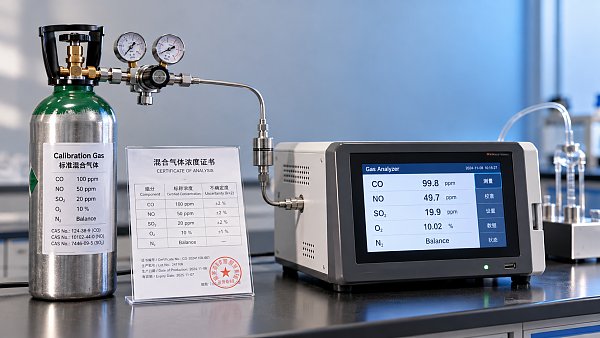
 What tolerance does a custom gas mixture need for calibration?Choose the right custom gas tolerance for calibration. Learn how blending tolerance, certified uncertainty, and stability affect accuracy—and avoid paying for precision you don’t need.
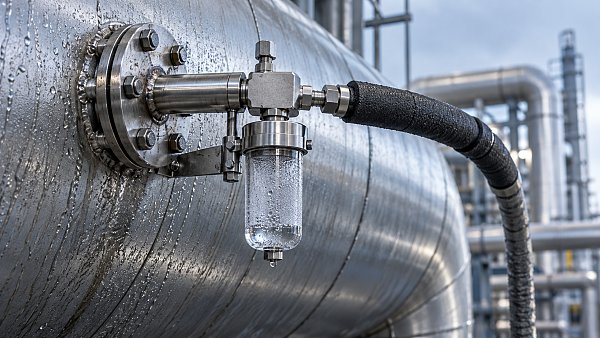
 How condensation affects stack detector readings in wet flue gasStack detector readings can drift when wet flue gas condenses. Learn how to identify moisture interference, prevent sample losses, and improve emissions monitoring reliability.
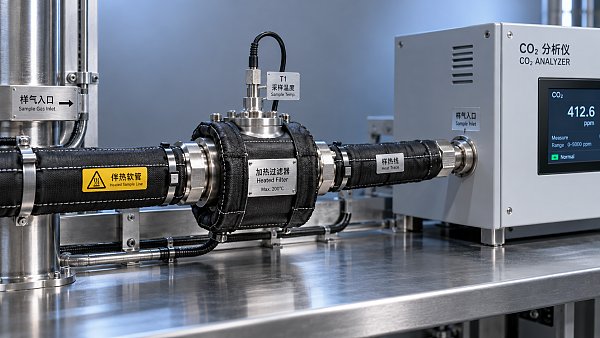
 How to prevent condensation in a CO2 analyzer sampling systemPrevent condensation in your CO2 analyzer sampling system. Learn how to control dew point, eliminate cold spots, and manage moisture for reliable readings and fewer costly disruptions.
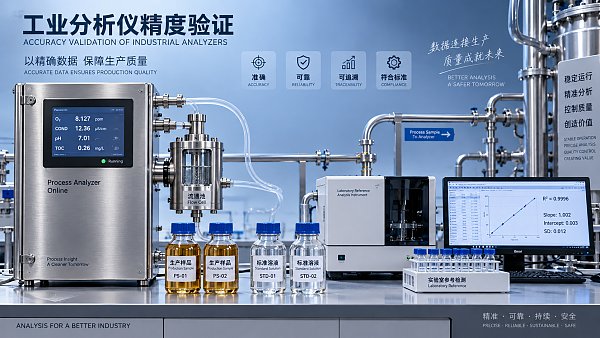
 How to verify accuracy claims for industrial quality analyzersVerify accuracy claims for industrial quality analyzers with calibration checks, independent testing, and clear acceptance criteria. Learn how to reduce risk and buy with confidence.
 How to calculate cooling loads for an industrial analyzer shelterSize industrial analyzer shelter cooling with confidence. Learn to calculate equipment heat, solar gains, and ventilation loads, then select HVAC capacity for reliable analyzer performance.
 Hydrogen Analyzers for Energy Storage: Purity Monitoring vs. Leak DetectionChoosing a hydrogen analyzer for energy storage systems? Compare purity monitoring and leak detection to select the right sensors, improve safety, and protect fuel cell performance.
 NH3 Monitoring in Fertilizer Plants: Where Should Leak Analyzers Be Installed?NH3 analyzer for fertilizer production: discover where to place leak detectors around storage, compressors, and loading areas to reduce blind spots and improve early warning.
 Diesel Engine NOx Analyzers: Response Time and NO2 Conversion ExplainedChoosing a NOX analyzer for diesel engines? Learn how response time, NO2 conversion, and sampling design affect accuracy—and make a smarter, evidence-based purchase.
 SO2 Analyzers for Smelter Emissions: Sampling Hot, Dust-Laden Flue GasSelect an SO2 analyzer for smelting industry applications. Discover how to handle hot, dust-laden flue gas, prevent sample losses, and achieve reliable emissions monitoring.
 Unstable CH4 Readings in Biogas Monitoring? Check Moisture and Sample FlowCH4 analyzer for biogas monitoring giving unstable readings? Discover how moisture, sample flow, and pressure checks help pinpoint faults and restore reliable methane measurements.
 Buying a CO2 Analyzer for Brewery Gas Recovery: Costs Beyond the Purchase PriceBuying a CO2 analyzer for brewery applications? Compare sampling, installation, calibration, and downtime costs to uncover hidden expenses and make a smarter gas recovery investment.
 Where to Place CO Analyzers for Effective Parking Garage VentilationOptimize your CO analyzer for parking garage ventilation with practical placement tips. Learn how sensor height, airflow, and zone coverage support timely detection and effective fan control.
 NDIR vs. FTIR Gas Analyzers: Which Fits Your Environmental Research?Find the right infrared gas analyzer for environmental research. Compare NDIR vs. FTIR on sensitivity, gas coverage, sampling needs, and cost to choose confidently for your study.
 Oxygen Analyzers for Diving: Calibration Checks Before Nitrox BlendingUsing an oxygen analyzer for diving applications? Discover essential calibration, sensor, and sampling checks before nitrox blending to support reliable readings.
 How Paramagnetic Oxygen Analyzers Work and Why Sample Pressure MattersLearn how a paramagnetic oxygen analyzer works, why sample pressure affects accuracy, and what to check in compensation and calibration before choosing your system.
 How Much Does a Complete CEMS Integration Project Typically Cost?How much does a complete CEMS integration project typically cost? Explore budget ranges, hidden installation costs, and compliance needs to compare quotes and plan confidently.
 What Is the Typical Response Time for Industrial Air Monitors?What is the typical response time for industrial air monitors? Explore T90, sampling delays, and alarm settings to compare performance and choose the right monitor with confidence.
 Do Regulatory Monitoring Systems Need Third-Party Certification?Do regulatory monitoring systems need third-party certification? Learn when it is required, what certificates prove, and how to verify compliance before buying.
 How Do You Choose Wired or Wireless for Stack Monitoring?Learn how to choose between wired and wireless for stack monitoring. Compare reliability, lifecycle costs, and data recovery to find the right CEMS setup for your site.
 What Happens When Combustible Gas Sensor Calibration Is Overdue?What happens if combustible gas sensor is not recalibrated on time? Discover the risks of inaccurate readings and missed alarms, plus steps to restore reliable protection.
 Can One Multi-Gas Detector Replace Four Separate Analyzers?Find out: can a single multi-gas detector replace four separate analyzers? Compare accuracy, safety, compliance, and lifetime costs to make a confident buying decision.
 Industrial Safety vs. Emission Monitoring: What Are the Differences?What are the main differences between industrial safety and emission monitoring? Compare goals, sensors, response times, and compliance needs to choose the right systems for your facility.
 Is Remote Monitoring Worth the Cost for Small Emission Sources?Is it worth investing in remote monitoring for small emission sources? Compare costs, compliance needs, and potential savings to choose the right solution for your operation.
 How Do You Handle Analyzer Failure During an Environmental Audit?Learn how to handle analyzer failure during environmental compliance audit procedures. Protect evidence, verify data, and restore monitoring with this practical response guide.
 Do VOC Monitors Require Explosion-Proof Certification?Does VOC monitoring require explosion-proof certification? Learn when approval is needed, compare ATEX and IECEx, and choose the right monitor for your site.

Search Categories
Search Categories
- Smart Meters & Power Quality
- Transformer Gas Analyzers
- BESS Thermal Runaway Detectors
- Energy, Power & Smart Grid Monitoring
- Optical Profilers & CMM
- Ultrasonic & X-Ray NDT
- Calibration Standards
- Precision Metrology & NDT
- Water Quality Analyzers
- CEMS & VOCs Monitors
- Price Trends
- Import & Export Updates
- Market Trends
- Industry News
- Industry Insights
Latest Article
- How does cross-interference affect multi-component gas analyzers?How does cross-interference affect multi component gas analyzers? Explore measurement errors, compensation limits, and validation tips to choose the right system for your process.Posted by:
- How does temperature affect high-accuracy sensor performance?Explore how temperature affects high accuracy sensor performance. Learn to reduce thermal drift, evaluate compensation, and select the right sensor for reliable measurements.Posted by:
- Can a C4H8O concentration analyzer distinguish between isomers?Can a C4H8O concentration analyzer distinguish isomers? Compare GC, FTIR and MS methods, uncover selectivity limits, and learn what to validate before choosing your instrument.Posted by:
Please give us a message
